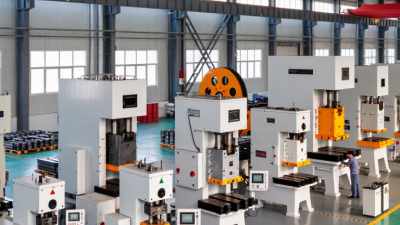
Top Press Machine Manufacturers in China for Global Buyers
Choosing a reliable press machine manufacturer in China requires more than comparing prices online. Global buyers must examine engineering capability, production consistency, safety controls, and export experience. A polished website is not enough.
China has a broad manufacturing base, from compact workshop presses to large hydraulic and mechanical systems. Leading suppliers often provide customized tonnage, stroke length, table dimensions, automation options, and electrical configurations. Buyers should request detailed drawings and test records before signing a contract. A factory video helps, but an on-site audit reveals more. Look closely at welding quality, machining surfaces, control cabinets, and assembly procedures. Small details matter.
Reputable manufacturers can explain material selection, overload protection, emergency stops, guarding, and maintenance schedules clearly. They should also support installation, operator training, spare parts, and remote troubleshooting after delivery. Ask for references from similar industries and verify certifications with issuing bodies. Do not rely on copied certificates or vague claims. That happens.
This guide reviews top press machine manufacturers in China for global buyers. It focuses on practical evidence, including manufacturing capacity, technical support, quality management, lead times, and communication standards. Some suppliers may offer excellent equipment but weaker overseas service. Others may respond quickly while lacking customization depth. No manufacturer is perfect. Careful comparison remains essential. By checking specifications, factory capability, warranty terms, and total ownership costs, buyers can reduce procurement risks and select a partner suited to their production goals.
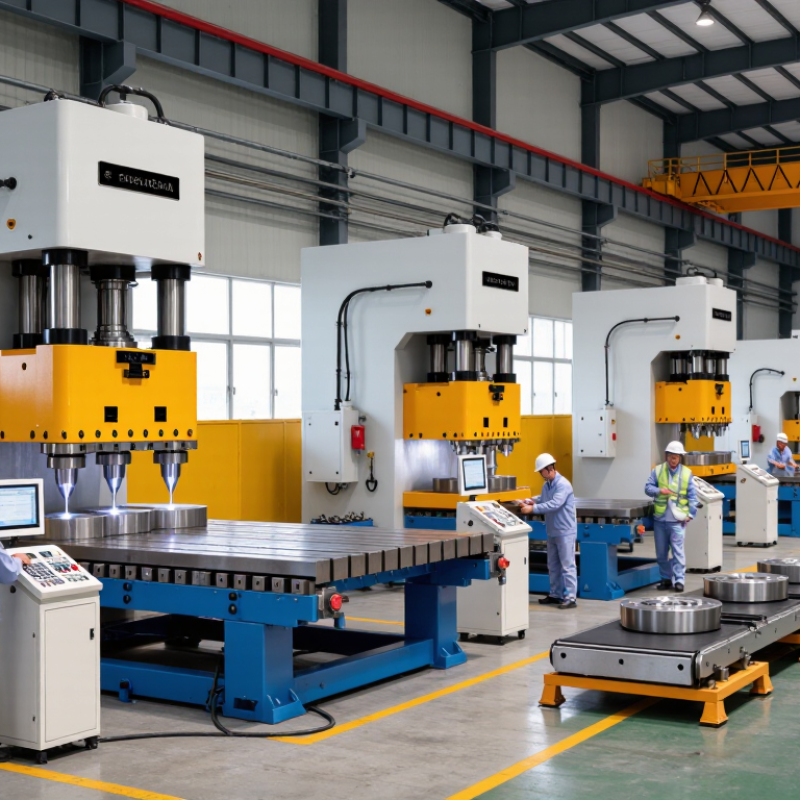
Types of Press Machines Manufactured in China
Chinese manufacturers produce mechanical, hydraulic, and servo presses for metal forming, stamping, and assembly.
Mechanical presses use a flywheel and crank to deliver fast, repeatable strokes. They suit high-volume blanking and shallow drawing.
Hydraulic presses apply force more gradually, making them useful for deep drawing, forming thicker stock, and compression tasks.
Servo presses offer adjustable stroke speed and position. That control can reduce impact and improve process consistency, though setup still matters.
The World Steel Association reported that China produced 1,019.1 million tonnes of crude steel in 2023, about 53.9% of global output.
This scale supports broad demand for equipment used to form sheet and structural materials, but it does not prove that every press maker offers equal precision or service.
Buyers should compare rated tonnage, bed size, stroke, daylight, and feeder compatibility against the actual part.
Ask for sample runs. Inspect the frame and guarding.
A machine that looks powerful may still be poorly matched to a thin, delicate component. That detail is easy to miss.
Key Factors for Evaluating Chinese Press Machine Manufacturers
When comparing press machine manufacturers in China, look beyond catalog photos and quoted tonnage. Ask how long the company has built the specific press type you need, and request examples of similar machines operating in comparable production conditions. Experience should be traceable to real installations, not just a broad product list. Ask for evidence.
Check the machine’s working details: frame construction, stroke range, table size, motor power, and control system. Request drawings and a written specification, then confirm that the quoted configuration matches your parts and materials. If possible, watch a test run using sample stock. Listen for unusual vibration and check whether the ram moves smoothly. Small observations matter.
Quality control deserves direct questions. Ask what inspections take place before shipment, how critical components are documented, and what test records are provided. Clarify installation support, spare-parts availability, response times, and warranty coverage in writing. A low price may not reflect the cost of commissioning, training, or downtime. Yet paperwork alone cannot guarantee a reliable machine. I would also speak with recent customers, while remembering that one factory visit can show only one day’s performance.
Leading Press Machine Manufacturers for Global Buyers
China’s leading press machine manufacturers increasingly serve global buyers through integrated engineering, automation, and export support. The International Federation of Robotics reported 276,288 industrial robot installations in China during 2023. That represented about 51% of global installations. This manufacturing environment supports press lines with robotic loading, real-time monitoring, and safer material handling.
Experienced buyers should assess manufacturers beyond tonnage and quoted price. A reliable supplier can provide load charts, die-space drawings, cycle-time tests, and traceable inspection records. Look for documented controls under ISO 9001, verified electrical components, and clear after-sales procedures.
Factory audits should examine machining accuracy, welding quality, calibration systems, and spare-parts storage. Small details matter.
Ask for a witnessed factory acceptance test.
Leading manufacturers often customize hydraulic, mechanical, or servo presses for automotive, appliance, and general metal-forming applications. Yet customization can hide weak project control. A lower price may exclude installation training, tooling trials, or software support. That is where buyers sometimes misjudge total cost. Request a complete quotation with delivery terms, acceptance criteria, warranty scope, and response times. Independent inspection remains useful, even when factory videos look convincing. The best supplier is not always the largest one. It is the one that can repeatedly prove performance with measurable evidence.
Manufacturing Standards, Certifications, and Quality Control
Top Press Machine Manufacturers in China for Global Buyers
For global buyers, manufacturing quality begins with documented standards, not polished factory photos. The ISO Survey 2022 recorded 1,265,216 ISO 9001 certificates worldwide, showing how widely formal quality systems are used. However, certification alone cannot prove press accuracy. Buyers should verify the certificate scope, audit status, and production site.
Reliable manufacturers typically align machine design with GB/T 5226.1 for electrical safety and relevant metal-forming machinery standards. They may also prepare technical files for CE conformity, depending on the destination market. Each press should receive inspection records for frame deflection, slide parallelism, stroke repeatability, and emergency-stop response. A practical factory check includes laser measurement, load testing, and calibration certificates with traceable instruments.
Small details matter. Ask for serial-number tracking on hydraulic valves, control modules, and safety guards. Review material certificates for the frame and inspect weld quality before painting. Factory acceptance tests should record noise, vibration, oil leakage, cycle time, and overload protection. Third-party testing adds useful independence.
Still, the process is not perfect. A certificate may cover management procedures, while one defective batch escapes inspection. Some suppliers also present outdated reports or incomplete test data. Buyers should compare sample results across several machines and request corrective-action records. The ISO Survey is a useful benchmark, not a substitute for engineering judgment.
Purchasing, Customization, Shipping, and After-Sales Support
Buying a press machine from China starts with a clear production brief. Share the material type, sheet thickness, required force, stroke length, and daily output. A factory can then recommend a suitable configuration instead of quoting a machine that only looks right on paper. Ask for drawings, component specifications, and a written list of included items. Small details matter. Confirm the control system, safety guards, tooling, and electrical requirements before approving the order. If customization is needed, request a marked-up drawing and review each change with the engineering team. I have seen vague specifications cause avoidable delays; buyers should not assume that “custom” means every detail is settled.
Shipping plans deserve the same attention as machine specifications. Confirm the packed dimensions, gross weight, loading method, and required export documents early. Ask how the machine will be secured against movement and moisture during transit, and who handles installation after arrival. Get the schedule and payment milestones in writing. Keep some flexibility, though: production or port schedules can shift, and the original estimate may not hold. Before shipment, request inspection records and clear photos of the finished machine. After-sales support should include practical guidance on installation, operation, spare parts, and troubleshooting. Ask who responds, in what time zone, and through which channel. A fast reply helps, but useful technical answers matter more. A few points may still be missed; record open questions and resolve them before the machine leaves the factory.
Top Press Machine Manufacturers in China for Global Buyers — Purchasing, Customization, Shipping, and After-Sales Support
| Buyer Dimension | What to Check | Recommended Buyer Action | Practical Note |
|---|---|---|---|
| Machine type | Confirm whether the application calls for a mechanical, hydraulic, or servo press, and whether the machine is intended for stamping, forming, punching, or another operation. | Provide the workpiece material, thickness, dimensions, production process, and expected output when requesting a proposal. | Machine selection depends on the process and tooling, not tonnage alone. |
| Capacity and specification | Review rated force, stroke, shut height, slide adjustment, bed dimensions, speed, and applicable electrical requirements. | Ask for a specification sheet and confirm that the stated capacity applies at the intended operating conditions. | Compare equivalent specifications across quotations. |
| Safety and compliance | Check the guarding, emergency-stop arrangements, control system, safety documentation, and standards applicable in the destination market. | Specify the destination country and ask what conformity documents and machine-safety features are included. | Requirements vary by market and machine configuration. |
| Customization | Clarify options such as feeding equipment, automation interfaces, tooling, light curtains, control language, and voltage or frequency configuration. | Separate standard features from optional items in the quotation and approve drawings or interface details before production. | Changes can affect price, lead time, and testing. |
| Acceptance testing | Agree on the inspection scope, operating checks, documentation, and any sample-production test required before shipment. | Record measurable acceptance criteria in the purchase contract and arrange a witnessed or documented inspection where appropriate. | Define criteria before manufacturing is complete. |
| Pricing and payment | Identify what the quoted price includes, including tooling, packaging, documentation, installation support, and delivery terms. | Compare quotations on the same technical scope and clearly state the agreed payment milestones and currency. | A low headline price may exclude key items. |
| Shipping and packaging | Confirm packed dimensions and weight, packaging method, loading arrangements, shipping responsibility, and the named delivery point. | Agree on the applicable Incoterms® rule and named place, and verify import duties, taxes, and local delivery responsibilities. | Incoterms® allocate defined costs and risks. |
| Import documentation | Confirm the documents required for the shipment, which may include a commercial invoice, packing list, transport document, and origin or conformity documents where applicable. | Check requirements with the destination-country customs authority or customs broker before dispatch. | Documentation needs depend on the destination. |
| Installation and training | Establish whether installation guidance, commissioning, operator training, and technical support are provided remotely or on site. | Confirm the scope, language, schedule, travel costs, and site-readiness requirements in writing. | Prepare foundations and utilities in advance. |
| Spare parts and warranty | Review warranty coverage, exclusions, response process, recommended spare parts, and the availability of manuals and electrical diagrams. | Request a parts list with part identifiers and clarify how warranty claims and replacement-part shipments are handled. | Coverage and terms are contract-specific. |
| Supplier evaluation | Assess relevant machine experience, production and inspection processes, technical communication, and the supplier's ability to support the destination market. | Request verifiable references or records relevant to the application and keep technical, commercial, and service commitments in the contract. | Verify claims independently where possible. |
Related Posts
-
China Top 10 Steel Press Machine Manufacturers
-
Unmatched Quality in China Delivering the Best Press Machine for Global Buyers
-
Comprehensive Manual Press Machine Guide: Everything You Need to Know for Optimal Use
-
The Future of Manufacturing Efficiency with Innovative Press Machine Technology Insights and Trends
-
15 Reasons Why the Best Press Machine Can Transform Your Production Process
-
How to Effectively Use a Manual Press Machine for Optimal Results