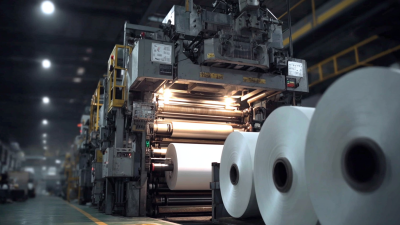
China Top 10 Steel Press Machine Manufacturers
Choosing a steel press machine is not a simple price comparison. A press may look impressive in a catalog, yet perform poorly when matched to the wrong material, part size, or production schedule. This guide examines ten manufacturers through practical considerations: press capacity, control systems, safety features, customization, service support, and delivery expectations. It is intended to help buyers ask sharper questions, not to declare one universal winner.
Manufacturing engineer Shigeo Shingo is often quoted as saying, “The most dangerous kind of waste is the waste we do not recognize.” That idea matters when comparing presses. Hidden costs can include tooling changes, operator training, maintenance access, and delays in obtaining spare parts. Some details are easy to miss. A polished specification sheet cannot show every shop-floor constraint. The manufacturers discussed here serve different needs, and their strengths may depend on the application and region. Readers should confirm current specifications, certifications, warranty terms, and local service availability directly with each supplier. A machine that suits a high-volume automotive line may be excessive for a small fabrication shop. Even this comparison has limits; rankings can simplify a decision that deserves careful technical review. Use the profiles as a starting point, then compare verified offers against your actual production requirements.
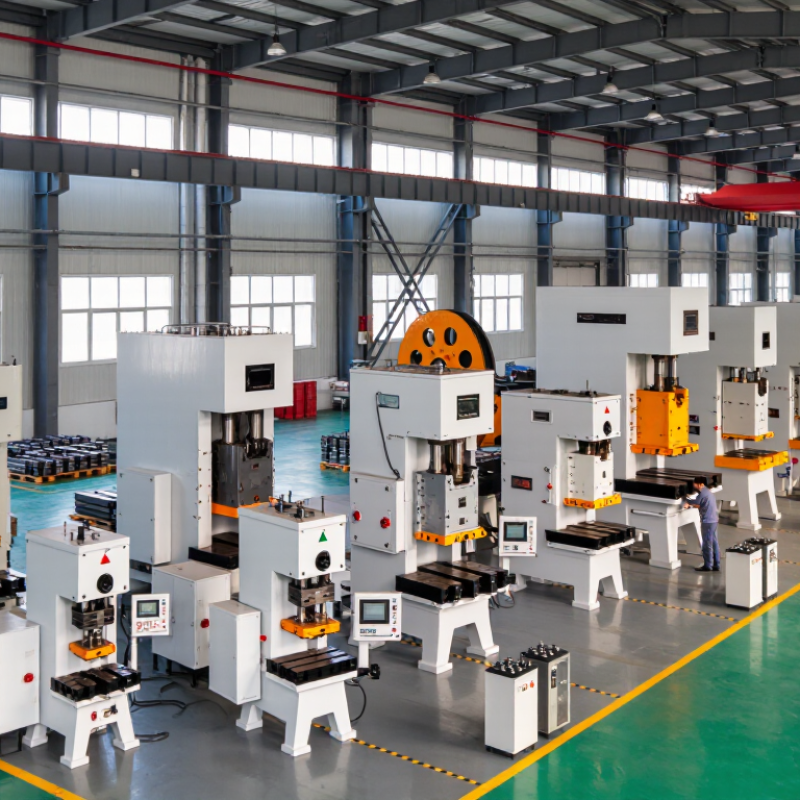
Steel Press Machines: Definition, Types, and Key Functions
A steel press machine applies controlled force to shape, cut, bend, or join steel. The material sits between tooling, such as a punch and die, while a ram or slide moves against it. Operators select the stroke, pressure, and tooling to suit the part. A small bracket and a thick plate need very different setups.
Common types include mechanical, hydraulic, and servo-electric presses. Mechanical presses use a flywheel and crank, making them suitable for repeated, fast strokes. Hydraulic presses generate force through fluid pressure and allow adjustable movement across the stroke. Servo-electric models use motor-driven motion for precise control and reduced idle energy use in some applications. The categories are not always neat; machine design and tooling can change how a press performs.
These machines perform blanking, punching, forming, stamping, and straightening. In a workshop, a press might punch bolt holes in a steel sheet or bend a panel to a specified angle. Setup matters. Poorly matched dies can leave uneven edges, distort the workpiece, or wear quickly. Press capacity alone does not determine suitability; material thickness, part geometry, stroke length, and production rate matter too. Measurements should be checked against the actual material, since steel properties can vary. A press is not a magic fix. It requires careful setup and regular inspection.
China’s Steel Press Machine Industry and Manufacturing Landscape
China Top 10 Steel Press Machine Manufacturers
China’s Steel Press Machine Industry and Manufacturing Landscape
China’s steel press machine sector benefits from a vast steelmaking base and a mature industrial supply chain. The World Steel Association reported that China produced 1,005.1 million tonnes of crude steel in 2024, about 53% of global output. This scale supports demand for forming equipment, replacement parts, and production-line upgrades. It does not, by itself, prove that every press manufacturer has equal capacity or quality.
The manufacturing landscape is shifting toward automation, energy efficiency, and more precise forming. The International Federation of Robotics reported 276,288 industrial robot installations in China in 2023, representing 51% of global installations. For press users, robots can help move heavy sheets between stations and reduce repetitive handling. Yet automation adds integration and maintenance requirements; this detail is sometimes underestimated. Buyers should examine press capacity, stroke, bed size, safety systems, and service support against actual parts and shift patterns.
Tips: Request test results using your material and thickness. Check spare-part lead times and operator training before comparing prices. A polished brochure is not a production trial.
China Top 10 Steel Press Machine Manufacturers - China’s Steel Press Machine Industry and Manufacturing Landscape
Industry overview by machine category. The entries below describe established press-machine types and applications; they are not a ranking of manufacturers.
| No. | Press machine category | Operating principle | Common applications | Key selection considerations |
|---|---|---|---|---|
| 1 | Mechanical stamping press | A motor and flywheel drive a crank or eccentric mechanism to move the slide. | High-volume blanking, punching, and forming of sheet metal. | Rated force, stroke, strokes per minute, shut height, and die compatibility. |
| 2 | Hydraulic press | Hydraulic pressure drives the slide, allowing force and speed to be controlled through the stroke. | Deep drawing, forming, straightening, and applications requiring controlled pressure. | Force control, cycle time, stroke length, daylight, and hydraulic-system maintenance. |
| 3 | Servo press | A servo motor controls slide motion and can support programmable movement profiles. | Precision forming and production requiring adjustable slide motion or process monitoring. | Motion programmability, required production rate, control system, and energy use for the intended duty cycle. |
| 4 | C-frame press | An open-front frame provides access to the die area from three sides. | General stamping, punching, and smaller-part forming operations. | Access and workpiece handling needs, frame stiffness, and off-center loading limits. |
| 5 | Straight-side press | A closed, column-supported frame is designed to provide high rigidity around the slide and bed. | Larger dies, heavier stamping work, and operations needing greater frame support. | Bed dimensions, frame rigidity, slide guidance, and tooling change requirements. |
| 6 | Progressive-die press | Strip stock advances through a die with multiple stations, each performing an operation on the part. | Repeat production of small or medium stamped components from coil-fed material. | Feed accuracy, press speed, die layout, material thickness, and scrap handling. |
| 7 | Transfer press | Parts are moved between successive forming stations by a mechanical or automated transfer system. | Multi-stage forming of parts that are separated from the strip before or during processing. | Transfer timing, station spacing, part geometry, automation integration, and die setup. |
| 8 | Tandem press line | Multiple presses perform successive forming stages, with parts transferred between presses. | Large or complex panels requiring several forming operations. | Line synchronization, automation, press spacing, die change time, and floor-space requirements. |
| 9 | Deep-drawing press | The punch draws sheet metal into a die; a blank holder helps control material flow. | Cup-shaped, shell-shaped, and other drawn components. | Cushion or blank-holder control, draw depth, material behavior, and lubrication needs. |
| 10 | Forging press | A press applies compressive force to shape metal, commonly while the workpiece is heated for hot forging. | Forged components such as shafts, connecting parts, and other load-bearing shapes. | Required forming force, workpiece size and temperature, tool life, and process safety. |
How to Evaluate Steel Press Machine Manufacturers
China Top 10 Steel Press Machine Manufacturers
How to Evaluate Steel Press Machine Manufacturers
A useful evaluation starts with the actual job, not the largest tonnage on a brochure. List material grade, thickness, blank size, die dimensions, stroke, shut height, and expected cycle rate. Then ask the manufacturer to show how the press handles your tooling and production conditions. A machine rated for the force may still struggle with bed deflection or repeatability. Small details matter.
The World Steel Association’s World Steel in Figures 2024 reports global crude steel production of 1,892.2 million tonnes in 2023. That scale makes dependable forming equipment important, but steel output alone does not prove a press is suitable. Request documented accuracy and repeatability figures, and check how they were measured. Review the control system, safeguarding, energy use, spare-parts availability, and local service response. Ask for an acceptance test using representative material and tooling, where practical.
Compare total operating costs, not just purchase prices. A lower quote may omit installation, training, tooling changes, or planned maintenance. It is easy to overlook die-change time when comparing cycle rates; revisit that assumption. Ask for maintenance schedules, inspection records, and references from applications with similar materials and press loads. If a supplier cannot explain a specification in plain terms, treat that as a reason to investigate further.
How to Evaluate Steel Press Machine Manufacturers
Suggested evaluation weights for comparing manufacturers. These are a practical assessment framework, not survey results or rankings; adjust them to match your production needs. Verify claims with specifications, inspection records, references, and service agreements.
Profiles of China’s Top 10 Steel Press Machine Manufacturers
This guide examines ten Chinese manufacturers through the practical details buyers need to compare. It focuses on machine capacity, press type, control options, and support for installation and maintenance. These details matter on the factory floor. A press rated for a certain tonnage may not suit every material, die, or production rhythm.
The profiles consider different strengths, including heavy-duty forming, compact workshop equipment, and automated production lines. They also look at frame construction, safety features, spare-parts availability, and the clarity of technical documentation. Ask how a machine performs with your actual workpiece, not only a sample listed in a catalogue. A short trial can reveal vibration, feeding issues, or slower cycle times. Small details count.
Specifications do not tell the whole story. Some public information may be incomplete, and advertised performance can depend on tooling and operating conditions. That deserves a closer look. Buyers should request drawings, service terms, and references for comparable applications before making a decision. A polished profile is useful, but it is not proof of consistent quality. I would also check whether quoted delivery and commissioning schedules match the factory’s current workload.
Applications and Factors to Consider When Choosing a Manufacturer
Steel press machines shape, punch, bend, and form parts used in automotive, appliance, construction, and electrical production. A stamping shop may run thin sheet all day, while a fabrication line needs greater force for thicker plate. Match the machine to the actual job. Fit matters.
When comparing manufacturers, share sample drawings, material grades, thickness ranges, and expected production volumes. Ask how the supplier calculates tonnage and selects bed size, stroke, and tooling. A machine that looks suitable on paper may struggle with a demanding die or frequent changeovers. Request a test using representative material, and check part accuracy, cycle consistency, and setup time.
Safety features, control options, installation support, spare-parts access, and operator training also affect long-term performance. Review maintenance guidance and ask how service requests are handled. Factory visits and conversations with existing users can reveal details a catalog misses, such as adjustment effort or delayed parts. Certifications help, but they do not prove a press suits your process. I would still verify the small things: guarding access, noise, and how easily operators can repeat settings. Some comparisons are imperfect; production conditions rarely match neatly.
Related Posts
-
15 Reasons Why the Best Press Machine Can Transform Your Production Process
-
Unmatched Quality in China Delivering the Best Press Machine for Global Buyers
-
Comprehensive Manual Press Machine Guide: Everything You Need to Know for Optimal Use
-
The Future of Manufacturing Efficiency with Innovative Press Machine Technology Insights and Trends
-
How to Use a Hydraulic Metal Brake Press for Effective Metal Forming
-
Top 10 Tips for Choosing the Right Hydraulic Metal Brake Press?