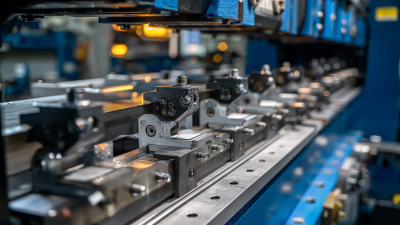
How to Choose a Small Press Brake for Your Needs?
Choosing a small press brake is not simply a matter of buying the lowest-priced machine. It is a practical decision involving material thickness, bend length, production volume, accuracy, and available floor space. A compact workshop may need a 40-ton machine for light steel brackets, while another may require 100 tons for wider stainless-steel parts. The difference is significant.
Steve Benson, a respected press brake educator and author, offers a useful principle: “The machine should be selected around the work, not the other way around.” That idea remains valuable when comparing hydraulic, electric, and manual models. It also encourages buyers to study real production samples instead of trusting attractive brochures.
Measure your heaviest regular job. Record its material, thickness, inside radius, bend angle, and total length. Then check whether the small press brake can handle those requirements without operating continuously at its maximum capacity. Leave practical allowance for tooling, springback, operator error, and future projects. A machine rated for 40 tons may perform poorly if every job demands nearly all 40 tons.
Operator experience matters too. A precise back gauge cannot rescue unclear drawings or poorly prepared tooling. Ask suppliers about training, service response, spare parts, and calibration support. These details often become important after installation.
There is no perfect choice.
I would not pretend that a compact brake solves every fabrication problem. However, a carefully matched small press brake can deliver clean bends, lower energy use, and better workspace efficiency. This guide examines the specifications, costs, tooling, safety features, and long-term limitations that deserve attention before purchase.
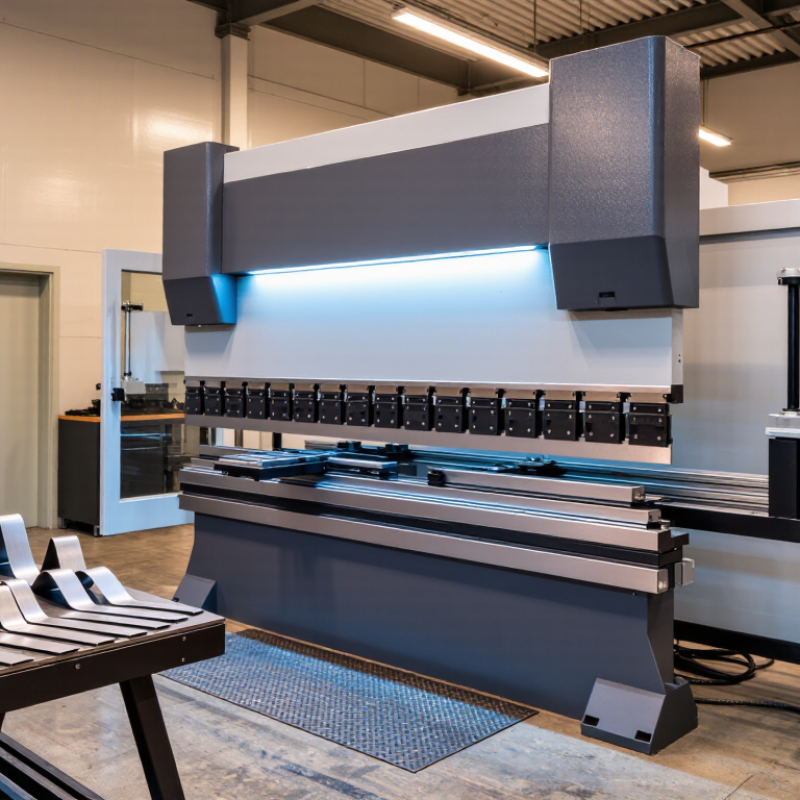
Understanding What a Small Press Brake Is and How It Works
A small press brake is a compact machine that bends sheet metal along straight lines. It uses a punch, a die, and controlled downward force. The sheet rests on the lower die. Then, the upper punch descends and forms the material into an angle.
The bending result depends on material type, thickness, width, and die opening. A wider die usually requires more force but can reduce surface marking. The machine’s rated tonnage must match your heaviest planned work. Exceeding that limit can damage the frame or create unsafe movement. Springback also matters. Some metals return slightly after bending, so the operator may need extra forming depth.
In workshop practice, I once underestimated setup time. That assumption was wrong. Positioning the back gauge, selecting suitable tooling, and checking the first bend often take longer than expected. A reliable small press brake should provide stable control, clear measurements, accessible guarding, and straightforward maintenance. Hydraulic and electric systems can both work well, but their maintenance needs differ. Ask whether replacement seals, lubrication points, and control adjustments are easy to manage.
Do not choose only by maximum bending length. Measure your usual sheet sizes and inspect the available working space. A machine that fits the workshop but lacks useful throat depth may become frustrating. Test a sample bend when possible. Check the angle with a calibrated gauge, not only by sight.
Defining Your Material, Bending, and Production Requirements
How to Choose a Small Press Brake for Your Needs?
Choosing a small press brake starts with the material, not the machine’s footprint. Record each material’s thickness, tensile strength, sheet width, and required bend angle. Also define the inside radius and flange length. Mild steel, stainless steel, and aluminum behave differently during forming. Your tooling must match these differences. Do not guess tonnage. A qualified technician can verify capacity through established bending calculations and practical tests.
Production needs matter just as much. Estimate daily quantity, batch size, changeover frequency, and acceptable cycle time. A workshop producing ten brackets weekly needs different features from one making hundreds daily. Check repeatability, back gauge movement, control simplicity, floor space, and electrical requirements. Test a sample bend before purchasing, if possible. Your spreadsheet may look precise, yet real material often varies slightly. That small variation can create visible angle errors. Even experienced operators sometimes overlook it.
Tips: Measure your largest sheet first. Test the tightest bend radius. Leave room for tooling storage. Ask about training, maintenance access, and technical documentation. Review safety functions carefully. A compact machine can still demand disciplined setup. Choose the simplest control system your operators can use consistently. Fancy features are not always useful.
Comparing Press Brake Types, Sizes, and Key Specifications
Choosing a small press brake starts with the material, bend length, and workshop space. Small machines are not identical.
Mechanical press brakes suit repetitive work and provide a quick cycling action. Hydraulic models offer adjustable force and smoother control for varied materials. Electric versions can reduce energy use and support precise positioning, but their performance depends on careful maintenance. In a working shop, I would test sample bends before purchasing. A specification sheet cannot reveal every practical weakness.
Compare the machine’s tonnage, working length, throat depth, stroke, daylight, and backgauge accuracy. Tonnage must match the material thickness, bend length, and tooling. A 40-ton machine may handle thin steel well, yet struggle with long bends. Consider a 1,000-millimeter working length for compact parts, not large panels. Check whether standard punches and dies fit the holder. Tool compatibility affects cost more than many buyers expect.
Look at repeatability, control usability, guarding, noise, and access to service support. A clear control interface reduces setup mistakes during short production runs. The frame should remain stable under load, with minimal visible deflection. Small does not mean simple. I once underestimated floor clearance and material handling space; the machine fit, but operation became awkward. Leave room for the operator, tooling storage, and safe sheet movement. Some choices still require compromise.
Evaluating Accuracy, Safety Features, Controls, and Maintenance
Choosing a small press brake starts with the work it must repeat every day. Measure your common material thickness, bend length, and required angle tolerance. A compact machine may save floor space, but limited throat depth can restrict larger parts.
Accuracy deserves practical testing, not just brochure figures. Ask for repeatability data and inspect the back gauge movement under load. A test bend should show a consistent angle across several pieces. Small differences matter. They become expensive during assembly. I have found that a stable frame and clear calibration procedure often matter more than impressive maximum force. This is not always obvious.
Safety features should protect operators without slowing normal work. Look for guarded pinch points, emergency stops, safe foot controls, and reliable restart protection after power loss. Controls should be easy to understand while wearing gloves. A bright display helps, but simple menus reduce input mistakes. Maintenance also shapes long-term value. Check access to lubrication points, filters, electrical cabinets, and tooling areas. Ask how often inspections are required and whether service records are easy to maintain. Some machines appear simple, yet awkward access can turn routine care into skipped care. That weakness deserves attention before purchase.
How to Choose a Small Press Brake for Your Needs? - Evaluating Accuracy, Safety Features, Controls, and Maintenance
| Evaluation Dimension | Recommended Selection Data | What to Verify | Why It Matters | Maintenance Consideration |
|---|---|---|---|---|
| Working Length | Select a length at least 10–20% greater than the widest part to be bent. | Confirm the usable bending length, not only the overall machine width. | Provides clearance for positioning, tooling, and future workpieces. | Keep the bed and tooling area clean to prevent inaccurate seating. |
| Maximum Bending Force | Choose rated tonnage with approximately 20–30% reserve above the calculated requirement. | Calculate force from material type, thickness, bend length, and die opening; verify the machine’s rated capacity. | Avoids overloading and supports consistent forming performance. | Inspect hydraulic hoses, fittings, cylinders, or drive components for wear and leakage. |
| Positioning Accuracy | For general fabrication, look for a manufacturer-stated back-gauge repeatability of about ±0.05 mm to ±0.10 mm. | Request the test method, measurement conditions, and whether the figure is repeatability or absolute accuracy. | Improves bend-angle consistency and reduces setup adjustments. | Clean and lubricate guideways according to the service schedule; check for backlash. |
| Bend-Angle Control | Prefer programmable angle control or a feedback system when repeatable production bends are required. | Check whether angle compensation is available and whether the system supports material and tooling parameters. | Compensates for springback and material variation more effectively than manual measurement alone. | Keep angle sensors, cables, and reference surfaces protected from impact and metal debris. |
| Frame and Bed Rigidity | Use a rigid, stress-relieved frame with a documented deflection or crowning solution for longer bends. | Inspect the machine under load and ask how deflection is controlled across the working length. | Reduces variation between the center and ends of a workpiece. | Check bolts, mounting points, and tooling alignment during scheduled inspections. |
| Guarding and Light Protection | Require point-of-operation guarding, suitable interlocks, and a properly positioned light curtain or equivalent protective device. | Verify that protective devices stop or inhibit hazardous motion and are tested before operation. | Helps prevent hand injuries in the pinch point between the punch and die. | Test safety devices at the required frequency and never bypass interlocks. |
| Emergency Stop System | Provide clearly marked, easily reachable emergency-stop buttons at operator access points. | Confirm that the stop circuit removes hazardous motion and requires a deliberate reset before restart. | Allows rapid response during abnormal movement or a tooling problem. | Perform functional checks and inspect buttons, wiring, and labels for damage. |
| Two-Hand or Controlled Start | Use two-hand controls or an equivalent control arrangement when the risk assessment requires both hands away from the die area. | Check anti-tie-down, anti-repeat, timing, and reset functions where applicable. | Reduces the likelihood of a hand being inside the danger zone during a stroke. | Test control synchronization and inspect switches for sticking or unintended activation. |
| Control Interface | Choose an intuitive controller with job storage, bend sequencing, tool libraries, and clear alarm messages. | Evaluate program entry, unit selection, operator permissions, backup, and recovery after power loss. | Shortens setup time and reduces data-entry errors. | Back up programs and keep software, manuals, and parameter records current. |
| Manual vs. Programmable Axes | Manual axes suit occasional work; programmable back-gauge axes are preferable for repeated parts or multiple bends. | Confirm the number of controlled axes, travel range, resolution, and maximum positioning speed. | Matches machine complexity to production volume and part variety. | Inspect axis drive systems, limit switches, cables, and mechanical stops. |
| Tooling Compatibility | Select tooling that matches the required material thickness, bend radius, die opening, and machine tonnage. | Verify punch height, clamping method, die dimensions, and tool load limits. | Correct tooling improves quality and prevents excessive force or surface damage. | Inspect tools for cracks, deformation, burrs, and incorrect installation. |
| Hydraulic or Electric Drive | Hydraulic systems suit broad forming demands; electric systems may reduce idle energy use and simplify some maintenance tasks. | Compare duty cycle, noise, energy consumption, speed control, and available service procedures. | Drive type affects operating cost, noise, response, and service requirements. | Hydraulic machines require fluid, filter, and leak checks; electric machines require drive, bearing, and cooling checks. |
| Routine Maintenance Access | Prefer accessible lubrication points, diagnostic displays, replaceable filters, and clearly documented service intervals. | Review the maintenance manual, spare-part lead times, and required technician qualifications. | Easy service access reduces downtime and encourages preventive maintenance. | Record inspections, lubrication, calibration, repairs, and safety-device tests. |
| Operator Training and Documentation | Require manuals, safety procedures, tooling guidance, electrical diagrams, and operator training before production use. | Confirm documentation covers setup, safe operating limits, lockout procedures, troubleshooting, and inspection tasks. | Proper training reduces setup errors, unsafe practices, and avoidable machine damage. | Update training after control changes, tooling changes, incidents, or revised risk assessments. |
Note: Accuracy, capacity, safety-system performance, and maintenance intervals must be confirmed against the specific machine’s technical documentation, applicable workplace regulations, and the manufacturer’s stated test conditions.
Selecting a Machine That Fits Your Budget and Future Needs
Choosing a small press brake requires more than comparing purchase prices. Measure your common sheet sizes, material thicknesses, bend angles, and production volume. A 1,000 mm machine may suit repair work, but it can become restrictive when larger projects arrive.
Budget for tooling, delivery, installation, training, maintenance, and electricity. These costs are easy to miss. The International Federation of Robotics reported 541,302 industrial robots were installed worldwide in 2023, showing how quickly manufacturers are preparing for automation. Your machine may not need robotics today, but compatible controls, repeatable backgauges, and safe communication interfaces can protect future investment.
Check the frame stiffness, rated tonnage, working length, and controller usability before buying. Ask for a real test bend using your material, not only a polished demonstration. Deloitte’s 2024 Smart Manufacturing and Operations Survey found that 86% of manufacturers expect smart manufacturing to support competitiveness within five years. That does not mean every small workshop needs advanced software. It does suggest choosing a press brake that can accept better measurement and data tools later. Service response matters too. A low initial price is not a saving if one failed sensor stops production for weeks. I would leave spare capacity, but not buy excessive tonnage without a clear workload. That judgment is imperfect. Your future orders may change.
How to Choose a Small Press Brake for Your Needs?
Selecting a machine that fits your budget today while leaving room for future production requirements.
The planning ranges compare common small press brake configurations by rated force and bending length. Entry-level machines are suitable for lighter sheet-metal work, while higher-capacity models provide more flexibility for thicker materials, longer bends, and future production growth. Budget figures are indicative new-machine ranges in USD and exclude tooling, shipping, installation, taxes, and customization.
Related Posts
-
Why Small Press Brakes Are Essential for Precision Metal Bending in Modern Manufacturing
-
Top 5 Benefits of Using Manual Press Brakes for Metal Forming?
-
Meeting Industry Production Standards with the Best Hydraulic Press Brake Machine for Optimal Efficiency
-
How to Use a Manual Press Brake Efficiently?
-
Unlocking Precision: The Best Press Brake Machines from China’s Premier Manufacturing Factory
-
2026 How to Choose the Right Mechanical Press Brake for Your Needs?