2026 Top Sheet Metal Press Machine Manufacturers?
Choosing among the 2026 top sheet metal press machine manufacturers requires more than comparing advertised tonnage or purchase prices. A reliable evaluation should examine forming accuracy, frame stability, energy use, control systems, and long-term service support. These details become visible on a factory floor, where vibration, oil temperature, and operator access affect daily output.
This guide reviews leading manufacturers through practical and technical criteria. It considers hydraulic, mechanical, and servo-driven press technologies for automotive, appliance, construction, and precision fabrication applications. It also examines working force, stroke length, bed size, cycle speed, tooling compatibility, and programmable controls. Safety features matter equally, including guarded access, emergency stops, light curtains, and documented maintenance procedures. A strong supplier should provide clear specifications, training, spare parts, and responsive technical assistance.
Not every large brand fits every workshop. That is important. A high-speed press may be unsuitable for a smaller facility with limited electrical capacity or infrequent production runs. Some manufacturers publish impressive performance figures, yet practical results can depend on tooling, material grade, lubrication, and operator experience. Readers should verify claims through independent testing, customer references, and site-specific calculations. This comparison aims to provide a balanced starting point, not a final purchasing decision. Manufacturing needs change, and even a well-regarded machine can become the wrong choice when service coverage, integration demands, or future production targets are overlooked.
What Is a Sheet Metal Press Machine?
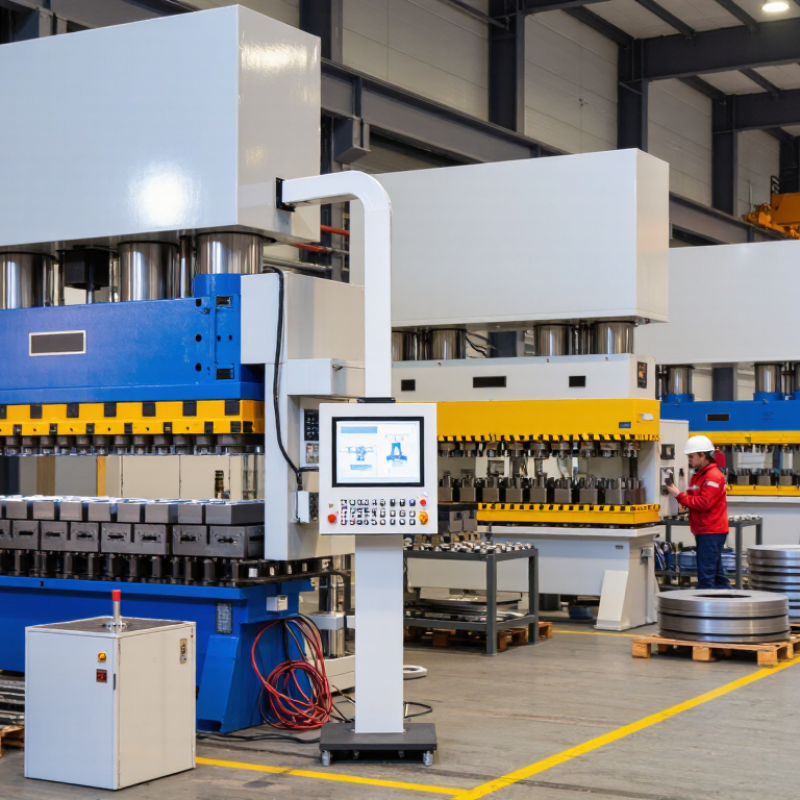
A sheet metal press machine is industrial equipment that shapes flat metal through controlled force. It uses a punch and die to bend, form, blank, or pierce sheet material. The sheet sits between these tools, while the press applies pressure through a guided stroke. Depending on the design, the force may come from a mechanical drive, hydraulic system, or servo-controlled mechanism. Each type offers different control, speed, and energy characteristics.
Operators select the machine according to material thickness, tensile strength, part size, and production volume. A thin stainless steel panel may need accurate pressure control, while a thicker steel bracket demands greater tonnage and a stronger frame. The die opening also affects bending results. Small changes can cause springback, edge marks, or uneven angles. These details matter on the shop floor.
A reliable press should include guarding, emergency controls, stable tooling, and clear operating instructions. Regular inspection of guides, hydraulic lines, electrical systems, and die surfaces helps reduce unexpected faults. In practice, the first trial is rarely perfect. Material grain direction can change the bend angle, even when settings appear correct. Careful test pieces and measurement reveal these problems early. I would not choose a machine from tonnage alone. Floor space, operator skill, maintenance access, and local technical support deserve equal attention. A powerful press can still perform poorly when its tooling or setup is unsuitable.
How to Evaluate Sheet Metal Press Machine Manufacturers in 2026
A 2026 evaluation should begin with working evidence, not showroom appearance. Ask manufacturers for load charts, cycle data, and tolerance records from comparable machines. A press that handles thin aluminum may struggle with thick structural steel. Check frame rigidity, hydraulic stability, tool alignment, and repeatability under continuous production. Request a live demonstration using your material, tooling, and target parts.
Reliable manufacturers explain their engineering choices in practical language. Their drawings should show safety systems, electrical layouts, maintenance points, and permitted operating limits. Verify compliance with applicable regional machinery standards and request independent inspection records when available. Do not accept vague claims about precision. Measure part angles, springback, noise, and cycle consistency during testing. Small deviations become expensive after thousands of bends.
Service quality deserves equal attention. Ask how quickly technicians respond, which spare parts are stocked, and who trains operators. Speak with several current users, not only the references selected by the sales team. A detailed warranty matters, but its exclusions matter more. A polished demonstration can mislead. I would also examine unfinished weld areas, oil leakage, software updates, and documentation clarity. These details may reveal factory discipline better than a perfect sample part. No evaluation is flawless, either; production conditions can expose weaknesses that a short trial misses.
Leading Sheet Metal Press Machine Manufacturers for 2026
Leading sheet metal press machine manufacturers are prioritizing accuracy, uptime, and flexible automation. The World Steel Association reported 1.88 billion tonnes of crude steel production in 2024. That scale keeps pressure on manufacturers to deliver faster forming cycles. Modern presses now commonly combine servo drives, real-time monitoring, and programmable tooling. These features can reduce material waste and improve repeatability. However, performance claims still require factory-floor verification.
The International Federation of Robotics recorded 541,302 industrial robot installations worldwide in 2023. This figure signals stronger demand for automated press lines and safer material handling. In 2026, reliable manufacturers should demonstrate energy data, cycle-time results, and service response records. Buyers should also inspect frame rigidity, hydraulic stability, controller usability, and tooling compatibility. A polished brochure is not enough. I have seen impressive specifications fail under uneven production loads. That remains an uncomfortable, but useful, reminder.
Tips: Compare measured cycle times, not advertised speeds. Request sample parts from your own material grades. Check long-term parts availability and technician training. Review independent testing where possible. Reports from different research firms may use different market definitions, so avoid treating one forecast as absolute. A practical shortlist should balance engineering evidence, operating cost, and regional support.
2026 Top Sheet Metal Press Machine Manufacturers
Leading Sheet Metal Press Machine Manufacturers for 2026
The chart presents common nominal press-force classes used in industrial sheet-metal forming, from 25 to 400 metric tons. Press force is a key comparison factor when evaluating machine capabilities for blanking, bending, stamping, and deep-drawing applications. Actual machine selection also depends on material type, sheet thickness, die size, stroke, working speed, and automation requirements.
Key Technologies Shaping Modern Sheet Metal Press Machines
2026 Top Sheet Metal Press Machine Manufacturers?
In 2026, leading sheet metal press machine manufacturers are judged by more than tonnage. Buyers now inspect control accuracy, energy use, safety integration, and service evidence. Servo-hydraulic systems adjust pressure and speed during each stroke. This reduces wasted power and improves repeatability. Modern machines also use real-time sensors to track force, position, temperature, and vibration. The data helps technicians detect drift before edges become inconsistent. Small changes matter.
Digital twins and connected controllers are changing setup work. Operators can test forming sequences virtually, then transfer validated parameters to the press. This shortens trial runs and limits scrap. Automatic die recognition can confirm tooling before production starts. Some systems also suggest stroke limits using material thickness and yield strength. Useful, but not infallible. Steel batches vary, and software assumptions may hide that variation. In production audits, I have seen a one-degree calibration error create visible flange differences. Experienced technicians still verify first pieces with calibrated gauges.
Safety technology deserves equal attention. Light curtains, two-hand controls, guarded access, and force monitoring should work as one system. A reliable manufacturer documents validation procedures, training, maintenance intervals, and spare-part support. Remote diagnostics can reduce downtime when error logs include timestamps and sensor readings. Cybersecurity is now part of machine reliability. Connected equipment needs disciplined access control. A cheap sensor upgrade cannot fix poor process design. During acceptance testing, record forming force, cycle time, dimensional tolerance, alarm response, and operator feedback under real production conditions.
2026 Top Sheet Metal Press Machine Manufacturers? - Key Technologies Shaping Modern Sheet Metal Press Machines
| Technology or Evaluation Dimension | How It Works | Typical 2026 Capability | Production Benefits | Best-Fit Applications |
|---|---|---|---|---|
| Servo-electric drive systems | A servo motor controls slide motion directly or through a mechanical transmission, allowing programmable speed and position profiles. | High repeatability, programmable stroke control, and reduced idle energy compared with continuously running hydraulic systems. | Lower energy consumption, quieter operation, accurate forming, and easier process optimization. | Precision stamping, progressive dies, electrical enclosures, automotive components, and high-volume production. |
| Hydraulic press technology | Hydraulic cylinders generate pressing force through controlled fluid pressure and flow. | Very high force availability, adjustable pressure, and controllable dwell time across the stroke. | Suitable for deep drawing, embossing, forming, and operations requiring sustained force. | Large panels, deep-drawn parts, heavy-gauge steel, stainless steel, and composite forming. |
| Mechanical eccentric or crank drive | A motor and flywheel transfer energy through a crankshaft or eccentric mechanism to produce repeated slide motion. | High cycle rates with consistent motion near the bottom dead center of the stroke. | High productivity, efficient force transfer, and strong suitability for repeatable stamping. | Blanking, piercing, bending, shallow drawing, and progressive-die production. |
| Closed-loop position and force control | Encoders, load cells, pressure sensors, and controller feedback continuously compare actual values with programmed targets. | Real-time correction of slide position, tonnage, speed, and forming pressure. | Improved dimensional consistency, reduced scrap, and better protection against overload conditions. | Tight-tolerance parts, multi-stage forming, thin sheet, and quality-sensitive production. |
| CNC and touchscreen control | A programmable control system stores recipes for stroke, speed, tonnage, feed timing, and tool setup. | Recipe management, guided setup, alarm diagnostics, password access, and production data display. | Shorter changeovers, repeatable setups, reduced operator error, and easier process documentation. | Mixed-model production, contract manufacturing, and facilities with frequent tooling changes. |
| Condition monitoring and predictive maintenance | Sensors monitor vibration, temperature, motor load, hydraulic pressure, lubrication, and cycle behavior. | Trend analysis, maintenance alerts, fault history, and remote data access when connected to a factory network. | Higher availability, earlier fault detection, and more planned maintenance activity. | Continuous production lines, automated stamping cells, and plants with uptime targets. |
| Automatic die protection | Load and position monitoring detects abnormal force, material misfeed, double sheet, or obstruction conditions. | Rapid press stopping or controlled cycle interruption when programmed limits are exceeded. | Lower risk of die damage, fewer unplanned stoppages, and improved operator protection. | Progressive dies, transfer dies, fine blanking, and automated coil-fed lines. |
| Robotic and servo-feed automation | Robots or programmable feeders load blanks, transfer parts, synchronize with the press, and remove finished components. | Automatic loading, unloading, transfer, stacking, and coordination with peripheral equipment. | Higher throughput, safer material handling, and more stable cycle times. | Automotive panels, appliance parts, repetitive batch production, and lights-out or low-labor cells. |
| Energy-efficient hydraulics | Variable-speed pumps, pressure-on-demand control, improved valve circuits, and heat management reduce unnecessary hydraulic power. | Lower pump idle time and reduced heat generation compared with fixed-flow hydraulic designs. | Reduced electricity use, lower cooling requirements, and improved hydraulic component life. | High-force forming, deep drawing, and facilities prioritizing energy management. |
| Quick die-change systems | Die carts, clamping systems, locating devices, lifting equipment, and automatic connections streamline tooling replacement. | Reduced setup time with repeatable die positioning and safer handling of heavy tooling. | Higher machine utilization and better economics for short production runs. | Job shops, multi-part production, prototype work, and high-mix manufacturing. |
| Integrated safety systems | Guarding, interlocks, two-hand controls, presence sensing, emergency stops, and safety-rated control circuits manage hazardous motion. | Safety functions designed around applicable machinery-risk assessments and regional requirements. | Reduced exposure to point-of-operation hazards and more consistent safety procedures. | All press-machine environments, especially automated and high-cycle production. |
| Material and process flexibility | Adjustable force, stroke, speed, feed length, cushion settings, and tooling allow one press platform to process different metals and geometries. | Configuration depends on rated force, bed size, stroke, shut height, speed range, and die design. | Supports steel, stainless steel, aluminum, copper alloys, and selected high-strength materials when properly engineered. | General fabrication, transportation, appliances, electronics, construction hardware, and custom components. |
| Key selection metrics | Machine suitability is assessed by force capacity, energy source, stroke, speed, bed dimensions, die space, accuracy, and automation compatibility. | A correctly sized press operates within the recommended force, eccentric-load, speed, and tooling limits. | Improves safety, tool life, product quality, throughput, and total cost of ownership. | Equipment comparison, capital planning, line upgrades, and new product introduction. |
Note: Actual press performance depends on machine configuration, tooling, material grade and thickness, operating speed, maintenance, and applicable safety requirements.
How to Select the Right Manufacturer for Your Production Needs
Choosing among the 2026 top sheet metal press machine manufacturers requires more than comparing prices. Your production needs should guide every question. Define material type, thickness range, part dimensions, daily cycle count, and required forming accuracy. A machine for thin stainless panels may struggle with heavy structural parts.
Ask each manufacturer for test results using your own material and tooling. Review force calculations, ram speed, repeatability data, and energy consumption. Inspect the control interface, guarding, hydraulic components, and maintenance access. Small details matter. A difficult filter change can reduce output over time.
A factory visit can reveal more than a brochure. Watch a machine running under realistic loads, not only during a polished demonstration. Speak with engineering and service teams. Their answers should be specific, measured, and supported by records. Check installation training, spare-part availability, response times, and software support for your region. References from similar factories are valuable, but verify them independently.
I once trusted impressive specifications too quickly. The machine performed well, yet its tooling changeover took longer than expected. That mistake taught me to measure complete workflow time, not only pressing speed. Ask for total ownership costs, including setup labor, maintenance, tooling, and operator training. A lower purchase price can hide expensive delays. Choose the manufacturer that understands your process and can prove consistent support after delivery.
Related Posts
-
15 Reasons Why the Best Press Machine Can Transform Your Production Process
-
Unmatched Quality in China Delivering the Best Press Machine for Global Buyers
-
The Future of Manufacturing Efficiency with Innovative Press Machine Technology Insights and Trends
-
China Top 10 Steel Press Machine Manufacturers
-
7 Tips for Choosing a Hydraulic Metal Shear Machine?
-
Top 5 Benefits of Using Manual Press Brakes for Metal Forming?