Skip to Content
chevron-left chevron-right chevron-up chevron-right chevron-left arrow-back star phone quote checkbox-checked search wrench info shield play connection mobile coin-dollar spoon-knife ticket pushpin location gift fire feed bubbles home heart calendar price-tag credit-card clock envelop facebook instagram twitter youtube pinterest yelp google reddit linkedin envelope bbb pinterest homeadvisor angies

Why Choose LED Stop Turn Tail Lights for Global Buyers?

Global buyers increasingly choose LED stop turn tail lighting for safer, clearer vehicle signaling and lower maintenance demands. In fleet evaluations, LED units respond quickly, use less power, and remain visible beside busy roads. Their light can appear crisp in rain, dust, and evening traffic. However, brightness alone does not prove product quality.

A dependable LED stop turn tail solution needs more than attractive specifications. Buyers should examine voltage compatibility, beam distribution, thermal management, housing strength, and connector design. Sealed housings can help resist water and road debris. Reliable suppliers should provide photometric test records, material details, production traceability, and consistent warranty terms. Regional vehicle requirements also differ, so professional verification remains essential before shipment.

Practical testing reveals small differences. A lamp may fit the mounting hole but strain the wiring. A strong lens may still show uneven illumination. These details matter. They affect installation time, driver confidence, and long-term operating costs. Experienced purchasing teams usually request samples, inspect solder joints, and test turn-signal timing under realistic conditions. One weakness remains: not every low-cost product offers stable performance after months of vibration. That risk deserves honest consideration.

For international buyers, the best choice balances safety, durability, documentation, and service support. Clear communication helps prevent costly misunderstandings across languages and markets. A supplier’s technical response can be as important as the lamp itself. LED stop turn tail products are not automatically superior, but well-tested designs offer a practical improvement for modern commercial vehicles.

Why Choose LED Stop Turn Tail Lights for Global Buyers?

What Are LED Stop Turn Tail Lights?

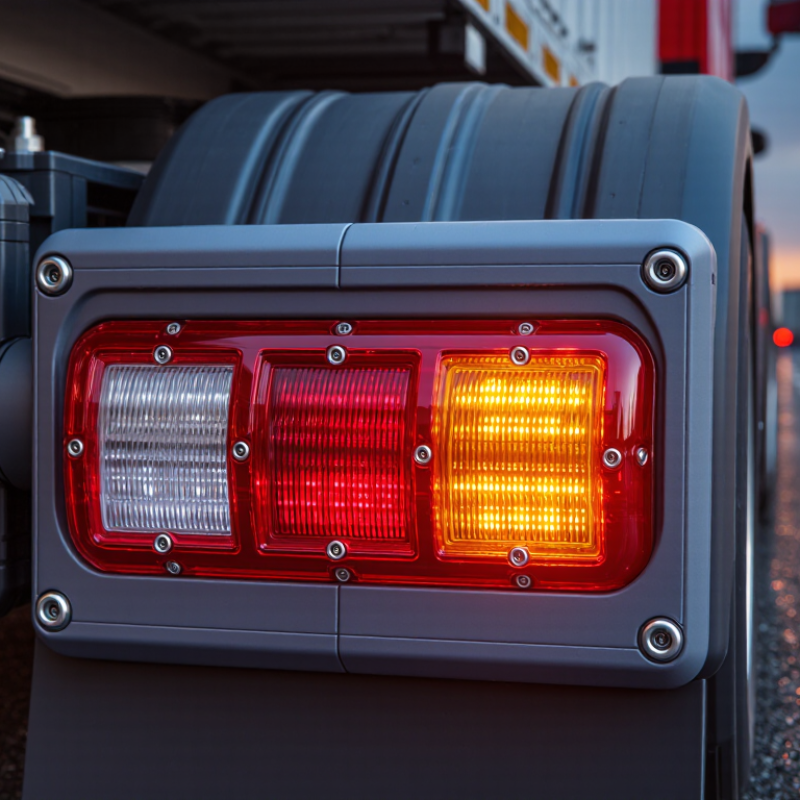
LED stop turn tail lights are integrated rear-light assemblies that signal braking, direction changes, and vehicle presence. “Stop” means the red brake lamp brightens. “Turn” means the amber or red indicator flashes. “Tail” provides a steady, lower-intensity rear light at night.

Unlike traditional incandescent bulbs, LEDs create light through semiconductor diodes. They respond quickly, use less electrical power, and fit compact housings. The U.S. Department of Energy reports that LED products can use at least 75% less energy and last up to 25 times longer than incandescent lighting. Automotive results vary, however. Heat, vibration, wiring quality, and poor thermal design can shorten service life.

For global buyers, compliance and optical accuracy matter as much as brightness. The U.S. National Highway Traffic Safety Administration regulates rear lighting under FMVSS 108. UNECE Regulation No. 48 also addresses lamp installation and signaling requirements in many markets. A reliable assembly should provide clear separation between tail and brake intensity, consistent flash timing, sealed connectors, and stable performance after vibration testing. Field experience shows that bright light alone is not enough. Glare, uneven illumination, or delayed signaling can create new risks. Buyers should verify photometric test reports, ingress protection results, operating voltage, and regional approval requirements before ordering. Some product data sheets remain vague. That deserves closer review.

Why Choose LED Stop Turn Tail Lights for Global Buyers?

LED stop turn tail lights combine rear-position, brake, and turn-signal functions in one lighting assembly. Compared with representative incandescent designs, LEDs typically provide lower power demand and faster light output.

The chart compares representative electrical power values commonly associated with a 21 W stop/turn bulb and a 5 W tail-light filament against typical LED design values of approximately 3 W for stop/turn and 1 W for tail illumination. Actual values vary by vehicle, lens design, optical efficiency, and applicable SAE or UNECE requirements.

How Do LED Stop Turn Tail Lights Work?

Why Choose LED Stop Turn Tail Lights for Global Buyers?

How Do LED Stop Turn Tail Lights Work?

LED stop turn tail lights use small light-emitting diodes instead of traditional filaments. When electrical current reaches the diodes, they produce light almost instantly. This quick response helps following drivers notice braking sooner. The circuit assigns different light levels to each function. A dim output shows the tail light. A brighter output signals braking. A flashing pattern indicates a turn.

Inside the assembly, a control circuit manages current and protects the LEDs from voltage changes. Turn signals usually receive an intermittent signal from the vehicle’s flasher system. Brake input creates a steady, stronger output. Some vehicles need an adapter because their original system expects higher electrical resistance. Without proper matching, the signal may flash too quickly. It happens fast.

Weather-resistant housings protect the circuit from rain, dust, and road spray. Reliable designs also use sealed connectors and balanced heat management. LEDs create less heat than bulbs, but the circuit still needs ventilation or a suitable thermal path. During installation checks, polarity, grounding, and connector fit deserve close attention. A bright lamp can still perform poorly with a weak ground.

One detail is easy to overlook: not every vehicle responds identically. Testing braking, tail illumination, and turn flashing after installation is essential. I have found that visual brightness alone is not enough. Viewing the lamp from different angles reveals uneven output or poor lens distribution. That small check can prevent an expensive mistake. For global buyers, clear wiring information and tested compatibility often matter as much as light output.

What Benefits Do LED Lights Offer Global Buyers?

Why Choose LED Stop Turn Tail Lights for Global Buyers?

LED stop, turn, and tail lights offer faster signaling, lower power demand, and stronger visual clarity. Their sharp illumination can appear more responsive than traditional bulbs.

The U.S. Department of Energy reports that LED lighting can use at least 75% less energy and last up to 25 times longer than incandescent lighting. This benchmark applies to general lighting, not every vehicle lamp. Still, it shows why efficiency attracts international buyers.

LED units also resist vibration and frequent switching, which suits commercial vehicles, trailers, and utility fleets. Many products provide a crisp red output and consistent brightness in rain, dust, or cold conditions. The International Energy Agency continues to identify efficient lighting as a major global energy-saving opportunity.

However, performance depends on heat management, lens quality, wiring, and vehicle compatibility. A cheaper lamp may fail early. That happens.

Tips: Check voltage, mounting space, connector type, and legal lighting requirements before ordering. Ask for photometric test data, ingress protection ratings, and operating-temperature details. Confirm whether the lamp supports separate stop, turn, and tail functions. Test the indicator rhythm after installation. Fit still matters.

Which Standards and Compatibility Factors Matter?

Why Choose LED Stop Turn Tail Lights for Global Buyers?

Which Standards and Compatibility Factors Matter?

For global buyers, LED stop turn tail lights should match regional standards and vehicle systems. In North America, SAE J585 and FMVSS 108 often guide stop lamp performance. European applications may require UNECE R6, R7, and R48 compliance. Other markets can apply their own vehicle lighting rules. Always verify the latest local requirements before ordering.

Compatibility begins with voltage, polarity, connector design, and mounting space. A 12-volt lamp cannot automatically replace a 24-volt unit. Check the lamp’s operating range, wire position, lens color, and light distribution. Red should remain clearly red, while amber indicators must be visible from required angles. Photometric test records are more useful than attractive product photos.

Modern vehicles may monitor current electronically. An LED replacement can trigger hyperflashing, warning messages, or intermittent signals. A load solution may help, but it can also create heat and waste energy. CAN-based systems need careful testing. I have seen identical-looking connectors fit poorly because pin assignments differed. That mistake is easy to miss.

Water resistance also matters. Look for a suitable IP rating, sealed wiring, and stable performance after vibration testing. Check trailer compatibility, especially when multiple lamps share one circuit. Samples should be tested on the actual vehicle, during daytime and darkness. A specification sheet is helpful, but real installation often reveals overlooked problems.

Why Choose LED Stop Turn Tail Lights for Global Buyers? - Which Standards and Compatibility Factors Matter?
Evaluation Dimension Relevant Standard or Technical Reference Typical Requirement or Fact Why It Matters for Global Buyers
Lighting Functions Stop, turn indicator, and rear position or tail-light requirements One LED assembly may combine several functions, but each function must provide the required color, intensity, visibility, and separation from other lamps. Confirm that the product is designed for the intended vehicle category and that the functions comply with the destination market’s lighting rules.
North American Compliance FMVSS No. 108; SAE J585 for stop lamps; SAE J588 for turn signal lamps Vehicles and lamps supplied for the United States or Canada may need photometric performance, mounting, visibility, color, and identification requirements specified by applicable regulations. Do not rely only on a general “DOT compliant” statement. Request applicable test evidence and verify whether the complete vehicle installation remains compliant.
European and UNECE Compliance UNECE Regulation No. 6 for direction indicators; UNECE Regulation No. 7 for front and rear position lamps, stop lamps, and end-outline marker lamps Approved lamps generally require the appropriate approval marking and must meet prescribed photometric and installation conditions. For European-market supply, check the exact UNECE function approval rather than assuming that an approval for one lamp function covers all functions in a combination lamp.
Other Market Rules National or regional vehicle-lighting regulations Australia, Japan, the Gulf region, South America, and other markets may apply local rules, adopted UNECE requirements, or modified national requirements. Identify the destination country before finalizing the design, markings, test plan, and mounting instructions.
Electrical Voltage Vehicle electrical-system specification Passenger vehicles commonly use nominal 12 V systems, while many commercial vehicles use nominal 24 V systems. Actual operating voltage is higher or lower during charging, starting, and transient events. Verify the lamp’s rated operating range and transient protection. A 12 V-only product should not be connected to a 24 V system without an approved voltage-conversion solution.
Current Draw and Load Compatibility Vehicle circuit design and lamp-monitoring strategy LED lamps normally draw less current than incandescent lamps. Some vehicles may interpret the lower load as a failed bulb and generate a warning or rapid-flash condition. Check whether a load resistor, electronic flasher, decoder, or vehicle configuration is required. Resistors can create heat and should be installed according to safety instructions.
CAN Bus and Electronic Control Vehicle body-control module and bulb-failure monitoring system Modern vehicles may monitor lamp current, pulse-width modulation, open circuits, short circuits, and communication-related faults. Confirm compatibility with the vehicle’s control architecture before purchase. A lamp that works on a simple circuit may require additional engineering on a networked vehicle.
Connector and Wiring Vehicle-specific connector, pinout, and harness design Common differences include connector shape, number of pins, pin assignment, ground location, wire polarity, and combined or separate stop-turn circuits. Request the connector drawing and pinout. A mechanically compatible plug does not guarantee electrically compatible function allocation.
Polarity and Grounding Vehicle wiring architecture Most automotive LED assemblies require correct positive and ground connections. Some installations use a shared ground, while others use separately controlled circuits. Verify positive and negative terminals, shared-ground requirements, and whether the lamp is suitable for positive-ground or negative-ground systems.
Light Color Applicable regional lighting regulation and photometric test method Stop and tail functions are generally red. Rear direction indicators may be red or amber depending on the market and vehicle configuration. Choose the correct lens and LED color for the destination market. A visually acceptable color may still fail the required chromaticity range.
Photometric Performance Applicable FMVSS, UNECE, national, or technical standard Compliance can depend on luminous intensity, illuminated area, vertical and horizontal angles, uniformity, and separation between functions. Ask for test results covering the complete lamp and intended mounting orientation, not only a bare LED or laboratory sample.
Visibility and Mounting Position Destination-market installation requirements Required mounting height, spacing, geometric visibility, lamp separation, and orientation vary by vehicle type and jurisdiction. Check the installation envelope and mounting instructions. A compliant lamp can become non-compliant when installed at an incorrect height, angle, or spacing.
Ingress Protection IEC 60529 IP Code IP ratings classify protection against solid objects and water under defined laboratory conditions. They do not by themselves certify vehicle-lighting compliance. Use an appropriate IP level for the location, such as exposed rear bodywork or trailer service. Also review sealing, pressure equalization, connector protection, and drainage design.
Environmental Durability Automotive environmental and vibration test specifications Rear lamps may experience vibration, thermal cycling, humidity, salt spray, dust, car-wash exposure, and road chemicals. Request evidence of environmental testing suitable for the intended vehicle application. Housing material, lens sealing, PCB coating, and thermal design all affect service life.
Thermal Management LED junction-temperature and housing design principles LED efficiency reduces energy use, but heat generated by LEDs and electronic drivers still needs to be transferred away from the junction and control components. Check the specified operating-temperature range, heat-sink or housing design, and performance after thermal aging to reduce premature dimming or failure.
Response Time Applicable stop-lamp and turn-signal performance requirements LEDs reach operating brightness faster than incandescent filaments, although the complete driver circuit still determines the actual switching behavior. Faster illumination can support clear driver communication, but the product should still be evaluated against the response-time requirements of the destination market.
Service Life and Maintenance Rated life under defined temperature, voltage, and duty-cycle conditions LED assemblies generally avoid filament burnout and can offer long service life, but drivers, seals, solder joints, and thermal interfaces can still fail. Compare the test conditions behind life claims. Confirm whether the assembly is replaceable, repairable, or supplied as a sealed unit.
Trailer and Commercial-Vehicle Use Trailer wiring standards, vehicle regulations, and 12 V or 24 V system requirements Trailers and heavy vehicles may use different voltage systems, long harnesses, multiplex wiring, and separate stop and turn circuits. Confirm voltage, connector type, circuit allocation, cable length, and compatibility with trailer monitoring modules before fleet deployment.
Approval Markings and Documentation Destination-market certification and marking requirements Markings may identify approved functions, category, voltage, approval number, or other regulatory information. The exact format depends on the jurisdiction. Request drawings, label photographs, declarations, test reports, installation instructions, and change-control information before importing at scale.
Interchangeability Original lamp dimensions and vehicle mounting interface Matching the external shape alone is insufficient. Hole spacing, lens clearance, gasket profile, flange depth, cable exit, and lamp orientation also affect fitment. Use dimensional drawings and a sample-fit inspection to prevent water ingress, body interference, loose mounting, or incorrect beam orientation.
Purchase Verification Checklist Technical data sheet, sample test, and destination-market review Verify voltage range, current draw, pinout, functions, color, approval scope, IP rating, temperature range, dimensions, and installation orientation. A structured pre-purchase check reduces compatibility failures, customs delays, warranty claims, and non-compliant vehicle installations.
Important: Regulatory requirements vary by country, vehicle category, lamp function, and installation position. The applicable authority, current regulation, and complete vehicle installation should be verified before production, importation, or road use.

How Should Buyers Evaluate Suppliers and Products?

Why Choose LED Stop Turn Tail Lights for Global Buyers?

Global buyers should evaluate LED stop turn tail lights beyond brightness and price. A dependable product needs clear light separation, fast response, stable color, and strong visibility in rain or dust. Check the housing material, lens sealing, connector quality, and heat management. A lamp that looks bright on a showroom table may perform poorly after long road exposure.

Request test data for photometric performance, water resistance, vibration, and temperature cycling. Regional vehicle requirements can differ, so confirm compatibility before placing a large order.

Supplier evaluation deserves equal attention. Ask for factory quality procedures, production traceability, inspection records, and realistic delivery capacity. Review a physical sample, not only catalog images. Install it on a similar vehicle and inspect the wiring, mounting points, and warning behavior. Reliable suppliers explain limitations clearly. That matters. Be cautious when test reports lack dates, methods, or product identification. I have found that unclear documentation often creates more risk than a higher unit price. Still, one sample cannot prove every production batch, so ongoing inspections remain necessary.

Tips: Compare at least three suppliers using the same checklist. Request samples from current production. Confirm warranty terms in writing. Check whether replacement parts are available. Test the lamp after repeated on-and-off cycles. Keep records of defects, response time, and corrective actions. A small trial order may reveal weaknesses early. Do not ignore minor issues; loose terminals and uneven sealing can become costly later.

Article Source: