Top China On Board Marine Charger Manufacturers
Choosing an On Board Marine Charger is not simply a matter of comparing output ratings. A charger must suit the battery chemistry, bank capacity, available shore power, and the boat’s daily electrical demand. Nigel Calder, author of Boatowner’s Mechanical and Electrical Manual, has emphasized the importance of matching charging equipment to the vessel’s batteries and electrical system. A concise paraphrase of that guidance is: “Choose charging equipment for the batteries and loads actually aboard.” This is a paraphrase, not a verified verbatim quotation.
For buyers comparing leading China-based manufacturers, the useful questions are practical. Does the maker publish clear charging profiles for lithium, AGM, and flooded batteries? Are output ratings supported by test data? Can the unit manage heat in a cramped engine-room locker? Look for documented protection against reverse polarity, over-temperature, and short circuits, plus wiring diagrams that specify cable sizes and installation clearances. Details matter.
Supplier claims deserve careful checking. A polished product page does not prove durability in salt air, vibration, or long charging cycles. Ask for technical documentation, production quality controls, warranty terms, and evidence from relevant marine testing. Compare service access and replacement-part availability, too. A lower price may be attractive, but downtime at anchor can cost more than the initial saving. Even a well-specified charger can be a poor fit when installation conditions are overlooked. The strongest manufacturer shortlist combines transparent engineering, consistent production, and support that remains useful after delivery.
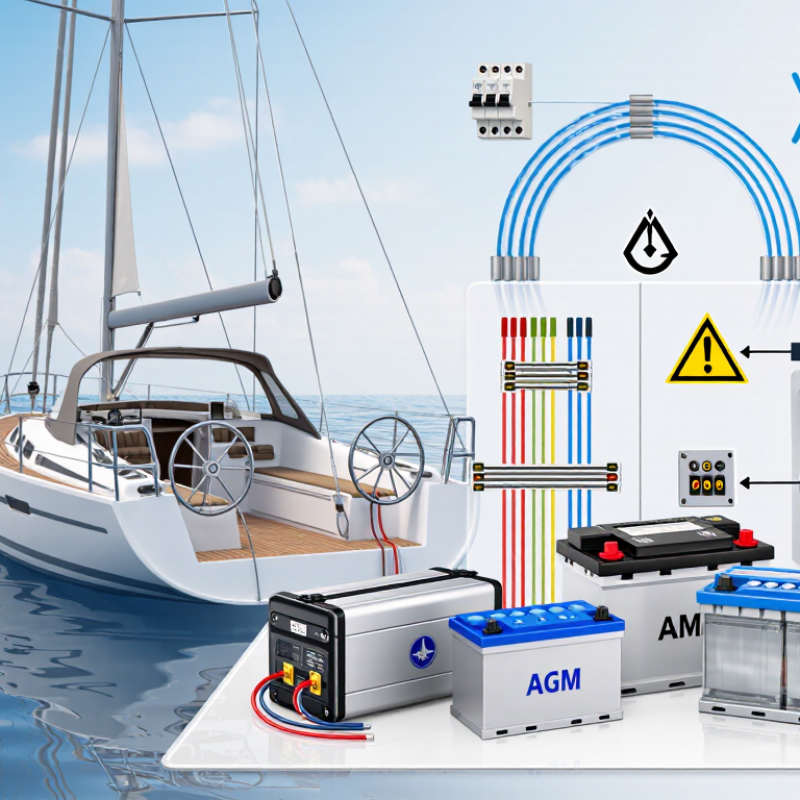
What Is an Onboard Marine Charger?
An onboard marine charger is a fixed electrical device that replenishes a boat’s batteries while the vessel is connected to shore power or another suitable AC supply. It converts incoming AC electricity into controlled DC charging current. Unlike a portable charger, it is installed aboard and wired into the vessel’s battery system.
A capable charger adjusts its output to suit the battery type and charging stage. This helps reduce the risk of undercharging or excessive charging. On a damp, vibrating boat, installation details matter: connections should be secure, cables correctly sized, and the unit placed where airflow is not blocked. That matters offshore.
A charger’s output rating should match the battery bank and expected charging time, but bigger is not automatically better. Compatibility with lithium batteries, if used, must be confirmed in the charger’s specifications. One detail is easy to miss: the charger does not replace every charging source, such as an alternator, and the full electrical system still needs careful assessment.
Tips: Check the charger’s input voltage, battery settings, and output current before installation. Keep it dry and ventilated. If wiring or battery chemistry is unclear, ask a qualified marine electrician; guessing can be costly.
How Marine Battery Chargers Work and Are Rated
A marine charger converts alternating current from shore power or a generator into regulated direct current for a battery bank. Many lead-acid systems use bulk, absorption, and float stages: current is high at first, then voltage is held while the battery fills, before maintenance charging begins. Lithium batteries need a compatible charging profile and battery-management-system limits. The details matter. A charger that fits the voltage may still be wrong for the chemistry.
Read the rating as a set of limits, not a single power number. A 12-volt charger rated at 30 amps delivers about 360 watts at nominal voltage; a 24-volt, 15-amp unit is similar in output. These are arithmetic examples, not guaranteed real-world performance. Check maximum output current, supported battery types, temperature derating, and enclosure protection for wet locations. Also check whether the stated current is shared across multiple banks. It often is.
The European Maritime Safety Agency’s 2023 guidance on onboard battery energy storage identifies thermal runaway and heat propagation as important safety concerns. That makes correct charging limits and ventilation practical checks, not brochure details. IEC 60092-507:2014 provides installation requirements for electrical systems on small vessels. A rating label cannot confirm a safe installation by itself. I would still verify cable size, fuse protection, and the manufacturer’s charging profile against the vessel’s actual battery bank. Real boats are messier.
Key Features of China-Made Marine Chargers
China-made onboard marine chargers are designed for tight engine-room spaces, fluctuating supply, and persistent salt exposure. The IMO’s Fourth Greenhouse Gas Study (2020) estimated that shipping produced 2.89% of global human-caused carbon dioxide emissions in 2018. That figure does not measure charger demand, but it highlights the pressure to improve vessel energy efficiency. Salt spray matters.
Key features include galvanic isolation, over-temperature protection, and adjustable charging profiles for different battery chemistries. Wide input-voltage tolerance can help manage unstable generator output, while CAN communication supports monitoring and battery coordination. Check efficiency curves at realistic loads, not only peak ratings. Marine electrical installations and electromagnetic compatibility are covered by IEC 60092 and IEC 60533; request test documentation and verify which editions and test conditions apply. An IP rating alone does not prove resistance to every onboard exposure.
Tips: Match charger output to the battery maker’s specified voltage and current limits. Confirm cooling needs, cable length, mounting clearance, and alarm interfaces before installation. Ask for salt-mist and vibration test records when relevant. Specs can look convincing on paper; real vessel conditions may be less tidy.
Leading Onboard Marine Charger Manufacturers in China
Leading onboard marine charger manufacturers in China serve vessel builders, refit yards, and distributors with systems designed for confined, demanding spaces. A capable supplier understands more than output ratings. It considers battery chemistry, shore-power input, engine-room heat, vibration, and moisture exposure. Small installation details matter. Cable access can decide whether routine inspection takes minutes or becomes awkward.
Experienced engineering teams confirm charging profiles and protection behavior before production. Ask how units respond to reverse polarity, overheating, overloads, and unstable input. Request test records for the exact model under consideration. Clear wiring diagrams and practical manuals are useful signs of mature technical support. Samples should be checked under realistic loads, not only on a clean workbench. That distinction is easy to miss.
For procurement, compare thermal performance, enclosure design, serviceability, and replacement-part availability alongside price. Factory audits and traceable quality checks can help buyers assess consistency across batches. Still, a polished sample does not guarantee every production run will match it; this deserves scrutiny. Share the vessel’s electrical layout early, then confirm compatibility with the battery supplier and installer. Better questions prevent costly surprises.
How to Compare Manufacturers and Choose a Supplier
When comparing marine charger manufacturers in China, start with the vessel’s actual electrical setup. Check the battery chemistry, bank capacity, charging current, and available AC input. A unit for a small cabin boat may not suit a vessel with several battery banks. Match the specifications to your installation, not just the largest output number.
Look closely at test records and technical documents. Ask how the charger handles heat, vibration, moisture, and salt-laden air. Confirm its enclosure rating, electrical isolation, temperature limits, and protections against overcurrent or reverse polarity. Request clear wiring diagrams and installation guidance. Useful answers are specific; vague promises are not.
Then compare supplier support and production consistency. Ask whether sample units can be tested under a realistic load, and whether the supplier can provide inspection reports for production batches. Check response times for technical questions and availability of replacement parts. A polished brochure can still leave gaps. I would not choose on price alone, though I have to admit that comparing offers is not always straightforward. One supplier may include better documentation, while another quotes a lower unit cost. Weigh those differences against the charger’s expected operating conditions and the support you may need later.