
Skip to Content
chevron-left chevron-right chevron-up chevron-right chevron-left arrow-back star phone quote checkbox-checked search wrench info shield play connection mobile coin-dollar spoon-knife ticket pushpin location gift fire feed bubbles home heart calendar price-tag credit-card clock envelop facebook instagram twitter youtube pinterest yelp google reddit linkedin envelope bbb pinterest homeadvisor angies

China Top Zigbee Fan Coil Thermostat Manufacturers

China has become an important sourcing market for smart building controls, including the zigbee fan coil thermostat. Manufacturers serve hotels, offices, apartments, hospitals, and other commercial projects. Their products may control two-pipe or four-pipe fan coil systems, electric valves, heating, cooling, and ventilation speeds.

Selecting a reliable manufacturer requires more than comparing prices. A capable supplier should explain Zigbee communication, network range, pairing methods, app compatibility, and gateway requirements. Product testing should cover temperature accuracy, relay performance, screen visibility, and stable operation during daily use. Factory experience also matters. Ask for wiring diagrams, sample units, installation guides, and clear technical support.

In practical projects, small details often affect commissioning. A thermostat may fit the wall box but fail to match the valve actuator. A gateway may connect successfully but perform poorly through concrete walls. These issues are easy to overlook. They should not be.

This guide reviews China’s leading zigbee fan coil thermostat manufacturers through product capability, customization, quality control, certifications, and service reliability. It also considers OEM and ODM experience, production consistency, communication speed, and after-sales support. Public information can be incomplete, and supplier claims require verification. No shortlist is perfect. Buyers should test samples under real project conditions before placing large orders.

The goal is practical and balanced guidance. It helps importers, contractors, distributors, and building owners compare suppliers with greater confidence. A trustworthy manufacturer should offer more than attractive hardware. It should provide dependable engineering, transparent documentation, and solutions that remain stable after installation.
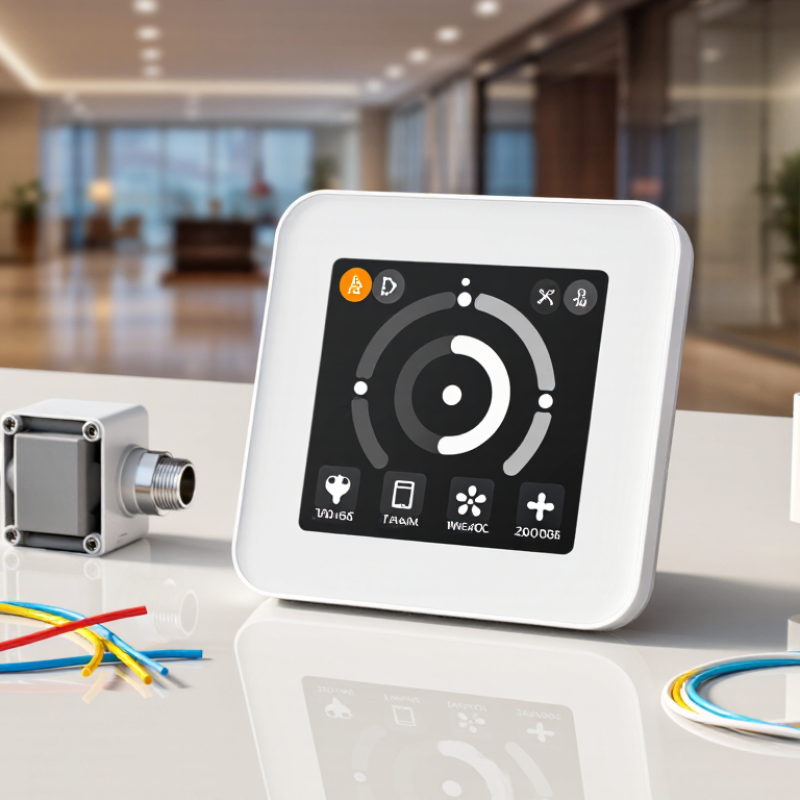
China Top Zigbee Fan Coil Thermostat Manufacturers

China’s Zigbee Fan Coil Thermostat Market: Standards and 2024 Industry Data

China Top Zigbee Fan Coil Thermostat Manufacturers

China’s Zigbee fan coil thermostat market grew with smart offices, hotels, and apartment projects in 2024. Public industry reports showed stronger demand for wireless room control, retrofit installation, and cloud-connected building systems. Exact market figures remain inconsistent, because suppliers classify thermostats differently.

That limitation matters.

Chinese manufacturers commonly design products around IEEE 802.15.4 radio requirements and Zigbee 3.0 interoperability. They also reference IEC-based safety practices, electromagnetic compatibility testing, and relevant Chinese control-device standards. A reliable thermostat should support two-pipe or four-pipe fan coils, three-speed fans, valve control, and temperature calibration. Some projects also require 0–10 V output or gateway access through BACnet and Modbus.

Standards alone do not guarantee field performance.

2024 tender observations suggested wireless models were increasingly selected for renovation projects, where new cabling was expensive. Sample-based supplier data often placed wireless control adoption above 30 percent in selected commercial projects, not the whole market. Results varied sharply by city and building type. Installation teams reported faster room deployment, but mesh reliability remained sensitive to concrete walls, metal ducts, and gateway placement. Battery life also deserves closer testing. Some published figures assume ideal transmission intervals. Real buildings are less polite. Buyers should request radio-distance tests, valve-cycle records, cybersecurity documentation, and independent EMC reports before approving a supplier.

How Zigbee Fan Coil Thermostats Work: 2.4 GHz, HVAC Modes, and BACnet

A Zigbee fan coil thermostat uses the 2.4 GHz radio band to exchange data with a coordinator or gateway. This frequency is widely available and supports low-power wireless communication. In a hotel room, the thermostat can report room temperature every few minutes. It can also receive commands without new control wiring.

The device normally manages cooling, heating, fan speed, and automatic changeover. A three-speed fan setting may select low, medium, or high airflow. Some systems also support valve control, sleep schedules, and window-contact inputs. In practical commissioning, installers should check signal strength near metal ducts and electrical cabinets. Thick concrete walls can weaken communication. Small details matter.

BACnet integration usually requires a compatible gateway between the Zigbee network and the building management system. The gateway maps values such as room temperature, operating mode, fan status, and setpoint. BACnet/IP is common in modern facilities, while BACnet MS/TP may suit existing field networks. Point naming must remain consistent. Otherwise, a correct command may control the wrong room.

Manufacturers should verify radio performance, valve compatibility, temperature accuracy, and recovery after power loss. Testing only one thermostat is not enough. A crowded 2.4 GHz environment may create delays. That issue is easy to underestimate. Wireless control also needs documented commissioning records, firmware procedures, and access protection. The design may look simple, but dependable HVAC operation requires repeated testing under real building conditions.

China Top Zigbee Fan Coil Thermostat Manufacturers - How Zigbee Fan Coil Thermostats Work: 2.4 GHz, HVAC Modes, and BACnet
Data Dimension Typical Specification or Capability Practical HVAC Meaning
Wireless Frequency 2.4 GHz ISM band Zigbee fan coil thermostats use the globally available 2.4 GHz industrial, scientific and medical radio band. The band is shared with technologies such as Wi-Fi and Bluetooth, so good channel planning and suitable placement are important.
Zigbee Network Type Low-power wireless mesh network Powered devices can generally act as routers, allowing messages to travel through multiple nodes to a coordinator or gateway. Battery-powered end devices normally conserve energy by remaining in sleep mode.
Typical Indoor Communication Range Approximately 10–30 m per hop in many buildings Actual range depends on walls, metal structures, floor layout, antenna design and radio interference. A mesh network can extend coverage beyond the direct range of one thermostat.
Security AES-128 link-layer encryption with network authentication options Secure commissioning, protected network keys and controlled joining procedures help reduce the risk of unauthorized access. Security settings should be configured by the building automation administrator.
Temperature Control Room temperature sensing with configurable setpoint The thermostat compares measured room temperature with the target setpoint and commands heating, cooling or fan operation. Sensor accuracy and installation location affect control quality.
Common HVAC Modes Off Cooling Heating Auto Fan Only Available modes vary by firmware and fan coil unit configuration. Auto changeover may require a suitable valve arrangement, changeover sensor or a supervisory control sequence.
Fan-Speed Control Typical 3-speed control: Low, Medium and High Some models also provide Auto fan operation or a variable-speed output. The thermostat output must match the fan coil unit’s relay, triac or controller interface.
Valve and Actuator Control Commonly 2-pipe or 4-pipe fan coil configurations Two-pipe systems typically use one heating or cooling water circuit, while four-pipe systems can provide separate heating and cooling circuits. Output type and actuator voltage must be checked before installation.
Typical Outputs Relay, triac or low-voltage control outputs, depending on model Output ratings are product-specific. The thermostat should not be connected directly to a load unless the rated voltage, current, inrush capacity and electrical protection are suitable.
Temperature Setpoint Range Commonly around 5–35 °C, configurable by application Commercial buildings often apply narrower user-adjustable limits to reduce energy waste and prevent extreme setpoints. The exact range is determined by the thermostat firmware.
Power Options Low-voltage wired power or mains-powered designs Fan coil thermostats that control valves and fan motors are commonly powered from the HVAC control circuit or a dedicated supply. The specified voltage must match the installation design.
Local User Interface Buttons, touch controls, display and optional occupancy functions Local controls may provide setpoint adjustment, mode selection, fan-speed selection, schedule override and fault indication. Interface features differ between product configurations.
Sensor Inputs Internal room sensor; optional external or changeover sensor on some models An external sensor can support remote temperature measurement, floor or pipe sensing, or water-system changeover detection when supported by the control design.
Commissioning Network joining, device addressing and parameter configuration Commissioning normally includes selecting the correct HVAC application, assigning the thermostat to a room or zone, setting fan and valve behavior, and verifying commands at the fan coil unit.
BACnet Connectivity Usually achieved through a Zigbee-to-BACnet gateway Zigbee and BACnet are different communication technologies. A gateway or building management controller typically maps thermostat values and commands into BACnet objects such as analog values, binary values and multistate values.
BACnet Transport BACnet/IP or BACnet MS/TP, depending on the gateway BACnet/IP commonly uses Ethernet or an IP network, while BACnet MS/TP uses an RS-485 bus. The gateway must support the required transport, object types and data-point mapping.
Typical BACnet Data Points Room temperature, setpoint, operating mode, fan speed, valve command and alarm status These points allow a building management system to monitor conditions, adjust operating parameters and coordinate fan coil operation with schedules, occupancy and energy-management strategies.
Interoperability Dependent on Zigbee profile, device clusters, gateway support and implementation Devices using the same radio frequency are not automatically interoperable. Confirm supported Zigbee profiles, endpoints, clusters, command formats and gateway compatibility before specifying equipment.
Energy-Saving Functions Scheduling, occupancy setback, temperature limits and networked supervision Energy performance depends on the complete HVAC sequence, valve control, fan strategy, ventilation requirements, building envelope and commissioning quality—not only on the wireless thermostat.
Installation Considerations Correct wall position, clear airflow, reliable power and RF coverage Avoid direct sunlight, drafts, heat-producing equipment, concealed obstructions and locations immediately beside doors or supply-air outlets. Perform a wireless survey in buildings with dense walls or metal partitions.

Top Chinese Manufacturers: OEM Capacity, Certifications, and Product Scope

China’s top Zigbee fan coil thermostat manufacturers usually combine OEM flexibility with practical HVAC expertise. They can adapt enclosures, screen layouts, wiring terminals, logos, and communication settings for different projects. Many support Zigbee 3.0, two-pipe or four-pipe fan coil control, valve outputs, and remote temperature adjustment. Product scope may also include sensors, gateways, hotel controls, and building management integration.

Certification should be checked model by model. Reliable suppliers can provide quality-system records, EMC test reports, safety documents, and market-specific approvals such as CE or RoHS. These documents must match the exact thermostat version, not a similar product. Factory audits, sample testing, and firmware demonstrations reveal more than a polished catalogue. One common weakness is delayed documentation after hardware revisions. That deserves attention.

Tips: Request three samples from the same production line. Test temperature accuracy, relay noise, Zigbee pairing, and recovery after power loss. Ask for an OEM timeline covering artwork, tooling, firmware, pilot production, and inspection. Confirm annual capacity and spare-part support in writing. A low quotation can hide limited testing or weak after-sales support. Choose measurable evidence over confident promises.

Performance Benchmarks: ±0.5°C Accuracy, 16A Loads, and Zigbee 3.0

China Top Zigbee Fan Coil Thermostat Manufacturers

For fan coil thermostat manufacturers, ±0.5°C accuracy is a useful performance benchmark. It should be verified across 10–35°C, not only at room temperature. Sensor placement, airflow, and wall temperature can shift readings. Real rooms are messier. ASHRAE research emphasizes thermal comfort depends on air temperature, humidity, air movement, and clothing, not temperature alone.

A 16A load rating also needs careful interpretation. It usually describes the relay’s resistive-load capacity, not every fan motor condition. Inductive motors create inrush current and may require derating, snubber protection, or independent load testing. IEC 60730 safety requirements support evaluating abnormal operation, switching endurance, and temperature rise. A stronger factory report should show repeated switching results, terminal heating, and performance after power interruptions.

Zigbee 3.0 adds another practical benchmark. Its standardized application framework supports device discovery, commissioning, and interoperability across compliant ecosystems. However, mesh reliability depends on network density, interference, and building materials. The International Energy Agency’s Buildings 2023 report estimates that buildings consume about 30% of global final energy. Better HVAC control can reduce waste, but claimed savings need field measurement. A 2024 pilot may perform differently in a concrete hotel. That limitation matters. Manufacturers should publish calibration methods, relay test conditions, communication recovery time, and measured energy data, rather than relying on headline specifications.

Buyer’s Guide: EN 60730, CE Compliance, MOQ, and Total Cost Factors

China Top Zigbee Fan Coil Thermostat Manufacturers

Choosing a China-based Zigbee fan coil thermostat manufacturer requires more than comparing catalog prices. A reliable supplier should explain how its controller meets relevant EN 60730 safety requirements. Ask for test reports, declarations, and the exact product model covered. A certificate copy alone is not enough.

CE compliance should include technical documentation, electrical safety checks, and electromagnetic compatibility evidence. Request samples before approving a large order. Test pairing distance, valve response, temperature accuracy, and recovery after power loss. Small details matter. A thermostat that disconnects beside a concrete wall may create costly service calls. Factory experience with HVAC wiring also reduces installation mistakes.

MOQ directly affects cash flow. Low MOQ may suit a pilot project, but unit prices can rise sharply. High MOQ can lower costs while increasing storage risk. Calculate the total cost, including tooling, firmware changes, packaging, shipping, import charges, installation labor, and warranty replacements. Ask whether Zigbee gateway integration is included or charged separately. Some quotations look attractive because they exclude support. That is a weakness worth challenging. I would also request a written production schedule and a sample approval record. These documents improve accountability, although they cannot replace an independent inspection. Choose the manufacturer that provides clear evidence, stable communication, and realistic cost assumptions.

China Top Zigbee Fan Coil Thermostat Manufacturers – Buyer’s Guide

Indicative Total-Cost Planning Model

This planning model shows practical cost categories for sourcing Zigbee fan coil thermostats. EN 60730-1 covers general automatic electrical control requirements, while EN 60730-2-9 applies to temperature-sensing controls. CE marking requires the manufacturer to complete the applicable conformity assessment and maintain technical documentation; it is not itself a third-party product certificate. Actual totals depend on specifications, test scope, order quantity, tooling, packaging, shipping terms, and requested documentation.