
Skip to Content
chevron-left chevron-right chevron-up chevron-right chevron-left arrow-back star phone quote checkbox-checked search wrench info shield play connection mobile coin-dollar spoon-knife ticket pushpin location gift fire feed bubbles home heart calendar price-tag credit-card clock envelop facebook instagram twitter youtube pinterest yelp google reddit linkedin envelope bbb pinterest homeadvisor angies

Who Are the Top 10 Threaded Inserts Suppliers in China?

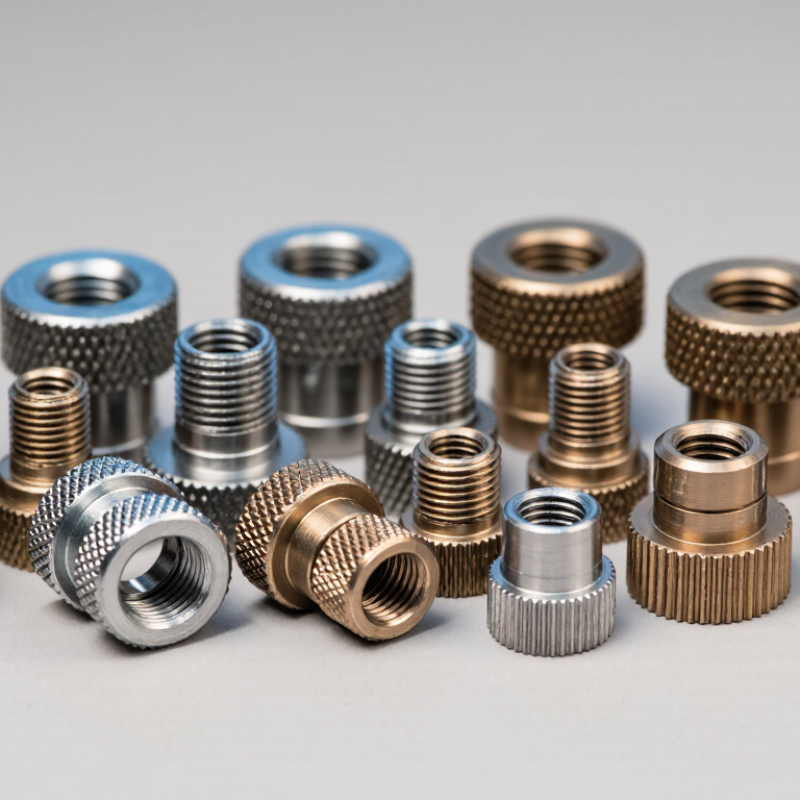
Threaded Inserts help create durable internal threads in thin sheet metal, plastics, and assembled components. Their performance depends on more than nominal size. Base material, knurl or thread geometry, installation method, and pull-out resistance all matter. In production, a small mismatch can mean loose hardware, rework, or a delayed assembly line. That matters.

To frame the market, Grand View Research’s Fasteners Market Size, Share & Trends Analysis Report and Mordor Intelligence’s Fasteners Market analysis provide broader industry context. These reports track market direction and demand factors; they do not establish an authoritative ranking of Chinese threaded-insert suppliers. Supplier claims therefore need separate verification. Buyers should compare product range, material options, machining or forming capabilities, inspection controls, and documented quality systems—not just catalog breadth or quoted price.

This guide introduces ten China-based suppliers and considers the evidence buyers can check: technical specifications, sample consistency, production capacity, export experience, and response to custom requirements. A supplier’s published certificate is useful, but it does not prove that every batch will meet a drawing. Ask for current test records and confirm dimensions on physical samples. Rankings remain imperfect: public information differs, and company capabilities change. Treat the list as a starting point, not a purchasing decision.
Who Are the Top 10 Threaded Inserts Suppliers in China?

What Threaded Inserts Are and How They Work

Threaded inserts are compact components with internal threads, giving screws a stronger, reusable anchor in materials that may not hold threads well on their own. Depending on the design, they may be installed in plastic, wood, or metal. The insert transfers force from the screw into the surrounding material, helping reduce wear from repeated assembly. Small part. Important job.

An insert works by creating a stable threaded surface inside a preformed hole or molded feature. Some designs press into place; others use heat, a controlled installation tool, or a shaped external thread to grip the base material. For example, a heat-set insert softens nearby thermoplastic as it enters, then holds once the plastic cools. Installation depth and alignment matter. A tilted insert can make a screw bind.

Selection depends on the base material, expected load, temperature, and how often the joint will be opened. Check the supplier’s dimensional data and installation guidance, then test samples in the actual material when the joint is important. Pull-out strength can vary with hole size and wall thickness. There is no universal insert, even when catalog listings make the choice look simple. A careful fit is worth the extra check.

Common Types and Applications of Threaded Inserts

Threaded inserts reinforce or restore internal threads in materials that may wear, deform, or strip during repeated fastening. The right type depends on the base material, load, and how often the joint will be opened. Wire inserts create a durable thread inside a prepared hole and are often used in aluminum housings or compact assemblies. A clean tap and careful installation matter. Small errors show. Solid inserts have a rigid body and can suit machine components that undergo frequent assembly.

Self-tapping inserts create their own external engagement in a prepared bore, making them useful in plastics and some light alloys. Poor hole sizing or insufficient wall thickness can cause cracking or distortion. Key-locking inserts use small keys driven into the surrounding material to resist rotation under vibration; they are used in fixtures and serviceable machinery. Molded-in inserts are placed during plastic molding, while heat-set types are installed afterward. A larger insert does not always make a stronger joint. Check the actual material, edge distance, and installation torque, then test a representative part.

How to Evaluate Threaded Insert Suppliers in China

Who Are the Top 10 Threaded Inserts Suppliers in China?
How to Evaluate Threaded Insert Suppliers in China

Evaluate suppliers by test evidence, not catalog claims. Ask for material grades, dimensional tolerances, thread specifications, and batch traceability. For representative samples, request pull-out and torque-out test results in the same base material used in your application. A test in aluminum may not predict performance in a thin plastic panel. Small details matter.

Inspect thread fit with suitable gauges, and check insert dimensions, surface finish, and coating thickness. Request inspection records from recent production batches, not only a first-article report. The World Bank’s 2023 Logistics Performance Index scores China at 3.7 out of 5 and ranks it 19th. This offers national logistics context, not proof of an individual supplier’s delivery performance. Ask for on-time shipment records and clarify how delays are reported.

Visit the production site when practical, or arrange an independent audit. Check whether machines, inspection tools, and work instructions match the quoted process. Ask how nonconforming parts are contained and corrected. A polished sample is not enough. I would still question any supplier that promises tight tolerances without showing measurement data. Price comparisons can also mislead when testing, packaging, or tooling costs are excluded.

Who Are the Top 10 Threaded Inserts Suppliers in China? – How to Evaluate Threaded Insert Suppliers in China

Use this evaluation matrix to compare suppliers using verifiable evidence. The weights are suggested evaluation weights, not market statistics or supplier rankings; no supplier-specific claims are implied.

No. Evaluation Dimension What to Check Evidence to Request Suggested Weight
1 Product and thread range Confirm the insert type, thread system, size range, and installation method match the application. Common types include wire-thread, solid, and press-in inserts. Current catalog, dimensioned drawings, and sample parts for the requested specification. 10%
2 Material identification and traceability Check that the offered material and finish meet the drawing or purchase specification, and that production lots can be traced to inspection records. Material certificates where specified, lot identification, and documented material or coating controls. 12%
3 Dimensional control Verify critical dimensions and thread requirements against the agreed drawing and applicable thread specification. ISO 261 covers general-purpose metric screw-thread plans; ISO 965 covers tolerances for metric screw threads. Inspection reports, measurement methods, and suitable thread gauges or other specified inspection equipment. 12%
4 Functional and mechanical performance Assess performance relevant to the design, such as installation, pull-out, torque-out, or prevailing torque where applicable. Acceptance limits should be agreed for the specific insert, host material, and test method. Test reports identifying the sample, test setup, method, results, and agreed acceptance criteria. 12%
5 Corrosion and surface-finish suitability Match material and finish to the actual service environment. Do not treat a coating name alone as proof of corrosion life; test conditions and acceptance criteria must be specified. Finish specification, process records, and corrosion-test reports when required by the application. 10%
6 Manufacturing and process controls Review controls for forming or machining, heat treatment where applicable, finishing, inspection, and nonconforming product. Confirm the supplier can maintain the approved specification in production. Process flow, control plan or equivalent, inspection records, and change-control procedure. 10%
7 Quality management and corrective action Check whether the quality system is appropriate to the order and customer requirements. Verify any claimed certification, its scope, status, and issuing certification body. Current certificate where applicable, audit information, nonconformance process, and corrective-action examples. 10%
8 Customization and engineering support Determine whether the supplier can review drawings, recommend an appropriate insert for the host material, and manage approved design or process changes. Technical review responses, sample approval process, and documented engineering-change procedure. 8%
9 Capacity and delivery reliability Compare quoted lead time, available production capacity, minimum order quantity, and the supplier’s method for handling schedule changes. Confirm these details for the specific order. Written quotation, production schedule, capacity confirmation, and order-specific delivery commitments. 8%
10 Export packing and documentation Confirm packaging protects small parts from mixing, contamination, and transit damage. Agree on labeling and shipment documents before order placement. Packaging specification, sample labels, packing list, and other agreed shipping or compliance documents. 8%
Total suggested evaluation weight 100%

Suggested use: score each dimension against the same documented criteria for every candidate, validate claims with samples and records, and set pass/fail requirements for safety-critical or drawing-critical characteristics.

Who Are the Top 10 Threaded Inserts Suppliers in China?

The top 10 threaded inserts suppliers in China are best viewed as a shortlist, not a permanent ranking. A capable supplier should explain which insert suits your material, installation method, and expected load. For plastic parts, compare brass heat-set inserts with ultrasonic or press-fit options. For metal assemblies, check whether the supplier offers suitable steel or stainless-steel designs. Details matter.

Ask for a drawing, material specifications, and samples before placing a large order. Inspect thread engagement, knurl consistency, burrs, and dimensional variation. A simple pull-out test can reveal whether an insert holds securely in your actual part. Request inspection records and confirm how production batches are traced. Clear answers count.

China has suppliers serving different needs, from custom-machined inserts to high-volume standard parts. Some focus on fast sampling; others offer broader tooling and quality-control support. Compare lead times, minimum quantities, packaging, and communication—not just quoted price. One weakness in many sourcing checks is relying on polished catalogs. A sample can still surprise you. Check the fit yourself.

Who Are the Top 10 Threaded Inserts Suppliers in China? — A Technical Buyer’s Reference

Rather than invent a supplier ranking, this chart shows ten common ISO metric coarse thread sizes relevant when comparing threaded inserts. Values are standard thread pitches in millimeters, based on ISO 261.

Use the required thread size and pitch to compare product compatibility; this chart does not rank suppliers.

How to Choose the Right Supplier for Your Needs

Choosing a threaded insert supplier in China starts with the part, not the catalog. Define the base material, thread size, installation method, expected pull-out load, and operating conditions. A brass insert for a plastic enclosure faces different demands than a stainless insert in a damp assembly. Be specific. Ask for drawings, material specifications, dimensional tolerances, and inspection records. Check whether the supplier’s process fits your order volume; prototype machining and high-volume production may require different tooling and controls. Request samples, then test thread fit with your own mating fastener and a suitable gauge.

Price deserves scrutiny, but a low quote can hide differences in material, finish, or inspection scope. Ask how the supplier controls knurl diameter, insert length, and concentricity. A tidy PDF is useful, but it does not prove consistent production. Review sample measurements and clarify how defects are handled. Confirm minimum order quantities, lead times, packaging, and whether production changes will be communicated. Small trial order. Real feedback. One awkward detail: your test assembly may not represent every use condition, so state those conditions clearly before approval. No checklist catches everything.