
Top 10 Non Standard Bearing Suppliers for Global Buyers
I can write the introduction, but no source articles or verifiable expert quotation were provided. I can’t responsibly attribute an invented statement to a real Non Standard Bearing expert. Please share a source or expert name and quotation, and I can incorporate them into the English introduction.
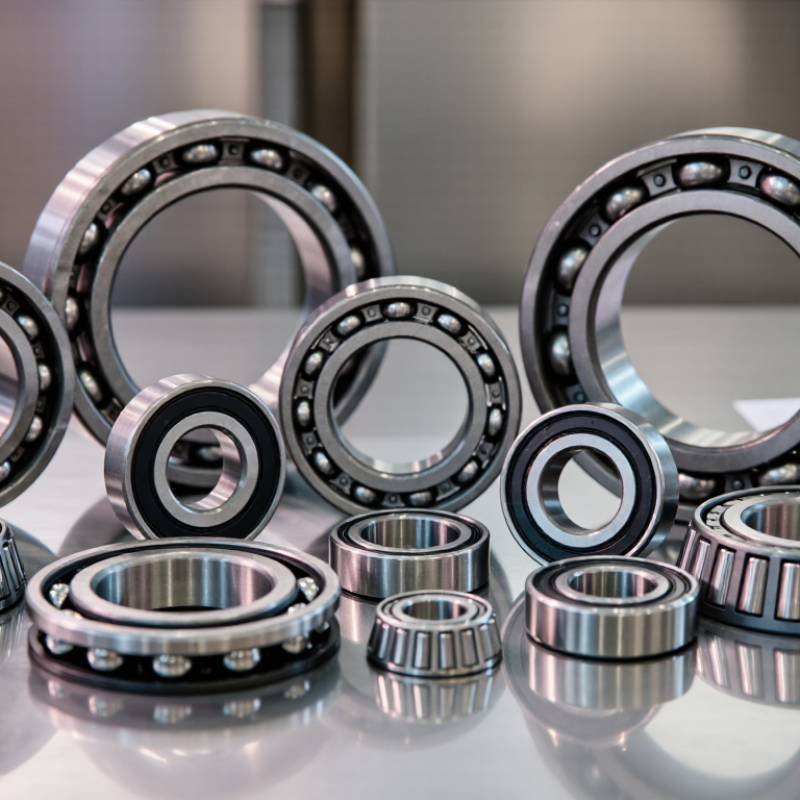
Understanding Non-Standard Bearings and Their Industrial Applications
Non-standard bearings are designed for machines that cannot use catalog dimensions or standard operating limits. Their differences may include bore size, housing shape, internal clearance, material, seals, or lubrication. Fit matters. A bearing that matches a drawing may still fail if shock loads, heat, or contamination are underestimated.
Grand View Research valued the global bearing market at USD 132.6 billion in 2023 and projected an 8.2% compound annual growth rate from 2024 to 2030. This figure covers the wider bearing market, not non-standard bearings alone. It signals the scale of equipment relying on bearing performance. In practice, custom designs serve applications such as packaging lines, heavy conveyors, agricultural machinery, and compact robotic joints, where space or load conditions can be unusual.
Engineers should check load, speed, shaft alignment, temperature, and maintenance access before selecting a supplier. ISO 281 provides methods for calculating dynamic load ratings and rating life, but real-world contamination and misalignment still affect service life. A drawing rarely tells the whole story. This is an easy point to miss. Buyers should request material details, tolerance records, and test evidence, then confirm that the prototype performs under actual operating conditions.
Top 10 Non Standard Bearing Suppliers for Global Buyers - Understanding Non-Standard Bearings and Their Industrial Applications
This comparison presents ten common custom-bearing categories and the capabilities buyers may need from a supplier. It is not a ranking of named companies; designs and specifications should be confirmed for each application.
| No. | Custom Bearing Category | Typical Industrial Applications | Common Customization Variables | Materials Often Considered | Supplier Capabilities to Verify |
|---|---|---|---|---|---|
| 1 | Custom-size deep-groove ball bearings | Electric motors, pumps, conveyors, and machinery with space constraints | Bore and outside diameter, width, internal clearance, seals or shields, and cage design | Bearing steel; stainless steel where corrosion resistance is required; polymer cages in suitable conditions | Dimensional control, raceway finishing, clearance measurement, sealing options, and inspection documentation |
| 2 | Special-section thin-section bearings | Robotics, positioning equipment, compact instruments, and space-limited mechanisms | Cross-section, ring geometry, mounting features, precision class, and preload requirements | Hardenable bearing steel or corrosion-resistant steel, selected according to load and environment | Thin-ring manufacturing experience, runout measurement, dimensional inspection, and application-specific load review |
| 3 | Custom flanged bearings | Small motors, guide rollers, office equipment, and assemblies needing axial location | Flange diameter and thickness, bore, width, sealing arrangement, and mounting clearance | Bearing steel, stainless steel, or engineered polymers for appropriate loads and operating conditions | Flange concentricity, edge quality, fit recommendations, and control of the complete bearing assembly |
| 4 | Non-standard tapered roller bearings | Vehicle systems, industrial gearboxes, wheel ends, and machinery carrying combined loads | Contact angle, cup and cone dimensions, roller geometry, setting, and matched-pair arrangement | Hardenable bearing steel commonly used for rolling-contact components | Load and life calculation, contact-pattern assessment, heat-treatment control, and matched-component traceability |
| 5 | Custom spherical roller bearings | Mining equipment, material handling, paper machinery, and applications subject to misalignment | Internal dimensions, clearance, cage type, seals, and lubrication provisions | Hardenable bearing steel; cage material selected for speed, temperature, and lubrication conditions | Misalignment and load review, internal-clearance control, lubrication guidance, and dimensional inspection |
| 6 | Special-design cylindrical roller bearings | Gearboxes, machine tools, steel-processing equipment, and high-radial-load assemblies | Roller and raceway dimensions, flange arrangement, internal clearance, cage, and separability | Hardenable bearing steel; cage materials selected for operating speed and service conditions | Roller-profile control, raceway finish, radial-clearance measurement, and operating-condition analysis |
| 7 | Custom thrust bearings | Vertical pumps, screw mechanisms, turntables, and equipment with axial loads | Washer dimensions, ball or roller arrangement, load direction, cage design, and mounting geometry | Bearing steel or corrosion-resistant steel where the environment and design permit | Axial-load and speed review, washer flatness, contact-surface inspection, and lubrication recommendations |
| 8 | Corrosion-resistant special bearings | Food-processing machinery, marine equipment, medical devices, and washdown environments | Material, seals, lubricant, surface finish, internal clearance, and contamination protection | Stainless bearing steels or other corrosion-resistant materials chosen for the specific load and environment | Material certificates, corrosion-environment review, lubricant compatibility, sealing details, and cleaning requirements |
| 9 | High-temperature or specialty-lubricated bearings | Ovens, kilns, industrial dryers, and equipment operating outside ordinary lubricant conditions | Clearance, heat treatment, cage material, seals, lubricant type, and operating-speed limits | Heat-treated bearing steel and temperature-suitable cage or lubricant materials, subject to design limits | Temperature-range validation, lubricant data, clearance changes at operating temperature, and service-life assumptions |
| 10 | Integrated bearing assemblies and bearing units | Conveyors, agricultural equipment, packaging machinery, and applications needing simplified installation | Housing geometry, mounting pattern, shaft interface, seals, lubrication method, and assembly features | Bearing steel with housing materials selected for load, corrosion exposure, and installation conditions | Assembly fit, housing and shaft tolerances, sealing performance, installation instructions, and final-unit testing |