
Skip to Content
chevron-left chevron-right chevron-up chevron-right chevron-left arrow-back star phone quote checkbox-checked search wrench info shield play connection mobile coin-dollar spoon-knife ticket pushpin location gift fire feed bubbles home heart calendar price-tag credit-card clock envelop facebook instagram twitter youtube pinterest yelp google reddit linkedin envelope bbb pinterest homeadvisor angies

China Top 10 Household Elevator Manufacturers

A Household Elevator is more than a compact lift between floors. It becomes part of a home’s daily routine, from carrying groceries to helping an older family member move safely. Buyers in China may find many manufacturers, but the differences are not always clear in a showroom. A polished cabin matters. So do smooth starts, clear controls, dependable servicing, and careful installation.

Elevator researcher Dr. Albert So is associated with a safety-first perspective. A responsible paraphrase of that perspective is: “A lift’s real value lies in dependable performance, not novelty alone.” This is not presented as a verbatim quotation. It is a useful lens for comparing manufacturers. A brand’s brochure cannot answer every practical question.

This guide introduces ten Chinese Household Elevator manufacturers and the factors that can help distinguish them. It considers product range, customization, safety features, technical support, and service availability. These details matter in different ways for a narrow stairwell, a new-build home, or a retrofit with limited space. Manufacturer rankings can also change with region, model, and after-sales coverage. That is worth remembering. The best-known name may not be the best fit for every house, and a low headline price may leave important installation details unclear. Readers should verify current specifications, certifications, and local service arrangements before making a decision.
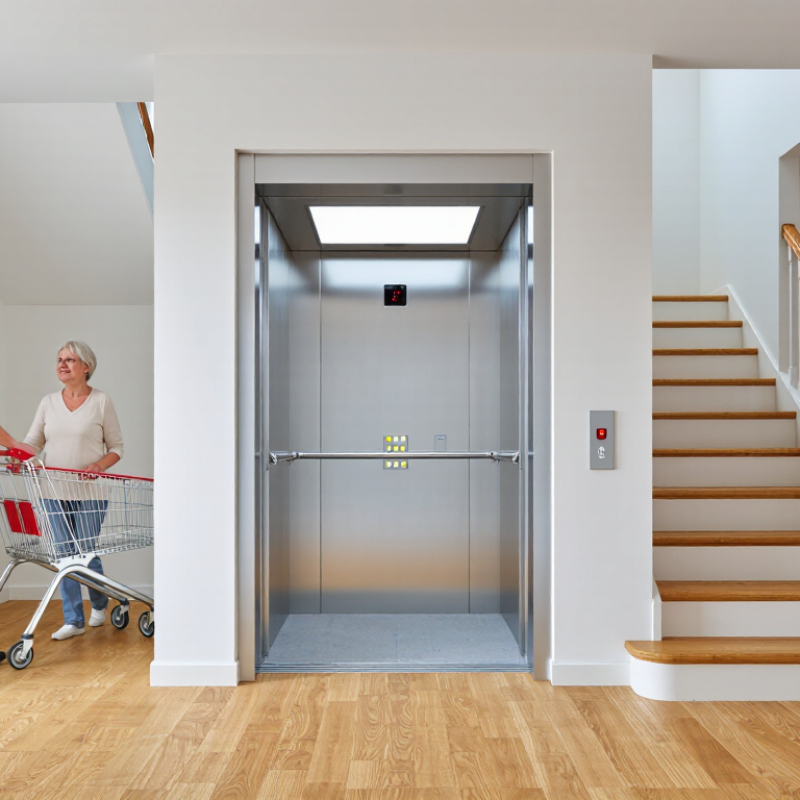
China Top 10 Household Elevator Manufacturers

What Defines a Household Elevator Manufacturer in China?

In China, a household elevator manufacturer does more than assemble a cabin and drive system. It connects building conditions with safe, dependable daily use.

Before production, its technical team should review floor openings, shaft dimensions, travel height, load requirements, and available power. Details matter. A narrow stairwell, for example, may limit door placement or maintenance access. Clear drawings and component specifications help homeowners and builders understand what will fit. The manufacturer should also explain which parts it makes in-house and which it sources from other suppliers.

Reliable manufacturing includes documented quality checks, installation guidance, and access to service support after delivery. Ask how the equipment is inspected, what maintenance intervals are recommended, and how replacement parts are handled. Good answers are specific, not just reassuring. A factory visit or detailed production records can offer useful evidence, though neither guarantees flawless performance. No factory is perfect. Even a well-designed lift can disappoint if site measurements are wrong or local installation is rushed. Comparing technical documents, service arrangements, and project references gives buyers a more grounded picture of what a manufacturer can actually deliver.

How the Top 10 Manufacturers Are Selected

A credible “top ten” list needs a clear method, not a popularity contest. Manufacturers should be assessed against the same evidence: product range, engineering capability, documented safety testing, installation support, and maintenance access. For household elevators, practical details matter. Reviewers can compare drive systems, rated loads, travel heights, cabin dimensions, emergency lowering, and accessibility options. Technical claims should be checked against product manuals, test records, and relevant certifications, rather than copied from sales pages. A bright brochure proves little. Measure carefully.

Selection should also consider service after installation. A household lift may operate for years in a narrow shaft, so spare-part availability, technician coverage, response arrangements, and warranty terms deserve documented review. Where possible, evaluators should speak with installers or owners and inspect completed projects, noting whether evidence is recent and independently verifiable. Scores can give safety and reliability greater weight than design choices, while still recording customization and energy use. The process is not perfectly tidy. Public records differ by region, and some manufacturers disclose more than others; missing data should be marked, not treated as proof of poor quality. The resulting list should explain its criteria, evidence dates, and limits, helping readers judge whether the ranking fits their home and local conditions.

Profiles of China’s 10 Top Household Elevator Manufacturers

Profiles of China’s ten leading household-elevator manufacturers are most useful when they show how each company works, not just what it sells. A buyer can compare factory capabilities, engineering support, installation planning, and after-sales service. Look for clear product specifications and written warranty terms. Small details matter.

One profile may emphasize compact designs for narrow shafts. Another may offer more layout customization for existing homes. Other manufacturers may focus on standardized production, quiet operation, control systems, or energy use. Some provide stronger installation coordination, while others have broader service networks. Check whether each profile explains maintenance access, delivery scope, and replacement-part availability. Ask for project references that resemble your home. Marketing photos alone prove little.

A top-ten list is not a verified ranking unless its criteria are transparent. That comparison is imperfect. Capacity, travel height, building structure, and local requirements can change which supplier fits best. Request drawings and a site assessment before comparing prices. A precise quote should state what is included, from shaft preparation to commissioning. Warranty wording deserves a slow read.

China’s Top 10 Household Elevator Manufacturers

Number of manufacturer profiles covered in the article title.

The chart shows the total profile count only. It does not rank manufacturers or display company names.

Comparing Products, Safety Features, Technology, and Service

China Top 10 Household Elevator Manufacturers

A useful comparison starts with the journey itself: floor-to-floor height, doorway width, and the space available for a wheelchair or shopping bags. Ask manufacturers to show rated load, travel speed, cabin dimensions, and noise measurements. A quiet ride matters at night. So does a level stop; even a small step can catch a toe. Compare drive systems and standby settings, but request measured energy figures for the same travel pattern, not a generic efficiency claim.

Safety deserves evidence, not adjectives. Check door interlocks, obstruction detection, emergency communication, and how the lift behaves during a power failure. Ask for inspection records and documentation against the applicable safety standards, such as ISO 8100-1 and ISO 8100-2. Details matter. The IEA’s 2024 Global Status Report for Buildings and Construction estimates that buildings account for 32% of global energy use and 34% of energy-related emissions. That is not elevator-specific data, but it makes operating efficiency worth comparing.

Service can decide whether a good product stays dependable. Request a written maintenance schedule, local technician coverage, spare-parts availability, and clear response-time commitments. Ask who handles a trapped-passenger call, and what happens after business hours. Compare warranty exclusions, too. I would still question any promise of “maintenance-free” operation; household lifts have moving parts, and real homes bring dust, pets, and frequent stops. A showroom ride cannot reveal long-term service quality.

How to Choose the Right Household Elevator Manufacturer

Choosing a household elevator manufacturer starts with your home, not a brochure. Ask for an on-site survey that checks floor openings, available shaft space, headroom, and the route for bringing equipment indoors. A few centimeters can affect the design. Share who will use the lift, including anyone with mobility needs, and ask how the proposed cabin, controls, and door width meet those needs. Quiet operation matters, too. Request details about expected sound levels and test the doors and controls during a visit to an installed system, if possible.

Compare written proposals line by line. Check what the price includes, such as building work, electrical connections, finishing, commissioning, and staff training. Ask which safety features are fitted and what happens during a power outage. Get clear information about warranty coverage, routine maintenance, spare-part availability, and typical service response times. Request references for homes with similar layouts, then ask owners about installation delays and follow-up support. A low quote may leave out important work. That is easy to miss.

Credentials and compliance documents should be relevant to your location and the elevator type. Ask the manufacturer to explain them plainly, rather than relying on a logo or broad claim. Even a careful checklist can miss practical details, so have the proposed layout reviewed by your builder or a qualified lift professional. One awkward point: the best-looking cabin may not be the easiest to service. Balance appearance with access to components and dependable local support.

China Top 10 Household Elevator Manufacturers - How to Choose the Right Household Elevator Manufacturer

A practical comparison checklist for assessing up to 10 manufacturer candidates. Requirements and specifications vary by model, building, and local regulations; verify all details in writing.

# Evaluation Dimension What to Compare Evidence to Request How to Assess
1 Product suitability Whether the proposed elevator type and configuration suit the home, number of floors, intended users, and installation conditions. Model-specific proposal, layout drawings, and a site-survey report. Prefer a documented assessment based on the actual building rather than a generic quotation.
2 Rated load and car dimensions Rated load, car size, door opening, and permitted passenger capacity for the selected model. Technical data sheet and approved configuration drawings. Check that dimensions and capacity match household needs and the available space; do not rely on estimates alone.
3 Building and civil-work requirements Required shaft or enclosure, pit depth, overhead clearance, floor openings, and any structural or electrical work. Dimensioned installation drawings and a written scope of site preparation. Confirm feasibility with the building professional and clarify which party is responsible for each item.
4 Drive and operating performance Drive type, rated speed, ride comfort, noise information, and performance under the proposed operating conditions. Model specifications, test information where available, and a demonstration of a comparable installation. Compare like-for-like models and ask how performance figures were measured.
5 Safety and regulatory compliance Applicable safety requirements, protective devices, inspection obligations, and local installation rules. Relevant conformity and inspection documents for the exact model and destination. Verify applicable requirements with the relevant local authority or qualified inspection professional.
6 Emergency and power-failure provisions Available alarm, communication, emergency lighting, and rescue or evacuation procedures for the selected configuration. Written description of emergency functions, backup-power options, and user instructions. Confirm what is included, how it operates during an outage, and who can perform a rescue.
7 Installation and project management Installation scope, estimated schedule, site coordination, commissioning, and handover responsibilities. Project plan, installation contract, commissioning checklist, and handover documents. Ensure the contract identifies exclusions, dependencies, and responsibility for delays or additional work.
8 Warranty and after-sales service Warranty coverage, exclusions, response arrangements, maintenance options, and availability of local service support. Written warranty terms, service contact details, and a sample maintenance agreement. Compare coverage and response commitments in writing; clarify travel, labor, and parts charges.
9 Customization and accessibility Available door, control, finish, lighting, and accessibility options, subject to technical and regulatory limits. Options list, finish samples, and confirmation that selected features are included in the quotation. Prioritize usability and safety; confirm any accessibility requirements with a qualified professional.
10 Total ownership cost and documentation Equipment, installation, site work, commissioning, maintenance, and other clearly stated costs over the expected service period. Itemized quotation, payment milestones, operating guidance, maintenance schedule, and parts information. Compare complete scopes rather than headline prices, and keep all specifications and commitments in the contract.

Comparison note: The table is an evaluation framework, not a verified manufacturer ranking. Enter the same model-specific information for each candidate to make a fair comparison.