China Top 10 Mattress Lamination Machine Manufacturers?
Choosing a reliable Mattress Lamination Machine manufacturer can shape product quality, production speed, and long-term operating costs. China has suppliers serving different factory sizes, materials, and automation needs, but a polished website alone says little about machine performance. Buyers should compare working width, bonding method, line speed, adhesive compatibility, and changeover requirements. Details matter. A machine handling foam and fabric well may need different settings for quilted panels or multilayer materials. Ask for technical specifications and practical demonstrations, not broad promises.
This guide introduces ten Chinese manufacturers to consider when researching mattress lamination equipment. It is a starting point, not a verified ranking of every supplier. Company capabilities and product ranges can change, so confirm current information directly with each manufacturer. Request references, installation details, operator training plans, spare-parts availability, and clear warranty terms. If possible, test representative materials before making a decision. Not every line fits every plant. A lower purchase price may also bring trade-offs in output, support, or maintenance. That part deserves a closer look. Comparing these points can help buyers build a shortlist that reflects real production needs, rather than relying on claims that are difficult to assess.
What Is a Mattress Lamination Machine?
What Is a Mattress Lamination Machine?
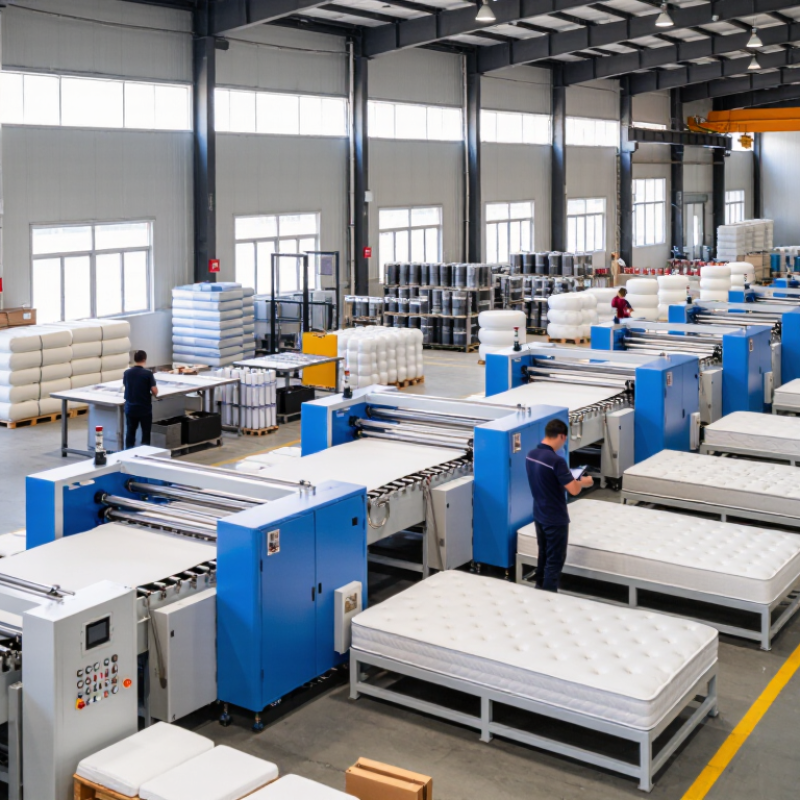
A mattress lamination machine bonds layers of foam, fabric, or other cushioning materials into a stable assembly. It may apply adhesive, then use rollers or a press to create even contact across the surface. Some production lines laminate quilted covers to foam; others join several foam layers. The method depends on material, adhesive, line speed, and product design. Not quite a sewing machine.
The finished bond should resist peeling while preserving the mattress’s intended feel. Operators check adhesive coverage, alignment, pressure, and curing time; a narrow glue gap can create weak spots near an edge. Grand View Research estimated the global mattress market at USD 50.61 billion in 2023. That figure describes mattress sales, not lamination-machine demand, but it shows the scale of the products these lines support. In practice, machine output alone is not enough: material tests and consistent setup matter. A useful specification states the workable layer width, compatible materials, bonding method, and adjustment range. That detail is easy to overlook.
How Mattress Lamination Machines Work and Where They Are Used
China Top 10 Mattress Lamination Machine Manufacturers?
How Mattress Lamination Machines Work and Where They Are Used
A mattress lamination machine bonds layers of foam, fabric, and fiber into stable panels. Operators align the materials, apply a measured adhesive layer, then pass the stack through pressure rollers. Some lines use heated rollers or controlled curing zones to help the bond set. Settings vary with material thickness and adhesive type. Too much pressure can flatten soft foam; too little may leave loose edges. Small adjustments matter.
Grand View Research estimated the global mattress market at USD 50.61 billion in 2023, with a projected 6.7% compound annual growth rate from 2024 to 2030. This points to sustained demand for consistent production, though market growth alone does not guarantee a return on a machine investment. Bonding quality, changeover time, and material waste deserve equal attention. Still, bonding is not magic. A poorly aligned layer can remain visible in the finished mattress.
Tips: Test the actual foam and fabric combination before setting production speed. Check bond strength after curing, not just at the roller exit.
These machines are used to make mattress comfort layers, quilted panels, toppers, and upholstered bedding components. They also support some furniture-panel production. On a factory floor, a reliable line helps keep layers aligned across wide sheets and reduces repetitive manual handling. That part is easy to underestimate.
Key Criteria for Evaluating Chinese Machine Manufacturers
When comparing Chinese mattress lamination machine manufacturers, judge process fit before the catalog. Ask which foam types, fabric widths, adhesive systems, and line speeds each machine can handle. Request a trial using your own materials. Watch edge alignment, adhesive coverage, and tension across a full-width panel. A clean sample matters. So does repeatability. Compare stated output with cycle time, operator workload, and changeover time. Specifications can look impressive on paper.
Tips: Ask for a recorded factory acceptance test, including its settings and measurement method. Inspect welds, guards, electrical cabinets, and maintenance access. Request a parts list with lead times, plus clear warranty terms and remote-support hours. Keep one concern open: a polished demonstration may not reflect a full production shift.
Evaluate documentation and after-sales support as carefully as price. Manuals should explain calibration, fault codes, maintenance intervals, and safe procedures clearly. Ask who trains operators and how quickly technicians respond in your time zone. Check installation scope and spare-part availability. Seek references from plants making similar products, not merely using similar-sized machines. If possible, visit a running line. Still, one visit cannot prove long-term reliability. Record acceptance criteria before ordering, including output, bonding consistency, scrap rate, and test duration.
China’s Top 10 Mattress Lamination Machine Manufacturers
China’s Top 10 Mattress Lamination Machine Manufacturers are best compared by their engineering capabilities, not by rankings alone. A suitable supplier should explain how its machine handles foam, fabric, and adhesive under real production conditions. Ask for sample specifications, line-speed ranges, and details about temperature and pressure control. Small variations matter.
During a factory evaluation, watch a complete lamination cycle. Check whether material feeds smoothly, edges stay aligned, and the finished panel bonds evenly. Ask how operators adjust settings for different mattress layers. Clear manuals and practical training can reduce setup errors. A short demonstration is useful, but it cannot replace long-term operating data.
The right manufacturer should also provide a realistic maintenance plan, spare-part information, and responsive technical support. Compare these details alongside price and delivery time. Some buyers focus too heavily on maximum speed; that figure may not reflect stable output with their materials. No supplier is perfect, and a machine may need tuning after installation. Request references or test results for similar applications before making a decision.
How to Compare Manufacturers by Technology, Capacity, and Service
China Top 10 Mattress Lamination Machine Manufacturers?
How to Compare Manufacturers by Technology, Capacity, and Service
When comparing mattress lamination machine manufacturers, look beyond headline speed. Ask how the machine controls adhesive application, roller pressure, and fabric alignment. These details affect bond consistency across foam, fabric, and other specified materials. Request a demonstration using materials close to your own production mix. Watch the edges and corners, not just the center. A clean sample matters.
Capacity should match your actual workflow. Compare working width, changeover time, and stable output during a full shift. A high stated speed may not reflect daily production with frequent material changes. Ask for operating ranges and acceptance criteria in writing. Also check what the quote includes, such as installation, operator training, and spare parts. A neat brochure can still leave gaps; I would not judge a supplier by one impressive sample alone.
Tips: Prepare the same sample materials and test conditions for each manufacturer. Ask who handles setup, how quickly technical support responds, and which wear parts should be kept on site. Record the answers. Small differences matter.
China Mattress Lamination Machine Manufacturers: How to Compare
Suggested evaluation weights for comparing manufacturers—not measured market data or scores for specific companies. Assess technology through bonding consistency and process control, capacity through line speed and operating requirements, and service through installation, training, spare parts, and response support. Adjust the weights to fit your production needs.