
China Top 10 180 Degree Concealed Hinge Suppliers?
Selecting a supplier for a 180 Degree Concealed Hinge takes more than comparing catalog prices. Cabinet makers and hardware buyers need hinges that open as specified, sit neatly inside the door, and remain stable through repeated use. Small details matter. The hinge cup, arm geometry, mounting plate, door thickness, and cabinet clearance can all affect the finished opening angle. A product described as “180 degree” may perform differently after installation, so confirm its technical drawing and test it on your actual cabinet design.
This guide introduces ten Chinese suppliers to consider and explains what to check before requesting a quotation. Compare manufacturing experience, available materials, surface finishes, adjustment ranges, soft-close options, and quality-control procedures. Ask for current specifications, sample availability, minimum order quantities, lead times, and clear packaging details. If a project requires custom dimensions or branding, request written confirmation rather than relying on a brief sales message. Fit is unforgiving.
A supplier list is a starting point, not a certification or guarantee of performance. Company capabilities, product ranges, and export experience can change, and the best match depends on your application and order volume. Evaluate samples under realistic conditions, including repeated opening and closing, before approving a large order. This extra step may feel slow, but it can reveal alignment or clearance problems early. The comparisons ahead aim to support practical research, while buyers should verify every specification directly with the supplier.
What Is a 180-Degree Concealed Hinge and How Does It Work?
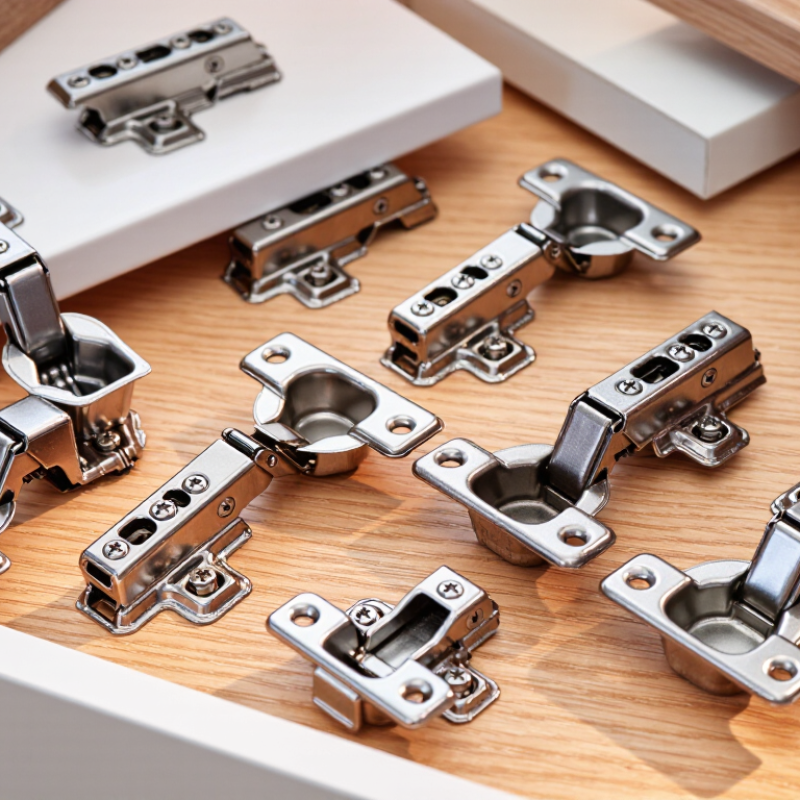
A 180-degree concealed hinge is designed to let a cabinet door open nearly flat against the cabinet’s side. When the door is closed, its hinge components sit inside the cabinet and door, leaving the exterior looking clean. You see the door, not the mechanism.
Inside, a cup fixed to the door connects to an articulated metal arm. A mounting plate secures the arm to the cabinet frame. As the door swings, the linked parts guide its movement and help keep it aligned. The exact opening angle depends on the hinge geometry and cabinet layout. “180 degrees” does not always mean the door clears every obstacle.
That matters. A nearby wall, thick door, or protruding handle can limit the usable opening. During installation, check the clearances with the door moving slowly through its full range. Small adjustment screws can shift the door’s position, but they cannot correct every fit problem. The detail is easy to overlook: even a well-made hinge may feel awkward if the mounting plate sits slightly out of position. Test the movement before loading the cabinet with dishes or tools.
How to Assess China-Based Concealed Hinge Suppliers
When assessing China-based 180-degree concealed hinge suppliers, check how they validate the opening angle, load rating, and door-gap consistency. Request drawings, material specifications, and test records for the exact model—not a similar sample. A useful factory check includes repeated opening-and-closing tests, corrosion testing, and inspection of screw holes and hinge-arm alignment. Ask how many cycles the test covers and whether results are recorded by production batch.
A smooth sample feels reassuring. It proves little on its own.
Supplier capability also depends on process control and delivery. The World Bank’s 2023 Logistics Performance Index gave China a score of 3.7 out of 5 and ranked it 19th among 139 economies. This offers broad logistics context, not proof that any individual supplier ships reliably. Ask for recent lead-time records, packaging details, and a process for handling rejected batches. Confirm whether production and quality checks happen at the stated factory; a video call can help, but it is not a full audit. I would still want to inspect a pilot order. Small details, like a hinge drifting slightly after installation, can be easy to miss in a polished catalog.
Profiles of 10 Chinese 180-Degree Concealed Hinge Suppliers
China’s 180-degree concealed hinge suppliers vary in their strengths. A precision-focused manufacturer may offer adjustable hinges, steel test reports, and clear load ratings. A hardware specialist may provide soft-close options for tall cabinet doors. Some factories focus on stainless steel for humid rooms. Others produce compact hinges for lighter furniture. A custom-order supplier can adapt cup depth or mounting plates. Its lead times may change with order size. One export-oriented producer may supply detailed drawings and sample parts. Another may offer flexible packaging for wholesalers. A smaller workshop may respond quickly, though its inspection records can be less complete. A high-volume factory may keep dimensions consistent across repeat batches. Not every profile fits every project.
A careful comparison matters. Ask for a dimensioned drawing, material details, cycle-test information, and a physical sample. Check the opening angle on the actual door. Small differences in overlay or drilling position can affect installation. Supplier claims should be confirmed.
Tips: Test a sample on your cabinet material and door weight. Record the hinge settings. Results can differ from catalog figures. That is worth checking.
How the Suppliers Compare in Products, Capacity, and Service
China’s 180-degree concealed hinge suppliers vary in product range, manufacturing capacity, and buyer support. Some offer several opening angles, finishes, and load ratings; others concentrate on a narrower selection. Catalogs can mislead. Ask for drawings, material specifications, and test details for the exact hinge model. Check how the hinge behaves when fitted to your cabinet thickness and door weight, not just in a product photo.
Capacity affects lead times and consistency. A supplier may handle a large order but struggle with repeated small batches or custom dimensions. Request a realistic production schedule and ask how inspection records are kept. It is useful to compare sample hinges with production units, especially for closing action, alignment, and surface finish. Large output is not enough.
Service becomes clear when questions arise. Check whether technical staff can explain installation clearances, adjustment points, and suitable screw placement. Ask how quickly they respond to sample or specification changes, and whether packaging protects moving parts during transport. Small gaps matter. A neat sample does not guarantee an identical batch, and even a careful comparison cannot replace a trial installation. Buyers should weigh product fit, dependable capacity, and practical communication against their own order size and quality requirements.
China Top 10 180 Degree Concealed Hinge Suppliers? - How the Suppliers Compare in Products, Capacity, and Service
Comparison note: No independently verified supplier-level dataset was provided. To avoid presenting invented company rankings or capacity figures as facts, this table compares ten practical sourcing criteria. Specifications and commercial terms vary by model and supplier; request current documents and quotations before making a purchasing decision.
| # | Comparison dimension | What to compare | Evidence to request | Why it matters |
|---|---|---|---|---|
| 1 | Opening angle | Confirm the actual opening angle in the intended door and frame setup. “180 degree” performance depends on hinge geometry and installation clearance. | Dimensioned drawing, installation instructions, and a physical sample test. | Prevents interference with adjacent panels, walls, or hardware. |
| 2 | Door compatibility | Check door thickness, frame construction, overlay or inset arrangement, and required machining. | Fitment chart and a written confirmation for the buyer’s door and frame dimensions. | A hinge may not fit correctly even when its advertised opening angle matches. |
| 3 | Material and construction | Compare the specified material for each component, such as the hinge body, pivot, and fasteners; do not assume all parts use the same alloy. | Bill of materials, material declarations, and applicable test reports. | Material and component design affect strength, corrosion resistance, and service life. |
| 4 | Rated load | Compare the rated door weight and the conditions used for the rating, including hinge count, door size, and installation method. | Model-specific load rating and supporting test method or report. | A load figure without its test conditions is not a reliable basis for comparison. |
| 5 | Adjustment and installation | Check available adjustment directions, adjustment range, mounting method, and required routing or drilling. | Installation guide, tooling requirements, and sample installation feedback. | Clear adjustment instructions can reduce fitting time and alignment issues. |
| 6 | Finish and corrosion protection | Compare finish options and confirm whether the intended environment requires a specified corrosion-resistance level. | Finish specification, sample approval, and relevant test documentation where applicable. | Appearance and corrosion performance can differ significantly between finishes. |
| 7 | Cycle-life testing | Compare tested operating cycles only when the test setup, load, and pass criteria are stated. | Test report identifying the model, sample count, conditions, and results. | A cycle count alone does not establish equivalent durability across products. |
| 8 | Production capacity | Ask for available monthly output for the exact model and finish, plus current utilization and peak-season constraints. | A dated capacity statement, production schedule, and recent delivery performance for comparable orders. | Factory-wide capacity may not reflect the output available for a specific hinge model. |
| 9 | MOQ and lead time | Compare minimum order quantity, sample lead time, production lead time, and whether packaging or finish choices change these terms. | A written quotation with validity period, production schedule, and shipment terms. | Commercial terms can vary by order size, customization, and material availability. |
| 10 | Quality control and after-sales service | Review incoming-material checks, in-process inspection, final inspection, traceability, defect handling, and response arrangements. | Quality procedures, inspection records, sample approval process, and written warranty or claim terms. | Documented processes make quality expectations and corrective actions easier to verify. |
Supplier selection tip: Compare like-for-like models using the same door dimensions, load assumptions, finish requirements, order quantity, and delivery destination. Treat unverified capacity, durability, and certification claims as unconfirmed until supporting documents are reviewed.
How to Verify and Source Hinges from a Chinese Supplier
To verify a Chinese supplier of 180-degree concealed hinges, begin with a written specification. Record cup diameter, overlay, arm clearance, opening angle, finish, and target load. Request a production sample, dimensional drawing, material details, and batch traceability. Measure several samples, then mount them on a cabinet door and check for rubbing, sagging, and uneven gaps. Test the soft-close function repeatedly. A polished sample can still hide inconsistent production. The World Bank’s 2023 Logistics Performance Index scored China 3.7 out of 5. This country-level score does not certify an individual factory.
Ask for dated inspection records and test results tied to the hinge model and materials. Agree on an inspection plan before ordering; ISO 2859-1 provides sampling procedures for lot-by-lot inspection. UNCTAD’s Review of Maritime Transport 2024 reported 2.4% growth in global maritime trade during 2023, but national trade growth cannot guarantee your delivery date. Request a realistic production schedule, packaging photos, and written lead-time assumptions. Confirm that cartons protect hinge arms from impact and moisture. Keep one approved sample for comparison with the delivered batch. I would still recheck dimensions on arrival; drawings and factory measurements can miss small, costly differences.
180° Concealed Hinge Supplier Verification: Nominal Opening-Angle Classes
These bars show nominal opening-angle classes commonly specified for concealed hinges; they are product specifications, not supplier rankings. When sourcing a 180° hinge, confirm the required angle in the supplier’s datasheet and verify it on a physical sample under the intended mounting conditions. Also check dimensions, load capacity, material, finish, and test documentation before placing an order.