
Skip to Content
chevron-left chevron-right chevron-up chevron-right chevron-left arrow-back star phone quote checkbox-checked search wrench info shield play connection mobile coin-dollar spoon-knife ticket pushpin location gift fire feed bubbles home heart calendar price-tag credit-card clock envelop facebook instagram twitter youtube pinterest yelp google reddit linkedin envelope bbb pinterest homeadvisor angies

7 Tips for Choosing a Double Glass Door

A Double Glass Door can bring daylight into a room while creating a clear connection between indoor and outdoor spaces. But appearance is only part of the decision. The right choice depends on where the door will go, how often it will be used, and the conditions it must handle. A patio entrance exposed to afternoon sun has different needs from an interior divider beside a quiet study.

Small details matter. Look closely at the frame, seals, glass specifications, and locking hardware. Double glazing may help reduce heat transfer and outside noise, but performance varies with the glass, frame, installation, and local climate. Ask for product specifications rather than relying on broad promises. If the door faces strong sun or a busy street, those details can make a noticeable difference.

Looks matter. So does fit.

This guide outlines seven practical tips for comparing options, from measuring the opening to checking maintenance needs. It also considers safety glazing, energy performance, operation, and professional installation. A door that slides smoothly in a showroom may feel different after years of daily use, especially if its track collects dust or its seals wear down. Think about who will use it, what furniture sits nearby, and how much upkeep you can realistically manage. No single model suits every home. With careful questions and a close inspection, you can choose a Double Glass Door that feels right in everyday use—not just in a product photo.
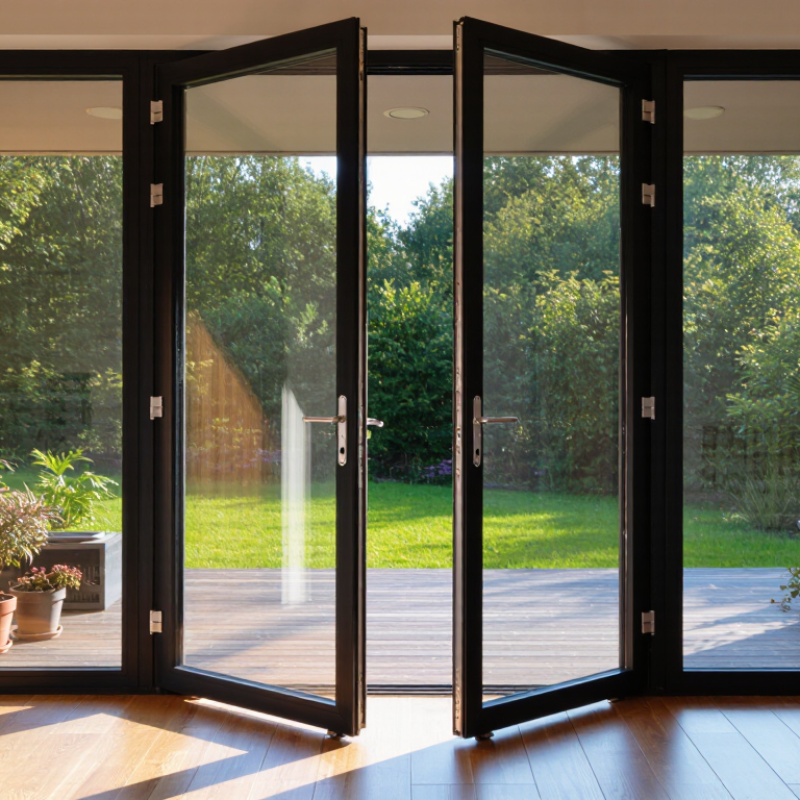
7 Tips for Choosing a Double Glass Door

Understand Double Glazing: Two Panes and a Sealed Insulating Cavity

A double-glazed door has two panes separated by a sealed insulating cavity. The trapped air, or sometimes argon, slows heat transfer. A spacer holds the panes apart, while perimeter seals help keep moisture out. The U.S. Department of Energy’s Energy Saver guidance estimates that windows account for 25–30% of home heating and cooling energy use. That figure is not a promise of equal savings from a glazed door; size, frame, orientation, and installation all matter. Small details count.

When comparing doors, check the whole-unit U-factor and solar heat gain coefficient, not just the glass description. The National Fenestration Rating Council’s certified ratings let buyers compare these measured properties across products. Lower U-factor generally means less heat passes through; solar heat gain needs depend on climate and exposure. A low-emissivity coating can reduce radiant heat transfer, while a warm-edge spacer may limit heat loss around the glass perimeter. Ask whether the cavity is gas-filled and how the unit’s seals are warranted. A sealed unit can still fail over time: mist between panes is a practical warning, not merely a cosmetic flaw. And honestly, no rating captures every draft caused by a poorly fitted frame.

Compare NFRC Ratings: U-Factor Units and SHGC on a 0–1 Scale

For a double-glass door, compare the NFRC-certified whole-product ratings, not only the glass specifications. U-factor measures heat transfer; in U.S. customary units, it is shown as Btu/(h·ft²·°F). Lower values mean less heat passes through the door. Some labels use metric units, so check the unit before comparing numbers. SHGC is different: it has no units and runs from 0 to 1. A value near 0 admits little solar heat; a higher value admits more. Small number, different meaning.

The U.S. Department of Energy’s Energy Saver guidance estimates that heat gain and loss through windows account for about 25–30% of home heating and cooling energy use. That figure is not a door-specific estimate, but it shows why ratings matter. In a sunny room, a lower SHGC may help limit hot afternoon glare; in a cold climate, some solar gain may be welcome. The trade-off is real. A low U-factor can still pair with an SHGC that does not suit the room. Check the NFRC label or Certified Products Directory, then consider orientation, shading, and frame construction. Ratings are useful, not a perfect shortcut. A door’s installation can affect its real-world performance, too.

Choose Safety Glass: Check ANSI Z97.1 or CPSC 16 CFR 1201 Compliance

A double glass door can look sturdy while still containing glass that breaks into dangerous shards. Ask whether each applicable pane is safety glazing, and request documentation showing compliance with ANSI Z97.1 or CPSC 16 CFR 1201. These standards address impact performance, but the required classification can depend on the door’s location and use. A nearby floor, stairway, or walking route may affect which requirements apply. Check local building rules, too.

Look for a permanent mark etched or printed on the glass, then compare it with the product paperwork. The label should identify the applicable standard and provide traceable information, not just say “tempered.” Small detail.

With insulated double glazing, don’t assume both panes have identical markings; ask the supplier which panes meet the requirement. A clear answer matters more than a confident sales pitch. If the mark is missing, blurred, or hidden by a frame, request written confirmation before ordering.

I find this step easy to overlook when comparing handle styles and finishes. Still, the paperwork can prevent an expensive guess later. Safety glass reduces certain injury risks, but it is not unbreakable, and installation quality still matters.

Match the Frame and Hardware to Door Weight and Traffic

Tip 1: Match the frame to the glass panel’s weight, not just its appearance. Double glazing can make a door considerably heavier than a single-pane door of similar size. A rigid frame helps limit sagging and keeps the panels aligned. Check the door and frame specifications together; a sturdy-looking frame is not proof of adequate support.

Tip 2: Choose hinges and other hardware rated for the door’s weight and expected use. A busy kitchen or shop entrance may open dozens of times each day, so ordinary light-duty hinges can wear quickly. Look for the manufacturer’s load rating and recommended hinge spacing. Smooth movement matters. If the door scrapes the threshold after installation, stop and have its alignment checked rather than forcing it.

Tip 3: Consider traffic, handles, and closing hardware as one system. In a narrow hallway, a bulky closer or handle can catch bags and sleeves. For a frequently used entrance, durable hinges and a properly adjusted closer may reduce slamming and stress on the frame. Have an experienced installer confirm clearances and fixings for the actual wall. I once focused too much on the frame finish; the hardware deserved equal attention.

Check Insulating-Glass Durability: Look for ASTM E2190 Certification

A double glass door relies on a sealed insulating glass unit to slow heat transfer and resist moisture between its panes. Ask whether the exact unit has been tested to ASTM E2190, a specification covering insulating-glass durability and performance. Be precise: ASTM does not certify products. Request the laboratory report or other traceable documentation, rather than relying on a vague “certified” sticker. Check that the tested configuration matches the door you are buying, including pane thickness, spacer, coatings, and seal system. Small differences matter.

Look for clear test results and the testing laboratory’s name. Ask how the supplier identifies units that meet the specification, and whether the report applies to the current production design. Good paperwork helps, but it cannot promise that every installed door will stay trouble-free. Installation and handling still count. After installation, check for moisture or haze trapped between the panes, especially near the edges. A little fog on the room-facing surface may have another cause, so observe where it forms. I would treat test documentation as useful evidence, not the whole answer. A careful question now can prevent guesswork later.

7 Tips for Choosing a Double Glass Door

Check Insulating-Glass Durability: Look for ASTM E2190 Certification

Use these three checks when reviewing a supplier’s documentation: confirm ASTM E2190 is cited, match the tested insulating-glass-unit configuration to the one in the door, and verify the certification scope with the issuing organization. Each bar represents one checklist item—not a test result or a durability score. ASTM E2190 applies to insulating glass units, not the complete door or its installation.