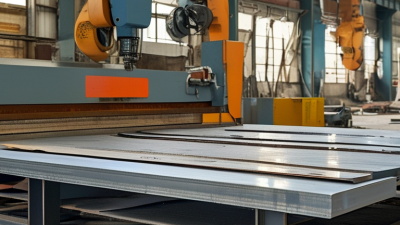
7 Tips for Buying the Right Shearing Machine
Buying the right shearing machine is rarely a simple price comparison. A machine may look impressive on paper, yet struggle with your actual material, thickness, or production rhythm. The wrong choice can leave rough edges, inaccurate cuts, excessive noise, and expensive downtime.
W. Edwards Deming, a respected manufacturing-quality expert, said, “If you can’t describe what you are doing as a process, you don’t know what you’re doing.” His principle applies directly to shearing machine selection. Before comparing brands, define your process. Measure the common sheet thicknesses, cutting lengths, material types, daily workload, and required tolerance. A 6 mm steel plate and a thin aluminum panel demand different solutions. So do occasional fabrication and continuous production.
This guide presents seven practical tips for making a more confident decision. It examines cutting capacity, blade design, machine accuracy, control systems, safety features, maintenance access, and total ownership cost. It also considers service support, because a powerful machine is still a poor investment when replacement parts take weeks to arrive.
Small details matter. Ask whether the back gauge repeats accurately after hundreds of cycles. Check how quickly operators can adjust the blade gap. Listen for unusual vibration during a demonstration. Request test cuts using your own material, not only the supplier’s sample.
No guide removes every uncertainty. Shop conditions vary. Some recommendations may seem overly cautious. However, careful evaluation usually costs less than correcting a mismatched purchase later. The best shearing machine is not necessarily the largest or cheapest. It is the one that consistently fits your process, people, materials, and long-term production goals.
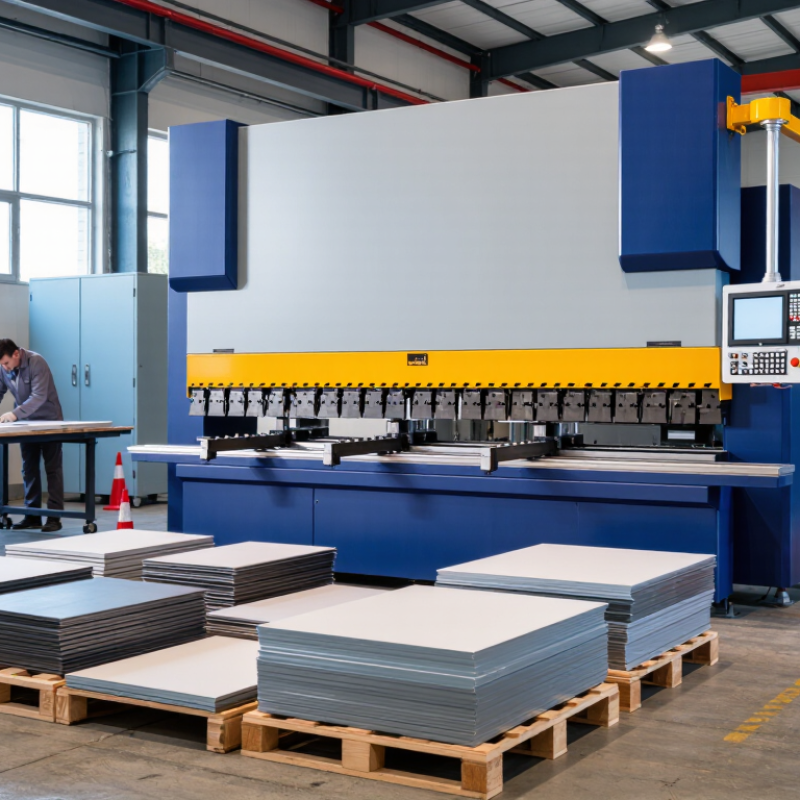
Define the Material, Thickness, and Cutting Requirements
7 Tips for Buying the Right Shearing Machine
Define the Material, Thickness, and Cutting Requirements
Start with the material, not the machine’s advertised capacity. Mild steel, stainless steel, and aluminum behave differently under the blade. Stainless steel usually needs greater cutting force and tighter blade clearance. Aluminum may require cleaner handling to prevent surface marks. Keep a sample sheet nearby during discussions. It reveals details that a brochure cannot.
Measure the thickest sheet you will cut regularly, then record the occasional maximum thickness separately. A machine rated for 6 mm steel may struggle with thicker stainless steel. Check the cutting length too. A 2,500 mm sheet needs a different working width from a 1,200 mm strip. Also define your tolerance, edge quality, and daily volume. Rough fabrication and precision production should not share the same expectations.
Look closely at the cut itself. Do you need square edges, low burrs, or repeatable short pieces? Blade clearance, rake angle, back gauge accuracy, and clamping pressure all influence the result. Ask for a test cut using your actual material and thickness. Watch the edge under bright light. Small burrs can become expensive problems later. I have seen buyers focus on maximum thickness and overlook cutting length, which was the real limitation. That mistake is easy to make. Recheck your figures before choosing the machine.
Compare Shearing Machine Types and Cutting Methods
7 Tips for Buying the Right Shearing Machine
Compare the machine with your material, thickness, and production rhythm. A guillotine shear gives straight, repeatable cuts on sheet metal. Hydraulic models handle thicker plates with controlled force and quieter operation. Mechanical shears can deliver fast cycles, but their fixed stroke may limit flexibility. Swing-beam machines suit general fabrication, although their cut angle may leave more distortion on thin sheets. Measure twice.
The cutting method matters more than many buyers expect. Cold shearing creates no heat-affected zone, so painted or coated sheets may need less finishing. Laser cutting offers narrow kerfs and detailed profiles, but it usually demands higher capital and cleaner material. Plasma cuts faster through thicker steel, though its edge can show more taper. Oxyfuel suits heavy carbon steel, while waterjet cutting protects heat-sensitive materials. The International Organization for Standardization’s ISO 9013 standard provides quality classifications for thermal-cut edges, helping buyers compare surface accuracy objectively.
Check real workload data, not only catalog capacity. The World Steel Association reported approximately 1.89 billion tonnes of crude steel production in 2023, showing the scale of today’s metal-processing demand. Ask for test cuts using your actual grade and thickness. Inspect burrs, squareness, noise, and setup time. A machine rated for 10-millimeter plate may struggle during continuous production. That mistake matters. Also calculate blade replacement, electricity, maintenance access, and operator training. I would not choose the fastest cycle automatically; inconsistent alignment can erase its productivity advantage.
7 Tips for Buying the Right Shearing Machine - Compare Shearing Machine Types and Cutting Methods
| Tip | Buying Criterion | Machine Type / Cutting Method | Typical Working Range or Data | Main Advantages | Limitations and Selection Notes | Suitable Applications |
|---|---|---|---|---|---|---|
| 1 | Match the machine to material thickness and strength | Mechanical guillotine or hydraulic guillotine; straight-line shearing | Light and medium sheet machines commonly cover about 0.5–6 mm mild steel. Heavy hydraulic models may handle approximately 6–20 mm or more, depending on cutting length and material strength. | Correct sizing improves cut quality, blade life, and machine safety. | Rated capacity is usually based on mild steel. Stainless steel and high-strength steel require lower allowable thickness or greater cutting force. | Fabrication shops, HVAC work, enclosures, structural components, and general sheet-metal production. |
| 2 | Choose the correct cutting action | Swing-beam guillotine, variable-rake guillotine, or rotary shear | Swing-beam machines use a pivoting upper blade. Variable-rake machines change the blade angle across the cut. Rotary shears use continuously rotating circular blades for narrow strips or long coil-fed material. | Swing-beam designs are simple and economical; variable-rake designs can reduce distortion; rotary shears support continuous strip processing. | Swing-beam machines may leave more distortion on thin sheets. Rotary shears are less suitable for large, thick plates or varied batch sizes. | Batch sheet cutting, precision plate preparation, slitting, coil processing, and high-volume strip production. |
| 3 | Compare drive systems and operating costs | Mechanical versus hydraulic drive | Mechanical shears generally provide fast, repeatable cycles for lighter work. Hydraulic shears provide adjustable stroke control and steady force across the cutting cycle. | Mechanical: high production speed and relatively simple operation. Hydraulic: strong overload protection, flexible stroke settings, and better suitability for thicker material. | Hydraulic systems require fluid, filter, hose, and seal maintenance. Mechanical systems can be less flexible when processing a wide range of thicknesses. | Mechanical systems suit repetitive thin-sheet work; hydraulic systems suit mixed materials, thicker plates, and variable production schedules. |
| 4 | Check cutting length and workpiece size | Straight-line guillotine with suitable blade length | Common cutting lengths range from about 1,000 to 6,000 mm. Select a machine that exceeds the longest regular cut rather than only the largest occasional sheet. | Adequate length reduces repositioning, improves workflow, and helps maintain consistent dimensions. | A longer blade generally increases machine footprint, weight, and cost. The rated thickness may decrease at the maximum cutting length. | Large panels, ductwork, cabinet production, construction sheets, and plate preparation. |
| 5 | Evaluate accuracy and back-gauge performance | CNC or programmable back-gauge system | Well-maintained machines may achieve back-gauge positioning in the approximate ±0.05–0.15 mm range, but actual accuracy depends on machine design, setup, material, and calibration. | Reduces manual measurement, setup time, scrap, and variation between batches. | A back gauge cannot correct warped material or poor blade clearance. Verify repeatability under real production conditions. | Repeat production, precision enclosures, electrical cabinets, appliance panels, and contract fabrication. |
| 6 | Inspect blade clearance and blade quality | Adjustable-clearance guillotine | A common starting point for mild steel is approximately 5–10% of material thickness; thinner or harder materials may require a different setting specified by the machine or tooling supplier. | Correct clearance minimizes burrs, deformation, excessive noise, and premature blade wear. | Incorrect clearance can cause crushed edges, large burrs, or higher cutting force. Blades should be reversible or replaceable where possible. | Mixed-gauge sheet work, stainless-steel fabrication, aluminum processing, and applications requiring clean edges. |
| 7 | Prioritize safety, ergonomics, and total ownership cost | Guarded guillotine with foot pedal, hold-downs, emergency stop, and optical or physical protection | Look for front and side guards, emergency-stop controls, sheet supports, hold-down devices, clear controls, and documented maintenance intervals. | Improves operator protection, handling efficiency, uptime, and long-term cost control. | The purchase price should be evaluated together with blade replacement, hydraulic service, electricity, training, installation, and downtime. | Any professional workshop, especially environments with multiple operators or high daily cutting volume. |
Note: The ranges shown are general industry reference values. Actual capacity, accuracy, speed, and power depend on machine configuration, blade condition, material grade, and manufacturer specifications.
Evaluate Capacity, Accuracy, Safety, and Automation Features
Buying the right shearing machine starts with capacity, not the catalog’s largest number. Match rated thickness to your material, tensile strength, width, and cutting length. Leave a practical margin for harder stock. A 6 mm rating may not cover 6 mm stainless steel. Check the duty cycle, too. Repeated cuts near maximum load can distort frames, blades, and schedules. Record common sheet sizes, monthly cut counts, and acceptable scrap rates before comparing machines.
Accuracy needs measurable proof. Request test cuts using your own material, then inspect squareness, burrs, edge straightness, and repeatability. Ask how accuracy changes across the full cutting length. A small error becomes costly after hundreds of panels. Do not rely only on displayed tolerances. Real production conditions are less forgiving.
Safety deserves direct verification. The U.S. Bureau of Labor Statistics recorded 5,283 fatal work injuries in 2023, across all industries, not shearing alone. That figure still supports careful guarding, interlocks, emergency stops, and clear operator access. Automation should reduce repetitive handling, not conceal poor setup. The International Federation of Robotics reported 541,302 industrial robot installations worldwide in 2023. Consider programmable backgauges, sheet support, blade-gap adjustment, and sensor-based detection. More automation is not always better. It can add maintenance and training demands. Review service records, software access, and operator skill requirements. A practical evaluation may still miss one detail: how easily workers can correct an imperfect setup.
7 Tips for Buying the Right Shearing Machine
Evaluate capacity, accuracy, safety, and automation features before making a purchase.
This practical evaluation model assigns the greatest weight to cutting capacity and accuracy, while also considering operator safety, automation, durability, and after-sales support. Use these percentages as a structured checklist and adjust them according to material type, production volume, and workforce requirements.
Check Blade Quality, Maintenance Needs, and Operating Costs
Buying the Right Shearing Machine
Blade quality deserves careful attention because it controls cut accuracy, waste, and operator confidence. Inspect the blade edge under bright light before purchasing. It should look even, without chips, dents, or rough grinding marks. Ask about blade hardness, sharpening limits, and replacement availability. A clean cut leaves a straight edge with little distortion. Run a short test with the material you commonly process. Do not trust appearance alone.
Maintenance needs can quietly increase ownership costs. Check how easily operators can access lubrication points, blade gaps, filters, and safety guards. A machine requiring complicated adjustments may spend more time idle than expected. Ask for a clear service schedule and realistic cleaning instructions. Noise is a warning. Unusual vibration can indicate poor alignment, worn bearings, or an unstable frame. A qualified technician should verify these issues before installation.
Operating cost includes more than the purchase price. Compare motor power, average energy use, blade life, labor time, and downtime. A cheaper machine may consume more electricity or require frequent sharpening. I once focused too heavily on the initial quote and underestimated setup labor. That mistake changed my buying checklist. Request maintenance records from experienced users when possible. Calculate cost per cutting hour, not just cost per machine. Leave room for imperfect estimates, because material thickness and production volume often change.
Verify Manufacturer Support, Compliance, and Total Purchase Value
Buying a shearing machine is not only a capacity decision. A machine that cuts accurately today may become expensive without dependable support. Ask the manufacturer for service response times, technician coverage, spare-parts availability, and training options. Request these details in writing. During factory discussions, look for clear wiring diagrams, maintenance intervals, and practical operator guidance. Vague answers are warning signs.
Verify that the machine has required declarations, test records, guarding, emergency stops, and traceable technical documentation. Requirements vary by location, so confirm them with a qualified local specialist. Do not rely on a sales promise alone. Inspect the proposed machine, or request a live cutting demonstration using your material thickness and width. Watch the cut edge, blade adjustment, noise, and recovery after repeated cycles. Small details matter.
Calculate total purchase value beyond the quoted price. Include installation, freight, tooling, consumables, energy use, software, training, inspections, and possible downtime. A cheaper machine may lose its advantage when a replacement blade takes weeks to arrive. Ask for warranty limits and exclusions. I once underestimated setup time because floor preparation seemed minor. That mistake changed my buying checklist. Still, estimates can be imperfect. Leave room for maintenance surprises and future production changes.
Related Posts
-
China Top 10 Shearing Machine Manufacturers
-
2026 Top Shearing Machine Manufacturers How to Choose?
-
Unlocking Global Trade with Best Hydraulic Metal Shear Machine Import and Export Certification Guide
-
Global Reach with China's Top Hydraulic Metal Shear Machines: Precision Engineering Redefined
-
7 Tips for Choosing a Hydraulic Metal Shear Machine?
-
How to Effectively Use a Manual Press Machine for Optimal Results