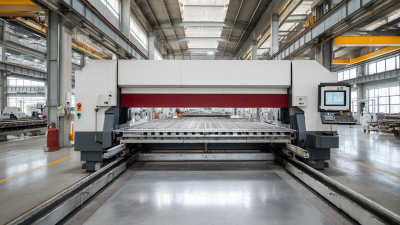
What Is a Small Press Brake and How Does It Work?
A small press brake may occupy only a few feet of shop floor, yet it performs a precise job: bending sheet metal along a straight line. Its compact size suits repair shops, prototyping benches, and short production runs. But “small” does not mean effortless. Material thickness, bend length, tooling, and machine capacity all affect the result. A thin steel blank can still spring back after bending, leaving an angle that needs adjustment.
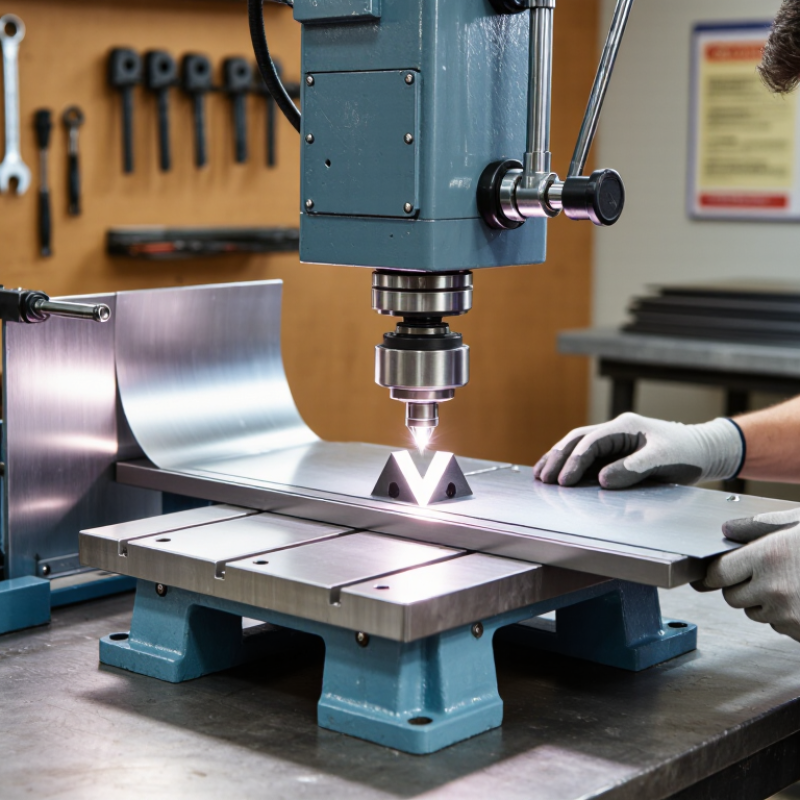
At its core, the machine uses a punch and die. The operator positions the sheet against a back gauge, then lowers the punch to press the material into the die. The setup determines the bend. A V-shaped die, for example, supports the sheet as the punch forms an angle; the finished angle depends on the tooling, force, and material. Metal-forming scholar Dr. Taylan Altan’s research provides a useful foundation for understanding these variables. In paraphrase, a key principle is: “Reliable bending depends on material behavior, tooling, and controlled force—not machine size alone.” That is a paraphrase, not a direct quotation.
This guide explains what a small press brake is, how its main components work, and what happens during a typical bend. It also considers capacity, accuracy, safety, and common limitations. The details matter. A misplaced gauge or worn die can change the bend, even when the machine looks ready. Beginners may expect perfect results on the first try. Often, a test piece tells a more honest story.
What Defines a Small Press Brake
A small press brake is defined less by one fixed size than by its working capacity and intended setting. The term usually describes a compact machine with a shorter bending bed and lower rated force than production-scale equipment. There is no universal cutoff. A shop should compare the machine’s maximum bending length, available tonnage, and material limits rather than rely on the word “small.”
These brakes are commonly used for short parts, repair work, prototypes, and light-gauge sheet metal. Picture a narrow steel panel resting between the punch and die: the punch descends, and the sheet bends along the die opening. The operator chooses tooling and settings to suit the material and bend angle.
Small footprint.
Less floor space is needed, which can help in a crowded workshop. Yet compact does not mean suitable for every job. A long part may exceed the bed, while thick stock may demand more force than the machine can safely provide.
Check the maker’s capacity chart and allow for material type, thickness, and bend length. It is easy to assume a small brake will handle any thin sheet; that assumption can be costly. The label alone tells you little.
Core Components and Their Functions
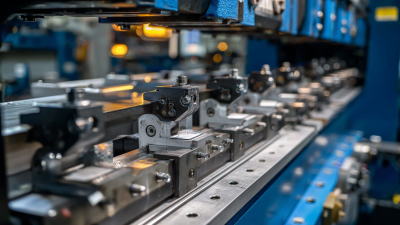
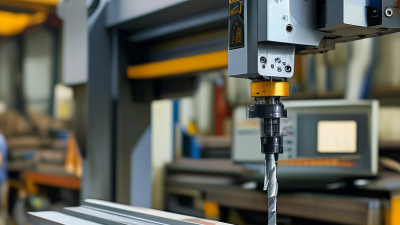
A small press brake relies on a rigid frame, a moving ram, and a matched punch and die. The frame resists bending forces; even slight deflection can leave parts uneven. The ram drives the punch downward, while the die supports the sheet and sets the bend angle. On a compact machine, a narrow setup may limit how much material can be bent in one stroke.
The backgauge positions the sheet against stops, helping repeat bend locations. A controller sets stroke depth, bend sequence, and, on some machines, ram speed. Hydraulic models use a pump and cylinders; electric models use motor-driven mechanisms. Small, but not simple. The U.S. Department of Energy’s 2014 motor-systems sourcebook estimates that motor-driven systems account for about 54% of U.S. manufacturing electricity use. That sector-wide figure is not a press-brake measurement, but it underscores why drive condition and settings matter. ANSI B11.3-2012 also addresses press-brake safeguarding. Guards and controls are functional components, not optional add-ons. A detail worth checking: a clean display cannot compensate for misaligned tooling or a poorly supported sheet.
How the Machine Generates Bending Force
A small press brake creates bending force by driving a punch downward into sheet metal supported by a die. In a hydraulic model, an electric motor powers a pump, which sends pressurized oil to cylinders. The cylinders push the ram and punch toward the workpiece. Force travels downward. In an electric model, a motor and screw mechanism move the ram instead. The operating principle is similar, though the drive system differs.
The punch presses the sheet into the die opening, making the metal bend along a straight line. The machine’s rated tonnage describes its available force, but the required force also depends on material type, thickness, bend length, and die opening. A longer bend generally needs more force. Operators set the stroke and align the sheet so the bend forms in the intended place. Small machines can feel precise, but alignment still matters. In practice, force may not be perfectly even across the bed, especially near the machine’s capacity. A test bend can reveal springback or a slight angle difference before a full batch is run.
The Sheet Metal Bending Process Step by Step
What Is a Small Press Brake and How Does It Work?
The Sheet Metal Bending Process Step by Step
A small press brake bends sheet metal by pressing a punch into a matching die. Start by checking the material type, thickness, and bend drawing. Measure the blank, then mark the bend line lightly. Choose tooling suited to the material and desired bend angle. Small machines have limits, so confirm the workpiece fits the brake’s capacity.
Set the backgauge to position the sheet, then align its edge against the stops. Keep your hands clear of the punch and die. Secure the sheet as the ram lowers, guiding the punch into the die to form the bend. For air bending, the punch does not press the sheet fully against the die bottom. The final angle depends on tooling, material, and stroke depth. Make a test bend and measure it. Springback can surprise you, even on a simple part. Adjust the stroke gradually rather than guessing.
Tips: Check the bend angle with a square or angle gauge. Inspect the first piece for cracks or uneven edges. If the result looks wrong, pause and review alignment before continuing.
Common Uses and Capacity Limits of Small Press Brakes
A small press brake bends sheet metal by driving a punch into a die. The operator positions the sheet, then controls the punch’s stroke to form an angle. Its compact frame suits small workshops, repair benches, and limited production runs. Common jobs include brackets, enclosures, flashing, and short panels. The bends are often simple, but repeatability still depends on careful setup.
Small brakes work well with thin sheet and modest part widths. Their capacity depends on rated tonnage, working length, material thickness, tensile strength, and die opening. A machine rated for a certain thickness in mild steel may handle less stainless steel. Wider parts also need more force, so a short machine may not bend a full-width panel evenly. In practice, the capacity chart can look clearer than the real setup. Allow for springback, tooling condition, and uneven loading. Never assume the maximum rating applies to every material.
Tips: Check the machine’s capacity chart before choosing a die. Test the bend on a small offcut, then measure the angle. Keep hands clear of the punch and die. A little scrap is cheaper than a ruined part.