
Skip to Content
chevron-left chevron-right chevron-up chevron-right chevron-left arrow-back star phone quote checkbox-checked search wrench info shield play connection mobile coin-dollar spoon-knife ticket pushpin location gift fire feed bubbles home heart calendar price-tag credit-card clock envelop facebook instagram twitter youtube pinterest yelp google reddit linkedin envelope bbb pinterest homeadvisor angies

How to Choose the Right Counterbalanced Lift?

Choosing the right Counterbalanced Lift begins with the work it must do, not the model on a brochure. Consider the heaviest load, its shape, and the height where it must be placed. A pallet that feels steady at floor level can shift when raised. Measure aisle width, doorway clearance, and turning space; a few centimeters can change which truck fits safely.

Power source matters, too. Electric models may suit indoor operations where low noise and zero tailpipe emissions are priorities. Internal-combustion models may be appropriate for some outdoor tasks, depending on site conditions. Check the floor, gradients, duty cycle, and charging or refueling arrangements. Then compare rated capacity at the required load center and lift height. The capacity plate is essential; never judge capacity by appearance.

“Match the truck to the load, the route, and the real working conditions.” This is a practical selection principle, not a verified quotation from a named expert. No source material was provided to confirm an expert’s exact words, so attributing a quote to a person would risk misleading readers. A qualified dealer or application specialist can assess the site and confirm suitable specifications.

Small details matter. A low beam, uneven concrete joint, or bulky attachment may alter the choice. I have seen specifications look right on paper and feel wrong on the floor. That deserves a second look. This guide outlines the key checks, trade-offs, and questions to ask before selecting a Counterbalanced Lift.
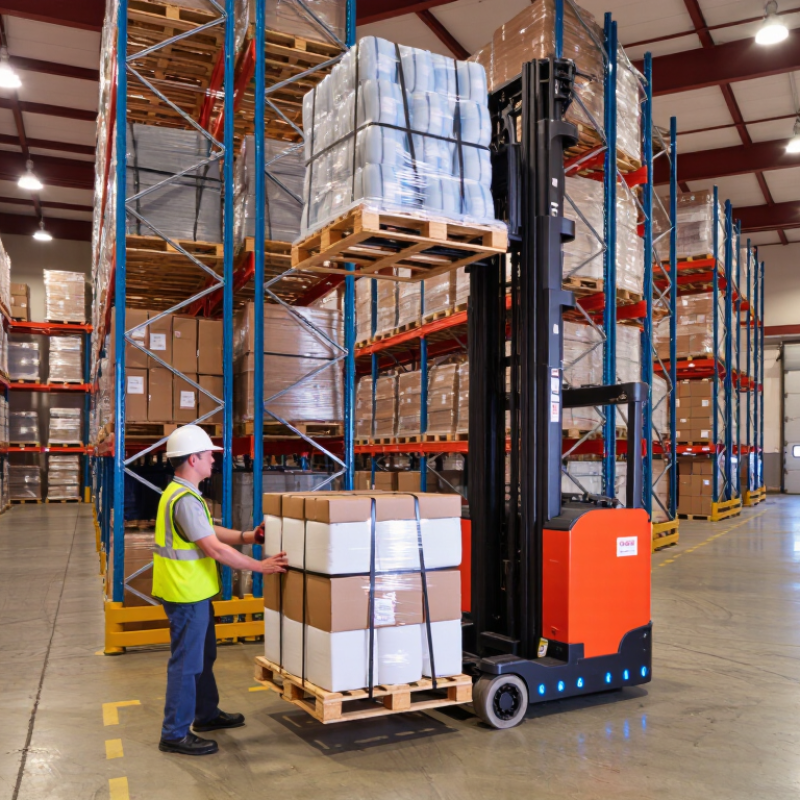
How to Choose the Right Counterbalanced Lift?

Define Counterbalanced Lift Types by Load, Surface, and Operating Environment

A counterbalanced lift carries its load beyond the front wheels, using the machine’s rear weight to maintain balance. Choosing the right type starts with the actual load, not just its stated weight. Check the load center, height, and any attachments; each can reduce the lift’s usable capacity. That number matters. A machine rated for a particular load may not safely handle the same weight when it sits farther forward.

Surface conditions help narrow the choice. Cushion tires generally suit smooth indoor floors, while pneumatic tires offer more compliance on uneven outdoor ground. For rough sites, confirm that the lift’s tires, clearance, and chassis match the terrain. Check the ground. A brief walk around the route can reveal thresholds, loose gravel, or a sloped loading area that a specification sheet misses.

The operating environment matters just as much. Electric lifts are often practical indoors, especially where ventilation and noise are concerns. Combustion-powered models may fit outdoor work with longer shifts, but site conditions still matter. Measure aisle width, door height, turning space, and charging or refueling access before selecting a type. It is easy to focus on capacity and overlook visibility or turning room. Recheck the choice with a representative load and route; real conditions can expose a mismatch that looked fine on paper.

Match Rated Capacity to Load Center: 24 Inches Is a Common Rating Basis

How to Choose the Right Counterbalanced Lift?

Rated capacity only makes sense when you know the load center behind it. ANSI/ITSDF B56.1 and OSHA’s Powered Industrial Trucks guidance address capacity ratings and load-center measurement. A 24-inch load center is common: with a uniformly distributed 48-inch load, its center sits 24 inches from the fork face. But uneven cartons or a long attachment can move that center forward. This is easy to overlook.

Tips: Check the capacity plate, load weight, and load center before lifting. For illustration, a 5,000-pound rating at 24 inches represents 120,000 inch-pounds of load moment. At a 30-inch center, the same load creates 150,000 inch-pounds. That comparison signals added risk; it does not establish a safe revised capacity. Never use a simple calculation to replace the truck’s rating plate or manufacturer-approved capacity data.

Measure from the vertical fork face to the load’s center of gravity, not to the pallet edge. If the load is longer than 48 inches, its center may exceed the common 24-inch basis. Check the actual load distribution, lift height, and attachment configuration against the truck’s rated capacity. OSHA requires capacity information to be available to operators, while ANSI/ITSDF B56.1 provides industry requirements for industrial truck design and operation. A quick visual estimate can be wrong; record the measurement when the load is irregular.

Compare Electric, LPG, and Diesel Models by Duty Cycle and Site Conditions

A counterbalanced lift should match the work cycle, not just the rated load. Electric models suit indoor warehouses, food areas, and sites where low noise and no tailpipe emissions matter. They work well with predictable shifts and planned charging breaks. Check battery capacity against travel distance, lift height, and attachment use; these all affect runtime. Quiet helps. But charging space and downtime need real planning.

LPG models can be useful where trucks move between indoor and outdoor areas and quick refueling supports busy shifts. Ventilation still matters, especially in enclosed spaces. Operators should also account for fuel storage and local site procedures. Diesel models generally fit demanding outdoor work, rough surfaces, and long operating hours. Their power may be valuable on ramps or construction yards, but exhaust, noise, and surface conditions can limit where they belong.

Compare a normal day, not an ideal one: loads per hour, distance traveled, time at idle, and shift changes. A truck lifting pallets all day needs a different setup from one making occasional moves. Measure aisle width and turning space, then check floor strength and slope. One detail is easy to miss: attachments change capacity and runtime. Ask suppliers to assess the actual load and work area, and verify specifications before choosing. A small site trial can reveal problems a duty-cycle estimate misses.

How to Choose the Right Counterbalanced Lift? — Compare Electric, LPG, and Diesel Models by Duty Cycle and Site Conditions

Decision Factor Electric Counterbalanced Lift LPG Counterbalanced Lift Diesel Counterbalanced Lift
Typical capacity range Commonly available from around 1.5 to 5 tonnes; larger models are also available. Commonly available from around 1.5 to 5 tonnes; larger models are also available. Commonly available from around 1.5 tonnes upward, including higher-capacity models for heavy loads.
Best-fit duty cycle Well suited to regular indoor work, multi-shift operations with planned charging, and applications where low local emissions matter. Useful for mixed indoor and outdoor work, variable shifts, or operations that need quick fuel changes. Indoor use requires suitable ventilation. Often suited to sustained outdoor work, heavy loads, and demanding applications where access to charging is limited.
Energy replenishment Requires battery charging or battery exchange. Charging arrangements should match the shift pattern and battery type. Refuelling with a replacement LPG cylinder can be quick; cylinders must be stored and handled according to local safety rules. Refuelling is generally quick. On-site fuel storage and handling must comply with applicable requirements.
Indoor air quality No exhaust emissions at the point of use; often the preferred option for enclosed spaces, subject to site requirements. Produces exhaust emissions, including carbon monoxide. Use indoors only where ventilation and monitoring are adequate and regulations permit. Produces exhaust emissions, including particulate matter and nitrogen oxides. Generally unsuitable for poorly ventilated enclosed areas.
Noise and operator environment Typically quieter, with low vibration and no engine exhaust at the truck. Engine noise and vibration are present; typically louder than an electric truck. Engine noise and vibration are present; often best suited to outdoor environments.
Outdoor and uneven surfaces Suitable for paved yards and firm surfaces when the truck, tyres, and weather protection are appropriate. Traction and battery performance should be checked for the site. Can suit paved yards and some mixed-surface work when configured for the conditions. Often a strong choice for outdoor yards and demanding surfaces when fitted with suitable tyres and ground clearance.
Maintenance considerations Requires battery, charger, electrical-system, and tyre care. Usually has fewer engine-related service items than combustion models. Requires engine, fuel-system, cooling-system, and emissions-system servicing, as applicable. Requires engine, fuel-system, cooling-system, and emissions-system servicing, as applicable.
Site infrastructure Needs suitable charging points, electrical capacity, and a safe battery-charging area; battery exchange may require handling equipment. Needs compliant LPG cylinder storage and a safe, designated cylinder-change area. Needs access to diesel fuel and compliant storage or refuelling arrangements.
Key selection checks Confirm shift length, charging windows, battery chemistry, charger capacity, load weight, lift height, and floor conditions. Confirm indoor ventilation, cylinder-change arrangements, shift pattern, load requirements, and local emissions rules. Confirm outdoor workload, surface conditions, load and lift requirements, fuel access, and local emissions rules.
A practical starting point Choose when indoor air quality, lower noise, and predictable charging access are priorities. Choose when fast refuelling and flexibility between indoor and outdoor tasks are important, and indoor ventilation is adequate. Choose when work is predominantly outdoors, loads are demanding, and charging infrastructure is impractical.

Capacity, operating time, performance, emissions, and suitability vary by truck configuration, battery or engine, attachment, load, surface, and local regulations. Verify the rated capacity at the required load centre and lift height, and assess actual site conditions before selecting a truck.

Set Mast Height, Free Lift, and Aisle Width Using Truck Specifications

Choose mast height from the highest beam, then add the pallet and load height. Check both lowered and fully raised mast dimensions against doorways, sprinklers, and ceiling obstructions. A truck that clears a dock door may still strike a low pipe inside.

Free lift matters in containers, trailers, and rooms with restricted overhead clearance. It lets forks rise before the mast extends, but the amount varies by configuration. Confirm the specification sheet’s free-lift figure and rated capacity at your actual load center. Attachments can reduce capacity. A neat spec sheet can still mislead.

Aisle width should come from the truck’s right-angle stacking specification, not a guess based on turning radius. Include the pallet’s length, load overhang, rack depth, and room for careful steering. OSHA’s powered-industrial-truck safety guidance cites about 85 fatal accidents and 34,900 serious injuries annually, underscoring why tight clearances deserve attention. Measure the narrowest working aisle, then verify it with the intended truck and load. Leave practical clearance; warehouse layouts are rarely perfect.

How to Choose the Right Counterbalanced Lift?

Compare representative mast lift heights, free-lift heights, and working aisle widths. Values are illustrative; actual specifications vary by truck, load, and configuration.

Choose a mast that clears the highest storage position while fitting beneath overhead obstructions when lowered. Free lift is the distance the forks rise before the mast extends, which matters in height-restricted spaces. Aisle width depends on the truck’s turning dimensions, load size, and required clearance—confirm it against the specific truck and load-handling data.

Check the Capacity Plate and OSHA’s Daily Pre-Shift Inspection Requirement

Choosing a counterbalanced lift starts with the load, not the truck’s advertised maximum. Read the capacity plate and match its rating to the load’s weight, dimensions, and center of gravity. A long crate can shift the load center forward and reduce safe lifting capacity. Mast height and fitted attachments can also affect the rating, so check the plate for the truck’s actual configuration. If the plate is missing or unreadable, do not guess. Ask a qualified supervisor to verify the truck’s rating.

OSHA requires powered industrial trucks to be examined before being placed in service, at least daily. Trucks used continuously must be examined after each shift. A pre-shift check should follow your workplace checklist and cover items such as forks, tires, mast chains, brakes, steering, horn, lights, and visible fluid leaks. Test operational controls only in a safe area. It is easy to rush this check. Don’t. Report defects, and keep a truck with unsafe conditions out of service until it is repaired. No checklist catches every developing fault, so note unusual noises or changes in handling, even when the truck still moves.

Article Source: