
Top 10 Fanless PC Manufacturers for Global Buyers
Fanless Pc systems are moving from niche installations into mainstream industrial computing. They fit where dust, vibration, and limited airflow make conventional cooling unreliable. A sealed unit mounted beside a production line can avoid fan maintenance, but it still needs careful thermal design. Small details matter.
The market context is clear. The International Federation of Robotics reported 541,302 industrial robot installations worldwide in 2023, with 4.28 million robots operating in factories. These figures do not measure fanless-PC sales, but they show the scale of automated environments that depend on dependable computing. Buyers still need to compare processor performance, operating-temperature ranges, ingress protection, connectivity, service life, and support. A low purchase price may not mean a lower total cost.
This Top 10 guide compares manufacturers for global buyers, focusing on product capability, customization, certifications, and after-sales reach. It also recognizes a limitation: the supplied material contains no verifiable quotation from a named Fanless Pc industry expert. Rather than invent one, this introduction relies on the cited IFR data and practical selection criteria. Readers should verify specifications against each manufacturer’s current documentation before choosing a system.
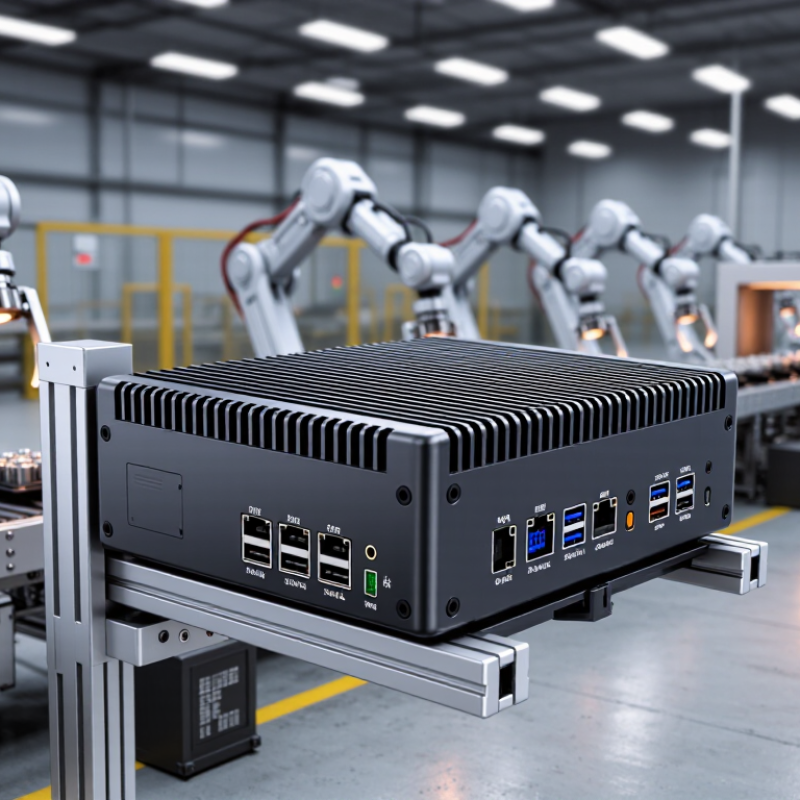
Fanless PC Fundamentals: Passive Cooling, CPU TDP, and Thermal Limits
Fanless PCs move heat through conduction and natural convection, so the enclosure is part of the cooling system. A processor’s thermal design power (TDP) is a design reference, not a guaranteed maximum draw. Turbo bursts, sustained workloads, and nearby heat sources can push actual temperatures higher. A compact aluminum case may feel cool on its fins while the processor approaches its thermal limit.
Thermal figures need context. JEDEC’s JESD51-12 guidance explains that package thermal metrics depend on test conditions and should not be treated as universal real-world values. ASHRAE TC 9.9’s 2021 Thermal Guidelines give 18–27°C as a recommended inlet range for data-center equipment; that range is not a blanket operating limit for every embedded PC. Small details matter. Compare the unit’s rated ambient range with the site’s hottest expected air temperature, not just the room’s average.
Ask manufacturers for sustained-load test results, the test ambient, and the chassis mounting position. Then run the intended workload with the actual storage, memory, and peripherals installed. Watch processor temperature and clock speed over time; a brief benchmark can miss thermal throttling after the case heat-soaks. Dust, blocked vents, or a panel mounted against a wall can change results. A datasheet can still mislead if it omits these conditions.
Ruggedness Benchmarks: IP65 Protection and IEC 60068 Environmental Tests
Global buyers comparing fanless PC manufacturers should treat ruggedness claims as evidence to verify, not marketing adjectives. IP65, under IEC 60529, indicates dust-tight protection and resistance to water jets under specified test conditions. It does not mean the computer can be immersed. Check whether the tested unit included its actual connectors, cable glands, and mounting hardware. Small details matter.
IEC 60068 is a family of environmental test methods, not one universal approval. Relevant tests can include temperature cycling, damp heat, vibration, and mechanical shock. Ask for the method numbers, severity levels, test duration, operating state, and pass criteria. A computer tested while powered may behave differently from one tested while switched off. Get reports for the exact model and enclosure revision.
Heat deserves close attention in a sealed, fanless design. Dust protection can limit airflow, so review operating-temperature results under realistic processor loads. Look for temperature logs, not only a pass statement. I would also ask how long the unit ran after testing; this evidence is easy to overlook. Paperwork helps, but it cannot fully predict years beside a vibrating pump or in a sun-warmed cabinet. A rating is not a field history.
Top 10 Fanless PC Manufacturers for Global Buyers - Ruggedness Benchmarks: IP65 Protection and IEC 60068 Environmental Tests
Standards-based comparison framework for evaluating shortlisted suppliers. It does not present a verified manufacturer ranking or claim that any particular product has passed these tests. Test severities and acceptance criteria should be agreed for the intended application.
| No. | Ruggedness benchmark | Relevant standard | What to specify or verify | Evidence to request from each supplier |
|---|---|---|---|---|
| 1 | IP65 dust and water protection | IEC 60529 | IP6X means dust-tight under the specified test; IPX5 covers protection against water jets. IP65 does not indicate protection against immersion. | Test report for the exact enclosure configuration, including covers, connectors, glands, mounting orientation, and any required cable installation. |
| 2 | Cold operation and storage | IEC 60068-2-1 | Agree the minimum operating and storage temperatures, exposure duration, and whether the unit must be powered during the test. The standard does not set one universal temperature for all products. | Declared operating and storage limits, test severity, test duration, and post-test functional results. |
| 3 | Dry-heat operation and storage | IEC 60068-2-2 | Specify the maximum operating and storage temperatures and the exposure duration. Confirm whether the acceptance check includes operation under load. | Test report identifying the temperature, duration, powered state, test configuration, and inspection or functional-check results. |
| 4 | Temperature change | IEC 60068-2-14 | Set the low and high temperatures, transition conditions, number of cycles, and dwell times to reflect the installation environment. | Test method and severity details, cycle count, sample configuration, and results for enclosure integrity and product function. |
| 5 | Cyclic damp heat | IEC 60068-2-30 | Use the selected temperature and humidity cycle to assess exposure to cyclic high-humidity conditions. Specify any required post-test inspection or operation. | Report showing the selected cycle severity, number of cycles, product configuration, and inspection results for corrosion, condensation effects, and function. |
| 6 | Steady-state damp heat | IEC 60068-2-78 | Agree the temperature, relative humidity, exposure time, and powered or unpowered condition. These severities are selected for the product and use case. | Test report with environmental conditions, duration, sample details, and results of the agreed functional and visual checks. |
| 7 | Sinusoidal vibration | IEC 60068-2-6 | Define frequency range, acceleration or displacement, sweep rate, duration, axes, and whether the unit is operating during the test. | Test profile and report identifying the mounting method, axes, severity, duration, and any detected loosening or functional interruption. |
| 8 | Random vibration | IEC 60068-2-64 | Specify the vibration spectrum, frequency range, duration, axes, and mounting arrangement based on the expected transport or operating environment. | Report showing the applied spectrum and duration, product mounting, sample configuration, and post-test inspection or functional results. |
| 9 | Mechanical shock | IEC 60068-2-27 | Agree pulse shape, peak acceleration, pulse duration, number of shocks, directions, and whether the product is powered. | Test report specifying the shock pulse and directions, the mounting arrangement, and results for physical damage and continued function. |
| 10 | Evidence and configuration control | Applies across the selected test methods | Compare evidence only when it covers the same product model and relevant enclosure, connector, thermal, and mounting configuration offered for purchase. | Traceable reports identifying the tested model, hardware revision, test laboratory, methods, severity levels, dates, and deviations from the agreed protocol. |
Global Buyer Criteria: Operating Temperature, I/O, Certifications, and Support
For global buyers, a fanless PC should be matched to its actual installation conditions, not just its processor specifications. Check the operating temperature range and confirm whether it applies under the planned workload. A unit inside a sealed cabinet may face hotter air than the room around it. Dust, vibration, and limited airflow also matter. Small details change reliability.
Tips: List every required connection before comparing models. Count Ethernet ports, USB types, serial interfaces, display outputs, and any expansion slots. Then check the connector locations against your cabinet layout. A missing port can mean an adapter, extra wiring, and another possible failure point.
Certifications deserve careful review. Ask for documentation that matches the exact model and intended market; similar-looking configurations may differ. Also assess support beyond the sales stage: response times, firmware access, repair options, and spare-part availability can affect downtime. Request clear answers in writing. I would still test a sample in the real enclosure before a large order. Specifications help narrow choices, but they cannot fully predict performance in a warm, crowded cabinet.
Top 10 Fanless PC Manufacturers for Global Buyers
Global buyer criteria include operating temperature, I/O, certifications, and support. The chart compares representative operating-temperature ranges commonly found in fanless and embedded PC specifications; these are not formal product classes or a manufacturer ranking.
Published specifications vary by model and configuration. Confirm the rated temperature range, required I/O, applicable certifications, and regional support directly in each product datasheet.
Top 10 Fanless PC Manufacturers: Product Specialties and Global Reach
Fanless PC manufacturers serve very different needs, from compact edge gateways to sealed systems for dusty production floors. Their specialties show up in cooling design, processor options, mounting methods, and operating temperature ranges. A small aluminum case may suit a kiosk, while a finned chassis and wide power input range better fit a factory cabinet. Heat still matters.
MarketsandMarkets estimated the global industrial PC market at 5.4 billion US dollars in 2023, with a projected value of 7.1 billion by 2028. This is an industrial PC estimate, not a fanless-only forecast. It still signals a sizable market for rugged computing. Buyers should compare each manufacturer’s tested thermal limits and product lifecycle policy, rather than treating “fanless” as a complete specification.
Global reach means more than shipping to multiple regions. Check for local technical support, clear documentation, spare-part availability, and consistent product configurations across markets. Ask how systems behave during sustained workloads, not just brief demonstrations. A quiet unit can still throttle under heat. Regional certifications and delivery timelines also need verification before deployment. That work is less glamorous, but often exposes gaps in a supplier’s real-world support.
Comparing Manufacturers by Performance, Lifecycle, Service, and Total Cost of Ownership
Top 10 Fanless PC Manufacturers for Global Buyers
A useful comparison starts beyond processor speed. Ask manufacturers for sustained-load test results, operating-temperature limits, and evidence of thermal throttling under real workloads. A fanless unit running beside a warm production line may behave differently from one tested in a cool office. Check interfaces, memory capacity, and storage options too. Small details matter.
Lifecycle support can outweigh a lower purchase price. Confirm how long the manufacturer expects to supply compatible components, provide firmware updates, and repair units. Ask for service-response times in writing, especially when devices operate across several sites. The International Energy Agency’s Electricity 2024 report estimates data centres used 240–340 TWh of electricity in 2022, with demand potentially reaching 620–1,050 TWh by 2026. That sector-wide figure is not a fanless-PC benchmark, but it underscores why buyers should measure power use rather than guess. Compare energy, installation, support, replacement, and downtime costs over the same service period. One caveat: projected lifetimes can be optimistic, so test assumptions against actual deployment conditions.