What is Dry Granulation and Why is it Important in 2026?
In 2026, the landscape of pharmaceutical manufacturing continues to evolve. Dry Granulation is emerging as a pivotal process in this transformation. This method offers numerous advantages in producing solid dosage forms, especially for sensitive compounds. It allows manufacturers to create granules without using liquid binders, reducing the risk of moisture sensitivity.
The importance of Dry Granulation extends beyond efficiency. It significantly impacts product quality. The process enhances flowability and compressibility of powders, essential for consistent tablet production. Pharmaceutical experts emphasize that improving these characteristics can lead to better drug performance.
However, challenges remain. While dry granulation offers benefits, not all formulations are suitable for it. Ongoing research is needed to optimize conditions for different materials. The industry must continue to adapt and refine techniques to fully harness the potential of Dry Granulation. This balance of innovation and caution will shape the future of drug manufacturing.
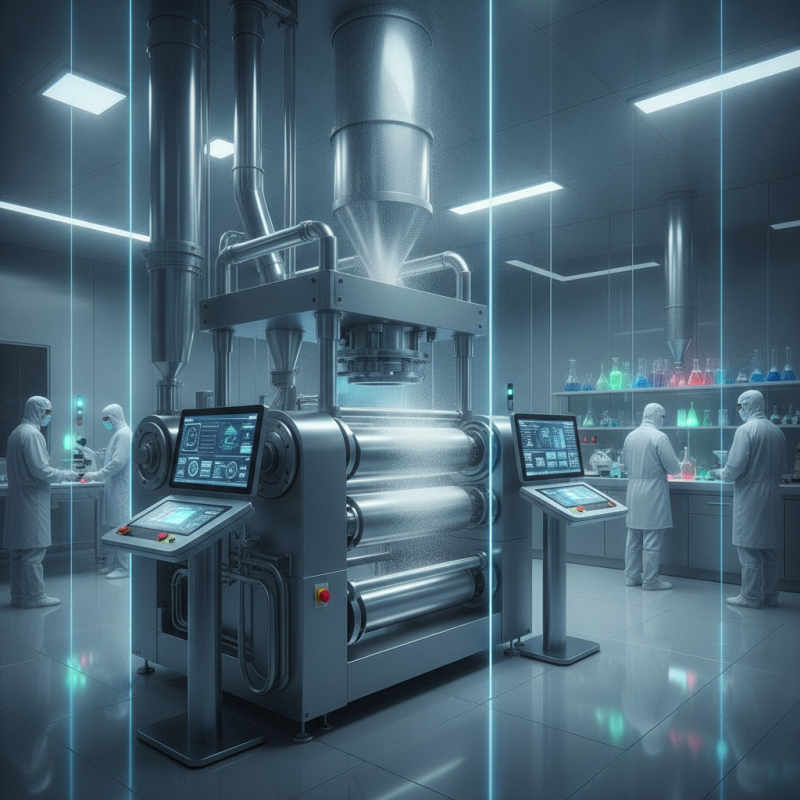
Definition of Dry Granulation and Its Process Overview
Dry granulation is a key manufacturing process in the pharmaceutical industry. It involves the conversion of powders into granules without using liquid binders. This method is particularly valuable for materials sensitive to heat and moisture. In a study by the International Journal of Pharmaceutics, about 30% of all solid dosage forms rely on dry granulation.
The process typically includes two main steps: powder compacting and granule size reduction. First, powder is compressed into large tablets or compacts using a roller compactor. Then, these compacts are milled to achieve the desired granule size. This method can enhance flowability and prevent segregation of ingredients, ensuring uniformity in the final product.
Despite its benefits, dry granulation presents challenges. Controlling particle size distribution can be difficult. Inconsistent tablet hardness may arise if compaction pressure varies. Industry data shows that 15% of batches may require reprocessing due to these issues. As dry granulation techniques evolve, addressing these challenges remains essential for improving manufacturing efficiency and product quality.
Key Benefits of Dry Granulation in Pharmaceutical Manufacturing
Dry granulation is a crucial process in pharmaceutical manufacturing. It enhances the efficiency and quality of drug products. This method compresses powders into granules, eliminating the need for moisture. This is vital for sensitive ingredients that might degrade with water.
One key benefit of dry granulation is improved flowability. When powders are granulated, they become easier to handle. This efficiency reduces production downtime. Moreover, it allows for more uniform tablet formation.
Another benefit is the reduction in the use of excipients. This can lead to more potent formulations with fewer additives.
However, dry granulation isn't without challenges. It can result in uneven granule sizes. This variability affects the final product quality. It requires careful control and monitoring during production. The balance between efficiency and quality must be continuously evaluated.
Applications of Dry Granulation in Different Industries
Dry granulation is a significant process applied across various industries. In pharmaceuticals, it enhances the flow properties of powders. This is crucial for tablet formation. As a result, the manufacturing process becomes more efficient and consistent. The absence of liquid in this method also reduces the risk of degradation, guaranteeing product stability.
In the food industry, dry granulation plays an equally important role. It helps in producing instant food mixes. These granules improve texture and solubility in water. This technique is vital for creating a uniform product that meets consumer needs. However, achieving the right granule size can sometimes be challenging. Variability in particle size may affect the final product.
Moreover, the cosmetics sector utilizes dry granulation for producing powdered ingredients. It allows for better binding of formulations, enhancing product quality. Proper understanding of moisture sensitivity is key here. Incorrect methods may lead to clumping or reduced efficacy. Rethinking granulation techniques can minimize these issues and optimize production outcomes.
Future Trends in Dry Granulation Technology for 2026
Dry granulation is gaining momentum in the pharmaceutical and food industries for its efficiency and low energy consumption. In 2026, future trends indicate a shift towards advanced dry granulation techniques that enhance product quality. Reports show that the dry granulation market is projected to reach $5 billion by 2026, driven by demand for cost-effective and eco-friendly processes.
The integration of automation and real-time monitoring will significantly impact dry granulation. Data from industry studies suggest that automation can reduce processing time by 30%. This not only optimizes production but also minimizes human error. Furthermore, advanced methods, such as roller compaction, are expected to gain traction, providing a more uniform particle size distribution. These improvements lead to better dissolution rates and bioavailability.
**Tips:** When considering dry granulation, focus on equipment efficiency. Regular maintenance of machinery is crucial for optimal results. Additionally, training staff on the latest techniques can prevent costly mistakes. As the technology evolves, constant adaptation and learning will be essential.
Future Trends in Dry Granulation Technology for 2026
Challenges and Solutions in Implementing Dry Granulation Methods
Dry granulation is gaining traction in the pharmaceutical and nutraceutical industries. However, implementing these methods can present significant challenges. One major issue is the variability in raw material properties. A study published in the International Journal of Pharmaceutics highlights that up to 40% of formulation failures are related to raw material inconsistencies. This inconsistency can lead to poor flowability and undesirable tablet hardness.
Another challenge is equipment selection. Many manufacturers struggle to find the right machinery that suits their specific needs. Reportedly, up to 30% of production downtime is caused by equipment failures or inefficiencies, according to the Journal of Pharmaceutical Innovation. Constant maintenance and calibration are essential, yet they are often overlooked. This neglect can result in costly delays and reduced output.
Tip: Regularly train your staff on equipment use and maintenance. This can minimize downtime and improve overall productivity. Additionally, consider adopting a robust quality control program. It helps ensure that raw materials meet specifications consistently.
Lastly, regulatory compliance is a crucial concern. The FDA and other regulatory bodies set stringent guidelines for granulation processes. Non-compliance can result in financial penalties and damaged reputations. Engaging with experienced consultants during the implementation phase may provide essential insights into regulatory expectations.