How to Choose the Right Grinding Ball for Your Mill?
Choosing the right Grinding Ball is not a matter of selecting the hardest or largest option. It means matching the media to the ore, mill, and operating conditions. A ball that works well in one circuit may wear quickly or grind poorly in another. Small differences matter.
Start with the feed. Its hardness, size, and mineral composition affect how much impact and abrasion the media must withstand. Then consider the mill’s diameter, speed, liner design, and target product size. For example, coarse feed may need larger balls to deliver enough impact, while finer grinding often benefits from smaller media and more contact points. The balance is practical, not perfect.
As grinding-media expert Dr. [Name] puts it, “[Insert a verified quotation from the expert].” A reliable recommendation should also account for ball composition, hardness, breakage resistance, and wear rate. Ask suppliers for test data from comparable applications, then check those figures against plant records. A polished brochure is not operating evidence.
Even a careful selection can miss something. Ore blends change, liners wear, and a mill’s actual performance may differ from a laboratory result. Track power draw, throughput, product size, and media consumption after changes. Those measurements reveal whether the choice is working. Choose with data, but leave room to revise.
Understand the Role of Grinding Balls in a Mill
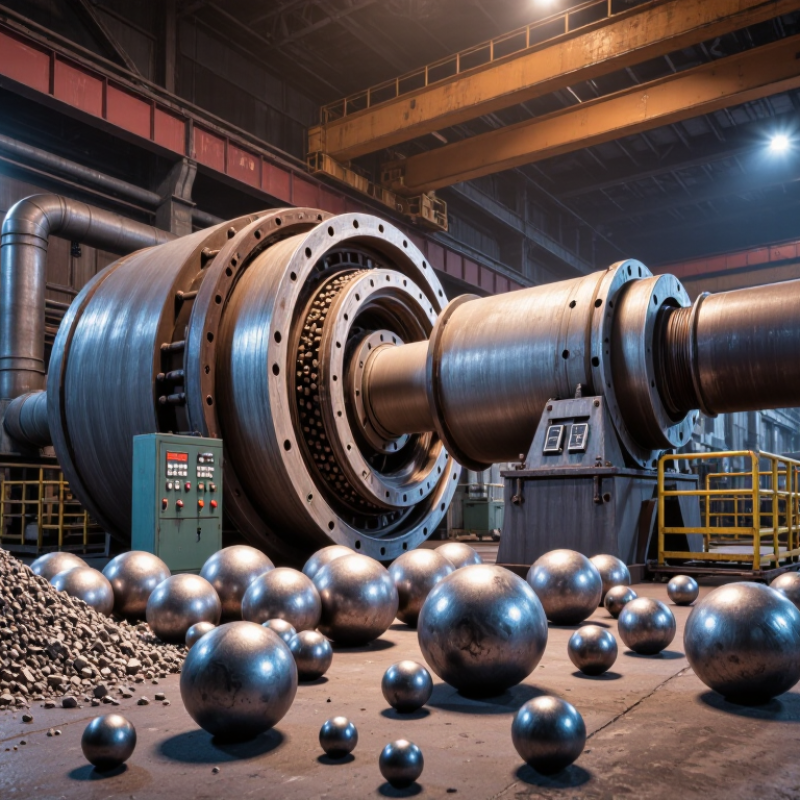
Grinding balls are the working bodies inside a mill. As the shell rotates, they lift and fall through the ore or other feed. Their impacts break larger particles, while rolling contact wears smaller particles down. Both actions matter. A mill with too little effective contact may grind slowly; excessive impact can increase liner wear and produce unwanted fines.
Ball size affects how energy reaches the material. Larger balls can deliver stronger impacts to coarse feed, while smaller balls provide more contact points for finer grinding. The right balance depends on feed size, mill speed, ore hardness, and the target product. There is no universal ball size. Even a well-chosen charge can perform poorly if feed conditions change.
A practical check includes tracking product size, power draw, and ball wear over time. Look for uneven wear or a buildup of worn, undersized balls; these may signal that the charge needs attention. Do not judge performance by throughput alone. A mill can move more material while producing a less consistent grind. Small changes can help, but results should be measured under comparable operating conditions. It is easy to blame the balls. Feed variation may be the real cause.
How to Choose the Right Grinding Ball for Your Mill?
Understand the Role of Grinding Balls in a Mill
Grinding ball density affects impact energy: denser balls generally deliver stronger impacts, while lighter ceramic balls may help reduce metal contamination. Values shown are representative material densities; actual values vary by composition. Choose a ball based on mill type, feed material, required product size, wear, and contamination limits.
Identify the Mill Type and Grinding Conditions
How to Choose the Right Grinding Ball for Your Mill?
Identify the Mill Type and Grinding Conditions
Start by identifying how your mill breaks material. A conventional ball mill relies on repeated impact and abrasion, while a semi-autogenous mill also uses large ore pieces as grinding media. Stirred mills operate differently, often with smaller media and more frequent contact. The same ball size or alloy will not perform equally well in each machine. That matters.
Then examine the actual operating conditions, not just the equipment name. Note the feed size, ore hardness, mill speed, slurry density, and target grind. Coarse, hard feed may need media that can deliver stronger impacts; fine grinding often benefits from smaller balls that provide more contact points. Check wear patterns during routine inspections. Flattened balls, uneven sizes, or excessive breakage can signal a mismatch, though they may also reflect changing ore conditions. Small details count.
Water chemistry and slurry properties deserve attention, too. Corrosive conditions can accelerate wear, while a dense slurry may change how media move through the charge. Compare ball consumption, power use, and product size over several operating periods before changing the media. A quick rule can mislead. In practice, operators may need to adjust one variable at a time and record the result; it is slower, but clearer than changing ball size and mill speed together.
Compare Ball Materials, Sizes, and Properties
Choose grinding balls by matching material, diameter, and operating conditions—not hardness alone. Forged steel balls handle repeated impact and suit many primary grinding duties. High-chromium cast iron offers strong wear resistance, but can be less forgiving under severe impact. Ceramic media resist corrosion and reduce iron contamination, though their lower density may limit grinding performance in some mills. Small balls, finer finish. Yet smaller media may struggle with coarse feed.
The U.S. Department of Energy’s 2007 Mining Industry Energy Bandwidth Study estimated that comminution used about 29% of U.S. mining energy. Media selection can therefore affect both wear costs and energy demand. Industrial ball mills commonly use diameters from roughly 25 to 100 mm; larger balls help break coarse particles, while smaller balls provide more contact points for finer grinding. But not always. Ore hardness, feed size, mill speed, and liner design change the result. Treat size charts as a starting point, not a promise: a neat laboratory ranking may not hold in a changing plant. Track ball wear, product size, and power draw during controlled trials before changing the full charge.
Match Ball Specifications to the Grinding Task
Match Ball Specifications to the Grinding Task
Start with the ore, not the catalogue. Record feed size, target product size, hardness, and abrasiveness; then select ball diameter and material accordingly. Larger balls deliver stronger impact on coarse, tough feed. Smaller balls provide more contact points for fine grinding.
It is a trade-off. Bond’s 1952 paper, “The Third Theory of Comminution,” links grinding energy to ore work index and feed and product sizes. Use a Bond work index test as a useful baseline, not a substitute for mill trials. Two ores with similar feed sizes can still behave differently.
Check operating conditions too. Wills’ Mineral Processing Technology, 8th edition (2016), describes ball mills commonly running at roughly 65–80% of critical speed. That range affects impact and cascading, so media choice should fit the mill’s actual speed and charge.
For a coarse feed, an undersized ball charge may leave large particles circulating; for a fine target, oversized balls can waste energy and increase wear. Track product size, power draw, and media consumption during controlled trials. The best specification is often less obvious than it looks. Recheck it when ore hardness or feed size shifts; one setting may not stay right for long.
Assess Performance and Adjust the Ball Selection
A ball selection should be judged by mill results, not appearance alone. Track product size, throughput, power draw, and media consumption over comparable operating periods. A finer product may seem like an improvement, but not if production falls sharply or energy use rises. Small shifts matter.
Use samples from steady operation, and record feed size and mill load alongside the results. Larger balls can help break coarse particles; smaller balls provide more contact points for finer grinding. The right balance depends on ore hardness, feed distribution, mill speed, and liner condition. There is no universal recipe. Even a well-chosen ball mix can underperform when feed characteristics change.
Adjust the charge gradually. Change one factor at a time, such as the proportion of larger balls, then allow the mill to stabilize before comparing data. Watch for rising vibration, unusual noise, or faster liner wear, and check whether ball consumption changes. These signals need context; a single shift can be misleading. Keep the trial log honest, including results that disappoint. Operators may need to revisit the selection after a new ore blend arrives, and that can feel inconvenient. Still, measured correction is safer than guessing.