How to Choose a Carton Printing Machine?
Choosing a Carton Printing Machine is a practical decision, not a simple equipment purchase. The right model must match your carton materials, print quality, order volume, and production space. A machine that performs well on coated board may struggle with recycled kraft paper. That difference can affect ink adhesion, drying time, and waste rates.
Experienced packaging teams usually inspect several details before comparing prices. Check the maximum sheet size, printing speed, color accuracy, plate system, feeder stability, and cleaning requirements. Ask for sample cartons made with your actual board and ink. Watch the feeding process closely. Uneven sheets can cause blurred edges, registration errors, and repeated stoppages. These small problems become expensive during long production runs.
Do not rely only on a supplier’s brochure. Request maintenance records, operator training details, warranty terms, and references from similar businesses. A dependable manufacturer should explain limitations clearly. It should also provide realistic output figures, not only ideal laboratory results. Every factory has different conditions. Humidity, operator experience, and board storage can change performance. Some assumptions may need revision after testing. That is normal.
Consider the complete operating cost, including energy, spare parts, labor, setup time, and rejected cartons. A cheaper machine may demand more manual adjustment. A faster model may require better quality control. Review safety features and documented compliance for your region. Then compare the machine’s expected service life with your production plans. The best choice is not always the fastest or most advanced. It is the Carton Printing Machine that delivers stable quality, manageable costs, and dependable support over time.
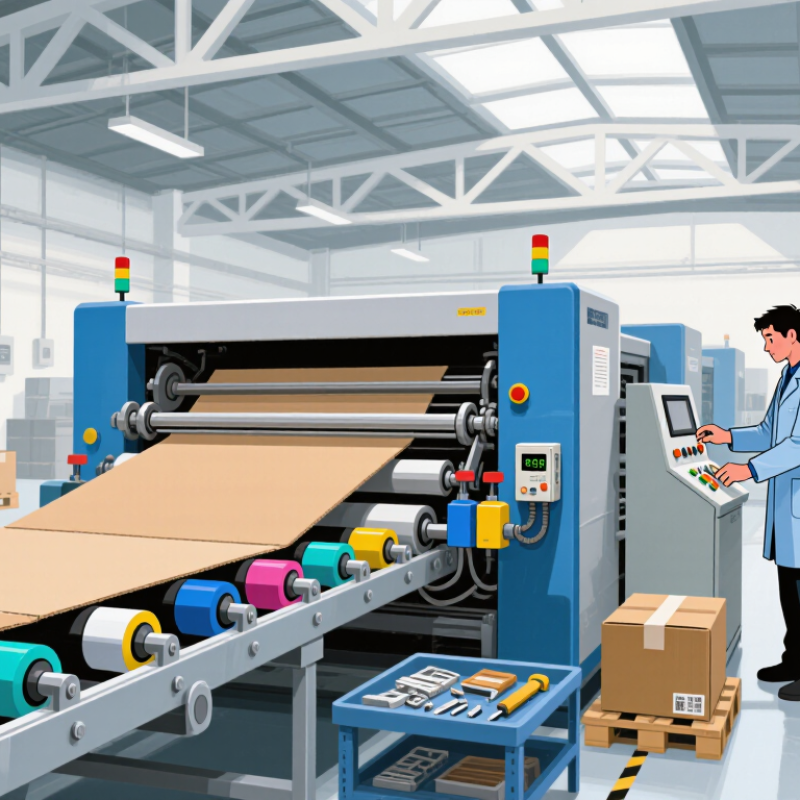
Define the Carton Types and Production Requirements
How to Choose a Carton Printing Machine?
Define the carton types and production requirements before comparing machine specifications. Corrugated cartons need strong feeding and stable ink transfer. Folding cartons often require sharper detail and tighter color registration. Rigid cartons may demand thicker board handling and careful surface control.
Measure the carton’s length, width, height, and board thickness. Record the smallest and largest sheet sizes. These figures determine the feeder design and printable area. Also identify the printing method, ink type, number of colors, and drying needs. Water-based inks may require different drying control than solvent-free coatings. Do not estimate production volume casually. A few thousand cartons per month needs a different machine from continuous daily production.
Check the actual job mix, not only the fastest expected order. A machine rated for high speed may perform poorly with frequent size changes. Changeover time can quietly reduce output. I have seen operators choose speed first and regret the decision later. Waste sheets, setup time, and maintenance access matter. Request practical samples using your own board. Inspect small text, solid coverage, edge sharpness, and color consistency. Leave room for uncertainty. Board quality can vary between deliveries, even when specifications appear identical. A reliable choice balances carton structure, print quality, order frequency, operator skill, and future workload.
How to Choose a Carton Printing Machine?
Define the Carton Types and Production Requirements
Carton construction is a key factor when selecting a printing machine. Folding cartons usually use paperboard of approximately 0.4–0.8 mm, while corrugated cartons commonly use E-flute, B-flute, C-flute, or BC double-wall board. Thicker board requires stronger sheet feeding, accurate registration, suitable ink transfer, and sufficient drying or curing capacity. Sheet-fed offset or digital printing is commonly considered for folding cartons and fine E-flute work, while flexographic systems are widely used for direct printing on larger corrugated cartons.
Representative thickness values: folding carton paperboard 0.6 mm, E-flute approximately 1.5 mm, B-flute approximately 3.0 mm, C-flute approximately 4.0 mm, and BC double-wall approximately 7.0 mm. Actual specifications vary according to paper grade, flute manufacturer, and board construction.
Match Printing Technology to Carton Materials and Designs
Choosing a carton printing machine starts with the material, not the machine name. Paperboard, corrugated board, recycled stock, and coated cartons absorb ink differently. Coated paperboard often suits offset printing because it supports fine text, smooth gradients, and sharp product images. Flexographic printing works well on corrugated surfaces and absorbent materials. It handles solid colors efficiently, though very small details may lose definition.
Digital printing can be practical for short runs, seasonal packaging, or cartons with changing graphics. It reduces plate preparation and supports quick artwork updates. For long production runs, flexographic or offset equipment may provide better unit costs. Check the carton thickness, sheet size, ink adhesion, drying method, and folding requirements before deciding. A machine that prints beautifully on a test sheet may perform poorly after creasing. Real production conditions matter more.
Tips: Request test prints using your actual carton stock. Inspect small lettering, dark areas, barcode edges, and color consistency. Ask whether the machine supports water-based, UV, or solvent-based inks required by your process. Review drying speed and setup waste with an experienced operator. Keep samples from several runs, not just one. A perfect sample can still mislead. I have seen attractive proofs fail during folding because heavy ink coverage made the board less flexible. Leave room for adjustment; carton design and printing technology must work together.
Compare Machine Speed, Format, and Print Quality
How to Choose a Carton Printing Machine?
Machine speed matters, but the fastest line is not always the most productive. Smithers’ The Future of Digital Print for Packaging to 2028 estimates that digital packaging print will grow from about US$22 billion in 2023 to nearly US$37 billion by 2028. This growth reflects shorter runs and faster artwork changes. Compare the rated speed with your real workload. A machine running 8,000 sheets per hour may slow sharply during washing, plate changes, or setup. Ask for production samples using your board grade.
Format affects waste more than many buyers expect. Check the smallest and largest carton dimensions, board thickness, feeder stability, and die-line tolerance. PMMI reports that packaging operations increasingly value flexible equipment for changing product formats. A wide format range can support more orders, but it may reduce efficiency on small cartons. Measure your common sizes, not only the maximum size. That mistake is easy to make.
Print quality should be judged under production conditions. Inspect fine text, solid coverage, color consistency, and registration at full speed. Corrugated board absorbs ink, so a sharp sample on coated stock can mislead you. Fogra guidance on process control emphasizes repeatable measurement, including density and color difference. Ask whether the machine supports inline inspection and documented calibration. I would also test a difficult design with small reversed text. It may fail. That failure is useful. A practical trial often reveals more than a polished showroom sample.
How to Choose a Carton Printing Machine? — Compare Machine Speed, Format, and Print Quality
| Printing Technology | Typical Production Speed | Common Format or Substrate Range | Print Quality and Color | Best Suited For | Key Buying Consideration |
| Sheet-fed offset | About 7,000–18,000 sheets per hour, depending on press size, stock, and job setup | Commonly B2 to B1-class sheets; maximum sheet dimensions vary by press | High-resolution images, fine text, and consistent process-color reproduction; spot colors are also possible | Medium- and long-run folding cartons with detailed graphics and frequent use of coated paperboard | Check maximum sheet size, board thickness, make-ready time, and compatibility with downstream coating or finishing |
| Sheet-fed digital inkjet | Varies considerably by system; production models are commonly rated in the thousands of sheets per hour | Often B2-class sheets; supported board size, thickness, and coating requirements are model-specific | High-quality variable graphics and short-run color work; color gamut and surface appearance depend on ink and substrate | Short runs, prototypes, versioned packaging, and jobs where avoiding plates is valuable | Request a test on the actual carton stock; verify food-packaging requirements, drying, finishing compatibility, and cost per sheet |
| Flexographic printing | Often about 100–300 metres per minute on suitable web or corrugated systems; actual output depends on configuration and job | Web width or board size is machine-specific; commonly used on flexible webs and corrugated board | Modern systems deliver strong color and good registration; results depend on plates, anilox rolls, ink, and substrate | High-volume packaging, corrugated cartons, and production requiring inline printing and converting | Confirm the machine is designed for the carton substrate and format; assess plate costs, changeover time, and inline finishing |
| Gravure printing | Often about 100–300 metres per minute on continuous-web systems, with speed affected by ink drying and job setup | Continuous web; usable width and repeat length depend on cylinder and press design | Consistent, dense color and smooth tonal areas; fine image reproduction is suitable for long, repeat runs | Very long-run packaging applications where stable output can justify cylinder preparation | Compare cylinder investment and lead time with expected run length; check substrate, drying, and changeover needs |
Note: Speeds and format ranges are indicative industry ranges, not guaranteed output. Actual production depends on machine configuration, carton stock, ink system, job complexity, setup, and finishing requirements. Verify specifications and run a production trial before purchasing.
Evaluate Automation, Setup, and Integration Needs
How to Choose a Carton Printing Machine?
Evaluate Automation, Setup, and Integration Needs
Choosing a carton printing machine starts with the workflow, not the machine’s headline speed. A fast press can create delays if operators load sheets manually or adjust settings repeatedly. Observe a normal production shift. Record loading time, plate changes, ink adjustments, drying delays, and cleaning work.
Automation should match your order pattern. Automatic feeding suits stable, high-volume runs. Flexible job presets help when carton sizes change throughout the day. Ask how quickly the machine detects misfeeds, controls registration, and alerts operators. Clear touchscreen instructions matter, especially during night shifts. Small details often protect output quality.
Integration deserves equal attention. Check whether the printer connects with your prepress software, production planning system, inspection equipment, and finishing line. Confirm file formats, data exchange methods, and maintenance access before purchase. Leave enough floor space for material movement and safe operator access. Measure door widths, ceiling height, ventilation, and power capacity.
I once underestimated setup time during a line change. The machine performed well, but upstream scheduling was poorly connected. That mistake caused avoidable waiting. Build a practical test using your carton board, artwork, ink, and usual batch sizes. Request measured results, not general promises. Also examine training, spare parts, service response, and operator documentation.
A simpler system may outperform a more advanced one when your team can control it confidently.
Assess Total Cost, Maintenance, and Supplier Support
How to Choose a Carton Printing Machine?
Assess Total Cost, Maintenance, and Supplier Support
A carton printing machine should be judged by more than its purchase price. Calculate the full cost over five years, including ink, plates, power, labor, waste, and replacement parts. Ask for a written estimate based on your carton size, production volume, and required print quality. A low initial price can become expensive when setup takes longer than expected.
Maintenance details deserve close attention. Check how often rollers, belts, print heads, and drying components require inspection. Ask whether operators can complete routine cleaning without a specialist. During a factory visit, look for accessible service panels and clear maintenance records. Small delays matter. One hour of unplanned downtime can disrupt delivery schedules and increase overtime costs.
Supplier support is equally important. Confirm response times, training arrangements, spare-part availability, and remote troubleshooting procedures. Request references from users with similar materials and production levels. Speak with their maintenance staff, not only sales representatives. My first machine comparison focused too heavily on speed. I underestimated setup waste and support delays. That mistake changed my evaluation method. A practical trial using your own carton board can reveal feeding problems, color variation, and operator difficulties. Ask the supplier to document test settings and expected output. Promises are useful, but service records are stronger evidence. q