
Skip to Content
chevron-left chevron-right chevron-up chevron-right chevron-left arrow-back star phone quote checkbox-checked search wrench info shield play connection mobile coin-dollar spoon-knife ticket pushpin location gift fire feed bubbles home heart calendar price-tag credit-card clock envelop facebook instagram twitter youtube pinterest yelp google reddit linkedin envelope bbb pinterest homeadvisor angies

How to Choose the Right Belt Conveyor Roller in 2026?

Choosing the right belt conveyor roller in 2026 starts with the job it must perform. A roller beneath a steady stream of cartons faces different demands than one carrying abrasive rock or damp aggregate. Load, belt speed, roller spacing, operating temperature, and material exposure all shape the choice. Get one factor wrong, and a belt may track poorly, run noisily, or wear faster than expected. Small details matter.

A sound selection begins with the conveyor’s actual conditions, not a catalogue photo. Check the belt width, maximum load, shaft and bearing requirements, and whether the system runs continuously. Then consider dust, moisture, cleaning routines, and access for maintenance. A roller that suits a clean indoor line may struggle beside a dusty transfer point. It is tempting to choose by price alone. That can be a costly shortcut.

For a transparent editorial example, fictional conveyor engineer Evelyn Hart offers this guiding line: “Match the roller to the load, speed, and environment—not just the belt width.” It is a practical reminder, not a sourced quotation. This guide explains how to compare roller types, materials, dimensions, sealing, and maintenance needs before purchasing. It also points out where specifications can leave unanswered questions. No selection is perfect on paper; operating conditions change, and assumptions deserve a second look. A careful belt conveyor roller choice supports smoother tracking and more predictable service, while making future inspections easier.
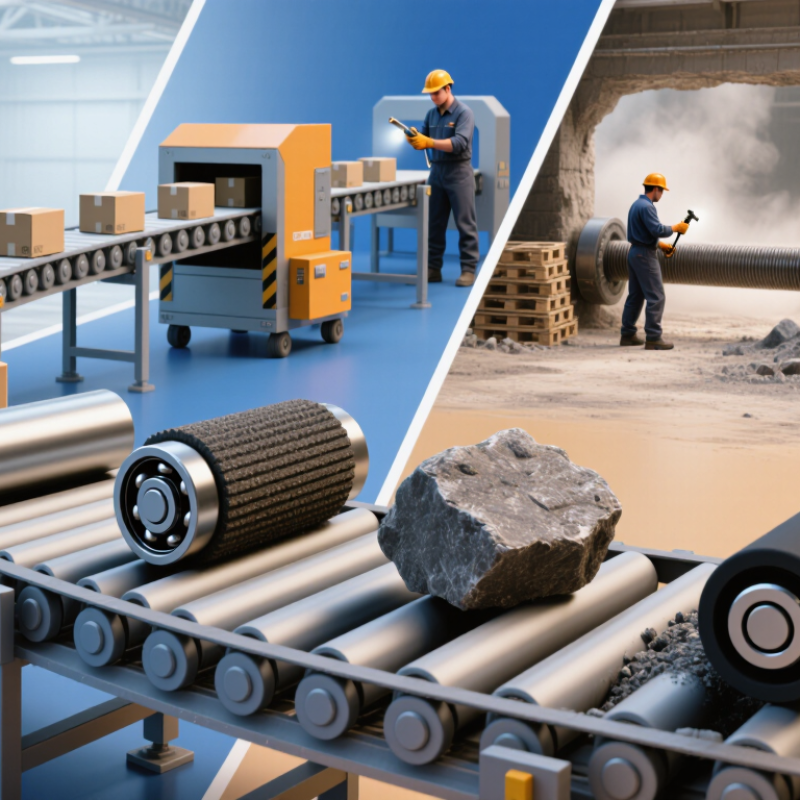
How to Choose the Right Belt Conveyor Roller in 2026?

What Belt Conveyor Rollers Do and How They Support Material Movement

How to Choose the Right Belt Conveyor Roller in 2026?

What Belt Conveyor Rollers Do and How They Support Material Movement

Belt conveyor rollers support the belt and help it carry material with less friction. Carrying rollers hold the loaded belt; return rollers support its empty underside. At a transfer point, properly aligned rollers help keep the belt tracking straight as gravel, cartons, or other goods move along it. Small alignment errors can cause persistent belt drift.

Roller choice depends on belt width, load, speed, material size, moisture, and impact. CEMA’s Belt Conveyors for Bulk Materials, 7th edition, treats idler spacing as a design factor; carrying idlers are often spaced roughly 3–5 feet apart, subject to load and application. That range is a starting point, not a universal specification. A site handling large, heavy rocks may need closer support than one moving light packages. Check the roller’s load rating, sealing, and bearing protection against real operating conditions.

Which Conveyor Dimensions and Load Requirements to Measure First

Before selecting a belt conveyor roller, record the belt width, roller face length, trough angle, and the distance between frames. Measure the installed conveyor, not just the drawing. A small alignment error can leave the belt edge poorly supported. Note belt speed, too; faster belts can increase impact and wear. Check the largest lump size and the material’s bulk density, rather than relying only on average load. CEMA’s Belt Conveyors for Bulk Materials, 7th edition, treats material properties and conveyor geometry as key inputs to conveyor design.

Then estimate the load using the actual material profile. ISO 5048’s calculation method accounts for belt speed, conveyed load, and conveyor resistance. For example, a measured load cross-section of 0.08 square metres, moving at 1.2 metres per second, with material density of 900 kilograms per cubic metre, equals about 311 tonnes per hour. This is an illustrative calculation, not a design rating. Measure the loaded profile at several points; feed surges can make one reading misleading. Measure the frame. Record the roller’s shaft diameter and bearing arrangement, too, so the replacement fits the supports. I would not trust catalog dimensions alone. Field measurements are easy to rush. Check them again.

How to Choose the Right Belt Conveyor Roller in 2026? — Which Conveyor Dimensions and Load Requirements to Measure First
Measure First How to Measure or Specify Illustrative Data or Range Why It Matters for Roller Selection
Belt width Measure the belt’s nominal width, not the conveyor frame width. Confirm the value from the conveyor drawing or by measuring the belt. Common bulk-conveyor widths include 500, 650, 800, 1,000, 1,200 and 1,400 mm. Helps establish the required roller face length and idler-frame configuration. The correct face length also depends on trough geometry and clearances.
Roller face length and frame dimensions Record the existing roller’s usable face length, overall length, shaft-end dimensions, and the distance between frame mounting points. Note whether the conveyor uses a troughing or flat idler. Use the measured assembly dimensions; do not infer roller length from belt width alone. A roller that is too short, too long, or has incompatible shaft ends may not fit or support the belt correctly.
Trough angle and idler arrangement Measure the wing-roll angle or verify it on the equipment drawing. Record the number of rolls per set and the center-roll and wing-roll lengths. Common trough angles include 20°, 35° and 45°; the installed angle must match the conveyor design. Trough geometry affects belt support, roller lengths, belt tracking, and how material load is distributed across the idler set.
Roller outside diameter Measure the roller shell diameter, excluding any coating or buildup. Confirm the bearing and shaft arrangement when replacing an existing roller. Bulk-conveyor roller diameters commonly fall within approximately 76–159 mm, depending on the design and duty. Diameter influences rotational speed, bearing selection, shell stiffness, and suitability for the conveyor’s load and operating speed.
Belt speed and throughput Record the operating belt speed in m/s and the maximum design throughput in t/h. Use the maximum expected operating duty, not only the average. Example: 600 t/h at 2.0 m/s corresponds to about 83.3 kg of conveyed material per metre of belt, before adding belt mass. Throughput and speed help establish material load per unit length. Higher speed also increases roller rotational speed and may affect bearing and sealing requirements.
Material bulk density and lump size Record the material’s bulk density, maximum lump size, moisture, abrasiveness, and whether the feed drops onto the belt. Bulk density is specified in kg/m³ or t/m³. For example, a material with 150 mm maximum lumps may require a different loading-zone arrangement than fine material. Density affects conveyed mass; large or heavy lumps and impact at the loading point can increase local roller loads and wear.
Idler spacing and roller-set load Measure the distance between carrying idler sets and return idlers. Note whether spacing changes near the loading zone, pulleys, or transition areas. Preliminary layouts often use about 0.8–1.5 m between carrying idlers and 2–3 m between return idlers; actual spacing is design-dependent. Closer spacing generally reduces the load carried by each set. Final roller loads must account for belt mass, material mass, load distribution, and dynamic effects.
Belt mass, tension, and operating conditions Obtain belt mass per metre, relevant belt-tension data, start/stop frequency, operating hours, ambient temperature, and exposure to water, dust, or chemicals. Provide values from the belt and conveyor specifications; they vary with belt construction and installation. These conditions inform the required roller, shaft, bearing, and seal duty. Confirm capacity against the conveyor design rather than relying on a generic load figure.
Loading-zone impact and duty cycle Identify the loading point, drop height, impact frequency, and whether the conveyor runs continuously or intermittently. Record the actual drop height and operating schedule; these are installation-specific. Impact zones may need purpose-designed impact support. A standard carrying roller should not be assumed suitable for every loading condition.
Selection note: The ranges and examples above are for initial assessment, not final engineering limits. Confirm roller load capacity, shell and shaft dimensions, bearing life, fit, and applicable conveyor-design requirements using the complete operating data.

How to Match Roller Types and Materials to the Application

A belt conveyor roller should be matched to the material, load, speed, and surroundings—not chosen by diameter alone. At loading zones, impact rollers with resilient rubber rings help absorb falling lumps and protect the belt. For long carrying sections with abrasive, heavy bulk material, steel rollers usually offer robust support. In wet or corrosive areas, polymer or coated rollers can resist rust, though their load and temperature limits need checking. Details matter.

CEMA’s Belt Conveyors for Bulk Materials identifies factors such as belt speed, material lump size, and operating conditions in idler selection. For a useful energy context, the U.S. Department of Energy’s 2014 motor-systems sourcebook estimates that motor-driven systems use about 68% of U.S. manufacturing electricity. That figure is not conveyor-specific, but it explains why unnecessary roller drag deserves attention. Low-friction seals and sound bearings help; poor alignment can still waste power.

For dusty service, inspect how well a roller’s seals keep grit away from its bearings. In food or washdown areas, prioritize cleanable surfaces and corrosion resistance. A polymer roller may sound ideal, but I would verify its load rating against real impact conditions before specifying it. One detail is easy to miss: the return side needs suitable rollers too.

How to Evaluate Speed, Environment, Sealing, and Service Life

How to Choose the Right Belt Conveyor Roller in 2026?

How to Evaluate Speed, Environment, Sealing, and Service Life

Match roller speed to belt speed and the load it carries. A roller that turns too slowly can drag against the belt; excessive speed may increase vibration and wear. Check the conveyor’s actual operating speed, not just its design figure. Also consider impact points, where heavy material can strike rollers repeatedly. Small details matter. Uneven loading is easy to underestimate.

The environment shapes roller and seal choices. Fine dust can work into bearing seals, while washdown areas expose them to moisture and cleaning chemicals. Check the temperature range and whether materials could corrode or build up on the roller shell. Sealing needs depend on exposure, not simply a general “heavy-duty” label. No rating captures every site condition. I would question any estimate that ignores maintenance access.

Tips: Confirm speed and load with operating data. Inspect seals for damage, unusual noise, and heat during routine checks. Ask suppliers for expected service life under comparable conditions, plus the assumptions behind that estimate. Keep a record of replacements; your own wear pattern may reveal that the original choice needs adjusting.

How to Confirm Roller Compatibility and Plan for Maintenance

A roller that fits the frame can still be wrong for the belt. Match its face width, shell diameter, shaft ends, and bearing type to the conveyor drawings. Check the belt width and trough angle, too. Then compare the roller’s load rating and speed limits with actual operating conditions. Fine, wet material may need better sealing than dry, light product. If measurements are unclear, verify them on the conveyor rather than guessing from an old parts list. That extra check can feel slow, but a near-match may cause belt tracking problems.

Plan maintenance around what the rollers actually do. During inspections, watch for uneven rotation, unusual noise, damaged seals, and material buildup. Check several rollers along the same section; one worn unit may point to a larger alignment or loading issue. Record the location and date of each problem. A quiet roller is not always a healthy one. Inspection alone can miss early bearing wear, so compare findings over time and follow the equipment maker’s service guidance. No schedule fits every site perfectly.

Tips: Keep one verified sample roller and its measurements on file. Clear buildup before judging roller condition. After replacement, run the belt and observe tracking under load. Small details are easy to miss.

How to Choose the Right Belt Conveyor Roller in 2026?

Confirm roller dimensions and operating requirements before ordering, then set an inspection plan for the conveyor’s actual conditions.

How to read this chart: The roller face widths show an illustrative sizing example of belt width + 50 mm total (about 25 mm extra on each side), not a universal specification. Confirm face width, shaft and bearing fit, load capacity, speed, frame clearance, and sealing needs against your conveyor design. Base maintenance checks on operating conditions and the equipment manufacturer’s guidance; inspect more often in dusty, wet, abrasive, or high-load service.