
Skip to Content
chevron-left chevron-right chevron-up chevron-right chevron-left arrow-back star phone quote checkbox-checked search wrench info shield play connection mobile coin-dollar spoon-knife ticket pushpin location gift fire feed bubbles home heart calendar price-tag credit-card clock envelop facebook instagram twitter youtube pinterest yelp google reddit linkedin envelope bbb pinterest homeadvisor angies

How to Choose the Best Udon Noodle Machine in 2026?

Choosing the best Udon Noodle Machine in 2026 starts with the product, not the brochure. Fresh udon needs consistent dough thickness, smooth sheeting, and clean cutting. A machine that runs quickly may still produce uneven strands or waste dough. Small details count.

Industry figures offer context, but they need careful interpretation. The World Instant Noodles Association reported global demand of about 120.2 billion servings in 2023. That figure concerns instant noodles, not fresh udon, so it signals broad noodle demand rather than udon-machine sales. Grand View Research valued the global food processing equipment market at approximately US$52.4 billion in 2023. This wider category includes many types of machinery, not just noodle makers. The numbers are useful, but they cannot choose a machine for your kitchen or factory.

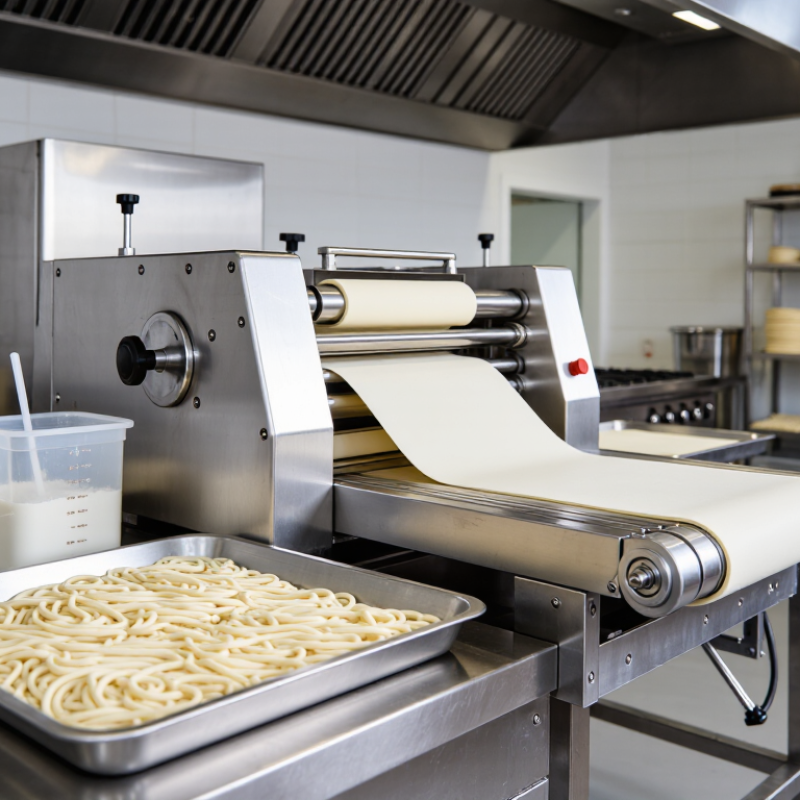
Start with daily output, available floor space, and the dough batches you actually make. Then compare roller adjustment, cutter options, cleaning access, electrical requirements, and spare-part availability. Ask suppliers for sample results using your flour and hydration level. Request written details on warranty coverage and service response times. Not just speed. A lower-cost model may fit a small shop, while a larger operation may need automated feeding and dependable production records. I would not treat published capacity as guaranteed output; real results depend on dough, operator skill, and cleaning breaks. Choose evidence over impressive claims.
How to Choose the Best Udon Noodle Machine in 2026?

How Udon Noodle Machines Work and Which Types Are Available

An udon machine typically mixes wheat flour, water, and salt, then develops dough through kneading or repeated compression. The dough rests, passes between rollers, and is cut into even strands. Some compact machines combine these steps; larger lines separate mixing, sheeting, cutting, and conveying. Extrusion models also exist, but pressure and die shape can produce a different bite. The FAO Statistical Yearbook 2023 reports 808.4 million tonnes of wheat produced worldwide in 2022. That figure does not measure noodle quality. It does remind buyers that flour strength and moisture can vary by supply and season.

Different jobs. Manual or tabletop rollers suit test batches and small kitchens, though output depends on operator rhythm. Semi-automatic units power the rollers and cutter, reducing repetitive work while staff still feed dough and check consistency. Integrated lines automate more stages and need space, stable power, and cleaning access. Compare dough width, thickness settings, cutting sizes, hourly capacity, and food-contact materials. Run a trial with your own flour and hydration; catalog capacity can mislead. A little unevenness is normal. Check whether dough releases cleanly from the rollers after a short production run.

How to Choose the Best Udon Noodle Machine in 2026?

Compare common machine types by their typical level of automation. The 1–3 scale is ordinal, not a measured performance rating; actual functions depend on the machine configuration.

How to choose: Manual machines suit small batches and hands-on production. Powered sheeter-and-cutter machines reduce repetitive rolling and cutting. Automated lines integrate more production steps and are generally intended for higher-volume operations. Check the exact functions, capacity, and cleaning requirements of each configuration before buying.

Assessing Production Capacity, Noodle Quality, and Kitchen Space

How to Choose the Best Udon Noodle Machine in 2026?

Match production capacity to your real service pattern, not just the busiest hour on paper. Estimate bowls per shift, then check the machine’s rated output and how long it takes to prepare dough, roll sheets, and cut noodles. A high-capacity model may sit idle during quiet periods. That still costs space and cleaning time.

Noodle quality depends on more than speed. Ask whether the machine can produce your preferred thickness and width, and test it with the flour and dough recipe you plan to use. Look for even strands, clean cuts, and a texture that holds up after cooking. Check the dough carefully. Small changes in hydration can affect the result, so a quick demonstration may not tell the whole story.

Kitchen space can narrow your options fast. Measure the counter, nearby work area, and route through doorways before ordering. Leave room for loading dough, collecting cut noodles, and cleaning around the rollers. A compact machine may fit neatly but slow down staff if its tray is awkward to reach. It is easy to focus on output figures and overlook daily handling; that trade-off deserves a second look.

How to Choose the Best Udon Noodle Machine in 2026? — Assessing Production Capacity, Noodle Quality, and Kitchen Space

Machine Type Indicative Production Capacity Noodle Quality and Consistency Approximate Equipment Footprint Typical Kitchen Requirements Best Suited For Key Trade-Off
Manual pasta roller and cutter Small batches; output depends heavily on operator speed and dough preparation. Good hands-on control over sheet thickness and noodle width. Results can vary between operators and batches. About 0.2–0.5 m² for the machine; allow additional bench space for dough handling. Stable workbench, room for manual feeding, cutting, and flouring. Home kitchens, very small restaurants, or occasional fresh-noodle production. Low space and equipment needs, but labor-intensive and difficult to scale.
Compact tabletop electric sheeter and cutter Low to moderate volume; check the manufacturer’s rated dough throughput and recommended duty cycle. More repeatable sheet thickness and cutting than manual equipment when dough hydration and feeding are consistent. About 0.3–0.7 m², excluding clearance for loading dough and collecting noodles. Strong, level counter; suitable electrical supply; space for mixing and resting dough nearby. Cafés, small kitchens, and restaurants making fresh udon in limited batches. Compact and relatively easy to place, but batch handling may limit service-volume output.
Floor-standing sheeter and cutter Moderate to high volume; capacity depends on roller width, motor rating, feeding rate, and operating schedule. Can produce more uniform sheets and cuts across larger batches; dough preparation remains essential to texture. About 0.6–1.2 m² for the machine, plus access and product-handling space. Dedicated floor area, safe operator access, appropriate power supply, and room for dough carts or trays. Busy restaurants, commissary kitchens, and small-scale food production. Higher throughput potential, but requires more floor space and a larger initial investment.
Integrated mixing, sheeting, and cutting line High-volume production; use the line’s rated capacity for the specific dough recipe and product format. Can improve repeatability across larger runs when mixing, resting, sheeting, and cutting are controlled as a process. Typically several square metres; the full line may need substantially more room than the machines alone. Planned workflow, ingredient storage, cleaning access, operator clearance, and suitable electrical and ventilation provisions. Central kitchens and dedicated production facilities with regular, substantial demand. High output potential, but greater space, installation, cleaning, and maintenance demands.

Planning note: Capacity and footprint are not standardized across machine designs. Treat the space figures as preliminary layout estimates, and confirm rated throughput, dimensions, electrical requirements, cleaning access, and duty cycle with the equipment supplier before purchasing. Noodle texture also depends on flour, hydration, mixing, resting, and cooking—not the machine alone.

Comparing Key Features, Materials, and Cleaning Requirements

Choosing the best udon noodle machine in 2026 means matching its features to your dough and daily output. Adjustable roller gaps help produce consistent thickness, while a sturdy cutter should create clean strands without tearing hydrated dough. Check whether the machine handles your batch size without forcing continuous operation. USDA Economic Research Service data show food away from home made up 58.5% of U.S. food spending in 2023, underscoring the importance of dependable commercial kitchen equipment. Still, advertised capacity can mislead; ask how it was measured and test a realistic batch if possible.

Materials and cleaning deserve equal attention. The FDA Food Code 2022, section 4-202.11, calls for food-contact surfaces to be smooth, durable, nonabsorbent, and easily cleanable. Stainless steel is a practical choice for exposed surfaces, but inspect seams, roller ends, and cutter housings, where dough can lodge. Small details matter. Removable parts can speed cleaning, provided they are easy to reassemble and do not create alignment problems. Check the manual for water restrictions; a motor housing should not be treated like a washable tray. One caveat: the easiest machine to wipe down may still have hard-to-reach joints. Look closely before buying.

Calculating Purchase, Operating, and Maintenance Costs

When comparing udon noodle machines in 2026, look beyond the purchase price. Include delivery, installation, staff training, and any mixer or cutting attachments. A lower-priced machine may need more manual work or produce noodles less consistently. Ask how quickly settings can be changed between noodle thicknesses. Small costs add up.

Estimate operating costs using your expected weekly production. Add flour, water, electricity, labor, and the cost of dough or noodles lost during setup. Compare machines by cost per 100 kilograms of saleable noodles, not just hourly output. A machine that runs quickly may still waste more dough. Track actual consumption during a trial if possible; estimates can be off.

Maintenance affects both the budget and production schedule. Check the price and replacement interval for blades, belts, and other wear parts. Ask how often cleaning is needed and how long routine service usually takes. Also assign a cost to downtime, even if it is only a cautious estimate. The calculation will never be perfect. That is fine. Use the same assumptions for every machine, then update them after several weeks of real production.

Matching Machine Specifications to Your Udon Production Needs

Choosing an udon noodle machine starts with dough and shift patterns, not advertised maximum speed. Record kilograms per hour, batch size, hydration, noodle width, and available operating hours. Leave time for cleaning and changeovers. The World Instant Noodles Association reported 120.21 billion servings of instant noodles consumed worldwide in 2023. This is not an udon market measure, but it shows the scale of noodle demand. Do not use it to calculate your capacity. Your order history is better evidence.

Match machine features to the product. A sheeter needs stable roller gaps; a cutter must hold noodle width without tearing hydrated dough. Check motor duty rating, adjustment range, food-contact documentation, spare-part access, and washdown time. Ask for a test with your flour and target hydration. Measure yield, thickness variation, and rejects. A tidy brochure is not proof. In compact kitchens, floor space and operator reach may matter more than peak output. Central kitchens may need continuous feeding and quick recovery after stops. There is no perfect specification. Treat calculated capacity as provisional until a full-shift trial reveals pauses, sticking, and operator fatigue.