
How to Choose the Best Capacitive Switch Supplier in China?
Choosing the best Capacitive Switch supplier in China requires more than comparing catalog prices. It demands practical research, technical judgment, and careful communication. A reliable supplier should explain sensing distance, response time, operating temperature, surface materials, and ingress protection clearly. They should also provide test reports, production photos, and samples before large orders begin. These details reveal whether the company understands real industrial requirements or simply repeats sales language.
Experience matters during evaluation. Ask how the supplier handles custom symbols, glass or acrylic panels, LED indicators, waterproof sealing, and low-volume prototypes. A professional factory should describe its inspection process, including appearance checks, sensitivity testing, wiring verification, and aging tests. It should also identify suitable certifications for your target market. However, certificates alone cannot prove consistent quality. Sample performance may differ from mass production. This risk deserves direct discussion.
Look for transparent answers.
A trustworthy supplier welcomes technical questions and explains limitations without exaggeration. Check its manufacturing history, engineering team, export experience, customer references, and after-sales process. Confirm lead times in writing, including tooling, sample approval, production, and shipping stages. Factory visits or third-party inspections can add useful evidence, especially for high-volume projects. Still, no supplier is perfect. Communication can slow down, specifications can change, and unexpected defects may appear. The strongest partner responds quickly, records corrective actions, and improves the process instead of hiding problems. With disciplined comparison, buyers can select a Chinese Capacitive Switch supplier that supports stable performance, manageable costs, and long-term product development.
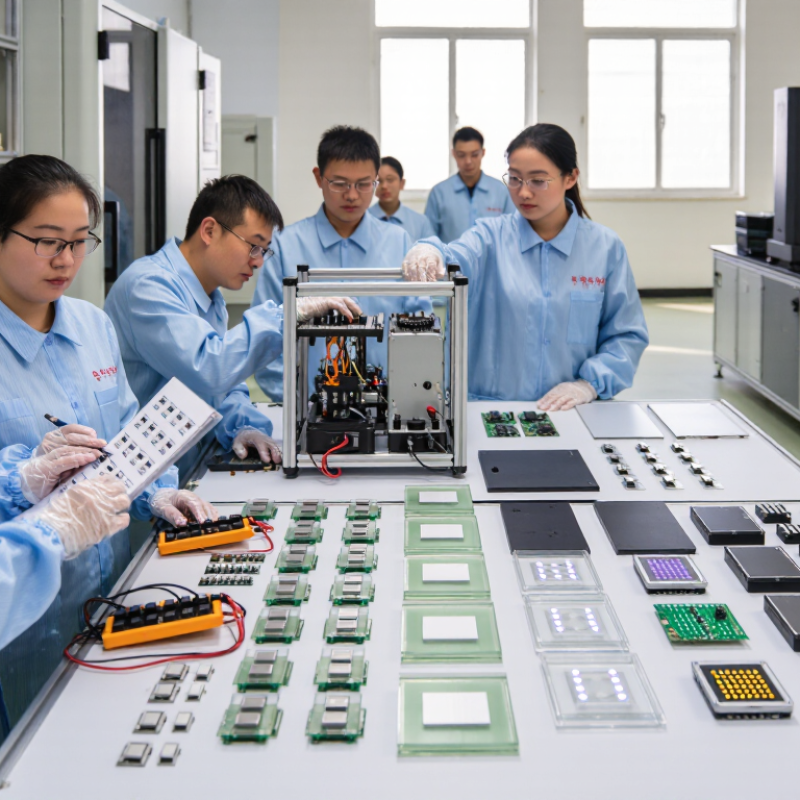
Understanding Capacitive Switches and Their Key Applications
How to Choose the Best Capacitive Switch Supplier in China?
Understanding the switch is essential before comparing suppliers. A capacitive switch detects changes in electrical capacitance when a finger approaches its surface. It has no mechanical button travel, so the front panel can remain flat, sealed, and easy to clean. Common applications include industrial control panels, kitchen appliances, medical equipment, lighting systems, and vehicle interfaces.
The demand is expanding. MarketsandMarkets reported that the global touch sensor market could grow from USD 6.8 billion in 2023 to USD 11.6 billion by 2028. Its forecast represents a 11.3% compound annual growth rate. This growth does not guarantee every switch will perform well. Moisture, gloves, electromagnetic interference, and thick overlays can reduce sensitivity. A practical supplier should explain electrode design, controller compatibility, IP protection, operating temperature, and testing methods. Ask for samples under real conditions. A bright laboratory demo can still hide field problems.
Tips: Request test reports, tolerance data, and lifecycle results. Check whether the supplier validates performance through humidity, vibration, and repeated-touch testing. Confirm materials, adhesive quality, and surface durability. Ask for a small pilot order before mass production. Also, review communication speed and engineering support. These details seem minor. They often decide whether a capacitive switch works reliably after installation. My own view is cautious: lower pricing may be attractive, but unclear testing creates expensive uncertainty.
| Evaluation Dimension | Recommended Technical Requirement | Why It Matters | Supplier Verification Points | Typical Applications |
|---|---|---|---|---|
| Sensing Principle | Capacitance-change detection using a human finger, conductive object, or dielectric material | Capacitive sensing enables activation without mechanical travel, reducing wear and supporting sealed control panels. | Confirm the sensing method, electrode structure, controller type, and performance with or without gloves. | Appliance panels Medical equipment Industrial controls |
| Switch Type | Momentary, latching, or programmable touch output | The output behavior must match the control logic of the end product. | Request switching logic, default state, output type, and firmware or controller configuration details. | User interfaces Lighting controls Control panels |
| Operating Voltage | Specify the exact system voltage; common low-voltage designs use 3.3 V or 5 V logic | Voltage compatibility affects controller selection, signal integrity, power consumption, and safety design. | Verify rated voltage, maximum current, idle current, touch current, and protection against reverse polarity where applicable. | Portable devices Automotive interfaces Embedded systems |
| Response Time | Define a measurable target, commonly tens to hundreds of milliseconds depending on the controller and interface | Fast and consistent response improves user experience and reduces missed or repeated inputs. | Review response-time test conditions, debounce settings, false-trigger rate, and performance with wet or gloved fingers. | Consumer electronics Access controls Operator panels |
| Detection Sensitivity | Adjustable sensitivity with a defined touch area, overlay thickness, and activation distance | Sensitivity depends on electrode geometry, overlay material, grounding, humidity, and electrical noise. | Ask for sensitivity curves or test results using the intended overlay, gloves, cable length, and grounding arrangement. | Glass interfaces Plastic overlays Sealed enclosures |
| Overlay Compatibility | Glass, acrylic, polycarbonate, or other specified nonconductive overlays | The overlay influences touch sensitivity, optical appearance, durability, and environmental sealing. | Confirm approved material, thickness range, adhesive compatibility, surface finish, and printed ink limitations. | Glass panels Plastic bezels Decorative interfaces |
| Environmental Protection | Select the required IP rating; IP65 or higher is commonly considered for dust and water-jet exposure | A sealed capacitive surface can reduce openings where dust, moisture, and cleaning fluids may enter. | Require an ingress-protection test report for the complete assembled product, not only for an individual component. | Outdoor equipment Kitchen appliances Industrial machinery |
| Operating Temperature | Define the project range; many industrial designs target approximately −20 °C to +70 °C | Temperature changes can affect electronics, adhesives, overlay materials, and touch sensitivity. | Check operating and storage temperature ratings, thermal cycling results, and performance at temperature extremes. | Industrial equipment Vehicles Outdoor controls |
| Electrical Noise Immunity | Demonstrated stability near motors, relays, switching power supplies, and long cable runs | Electromagnetic interference can cause false activation, missed touches, or unstable detection. | Request EMC design details, grounding recommendations, shielding requirements, and test results under the intended installation conditions. | Factory automation HVAC controls Power equipment |
| Mechanical Construction | No moving contact required; use a defined PCB, flexible circuit, electrode, overlay, or integrated-panel structure | The construction determines durability, assembly method, repairability, and resistance to vibration. | Review drawings, mounting tolerances, connector type, cable bend radius, vibration requirements, and assembly instructions. | Membrane panels Touch keys Rugged interfaces |
| Material and Surface Durability | Specify resistance to abrasion, cleaning agents, UV exposure, and repeated touch cycles | The visible surface is often the primary user-contact area and must retain appearance and function over its service life. | Request abrasion, chemical-resistance, UV, and lifecycle test methods with acceptance criteria. | Medical devices Public terminals Commercial equipment |
| Compliance Documentation | Applicable evidence for electrical safety, EMC, materials, and environmental requirements | Documentation supports product approval, risk assessment, import requirements, and customer audits. | Request relevant declarations, test reports, material information, RoHS or REACH documentation where applicable, and traceability records. | Medical products Industrial products Consumer products |
| Customization Capability | Ability to customize dimensions, symbols, backlighting, connectors, firmware, electrode layout, and mounting method | Capacitive switches are strongly influenced by the mechanical and electrical design of the final product. | Evaluate engineering support, drawing review, prototype process, design-for-manufacturing feedback, and revision control. | OEM equipment Private-label products Specialized instruments |
| Prototype and Validation | Functional prototypes followed by environmental, electrical, mechanical, and user-interface validation | Early testing identifies sensitivity, fit, sealing, illumination, and EMC issues before mass production. | Confirm prototype lead time, sample quantity, engineering-change process, inspection records, and approval criteria. | New product development Product upgrades Low-volume programs |
| Quality Control | Documented incoming, in-process, and final inspection with lot traceability | Consistent electrode alignment, overlay printing, soldering, sensitivity, and appearance are essential for stable performance. | Check quality procedures, control plans, sample inspection standards, calibration records, defect handling, and corrective-action process. | All applications High-volume production Safety-related controls |
| Total Cost of Ownership | Compare tooling, unit price, electronics, assembly, testing, packaging, logistics, and after-sales support | The lowest unit price may not provide the lowest total cost if reliability, yield, or engineering support is inadequate. | Request a complete quotation, tooling ownership terms, minimum order quantity, warranty conditions, replacement policy, and delivery schedule. | Cost-sensitive projects Global sourcing Long-term supply |
| Selection guideline: Choose a supplier that can demonstrate performance using the complete final assembly, including the intended overlay, electronics, enclosure, cable layout, grounding method, and environmental conditions. Technical compliance, process control, and long-term support should be evaluated together with price. | ||||