
How to Choose an IRS 2700 Series Portable FTIR Gas Analyzer
Choosing an analyzer begins with the gases you need to measure. The IRS 2700 Series Portable Fourier Transform Infrared Gas Analyzer may suit field teams that need infrared-based measurements in a portable format. Suitability depends on the application, not the name alone. Start with a clear list of target gases, expected concentration ranges, and the conditions where sampling will occur.
Look closely at the specifications. Confirm that the instrument covers your target compounds and required measurement ranges. Ask how humidity, temperature, pressure, and other gases may affect readings. These details can matter at a sample line as much as they do in a laboratory. Check the stated response time, sampling setup, calibration requirements, and data export options. Small details matter. A display that is easy to read outdoors, a case that fits your transport routine, and accessible service support can shape daily use.
It is also worth asking for documentation that matches your intended measurement task. Request clear information on performance, limitations, maintenance, and any conditions needed for reliable results. If possible, compare a demonstration or sample report with your own workflow before making a decision. A specification sheet cannot answer every practical question. That is easy to overlook. The right choice balances measurement needs, operating conditions, training, and ongoing support, while leaving room to reassess assumptions as field requirements become clearer.
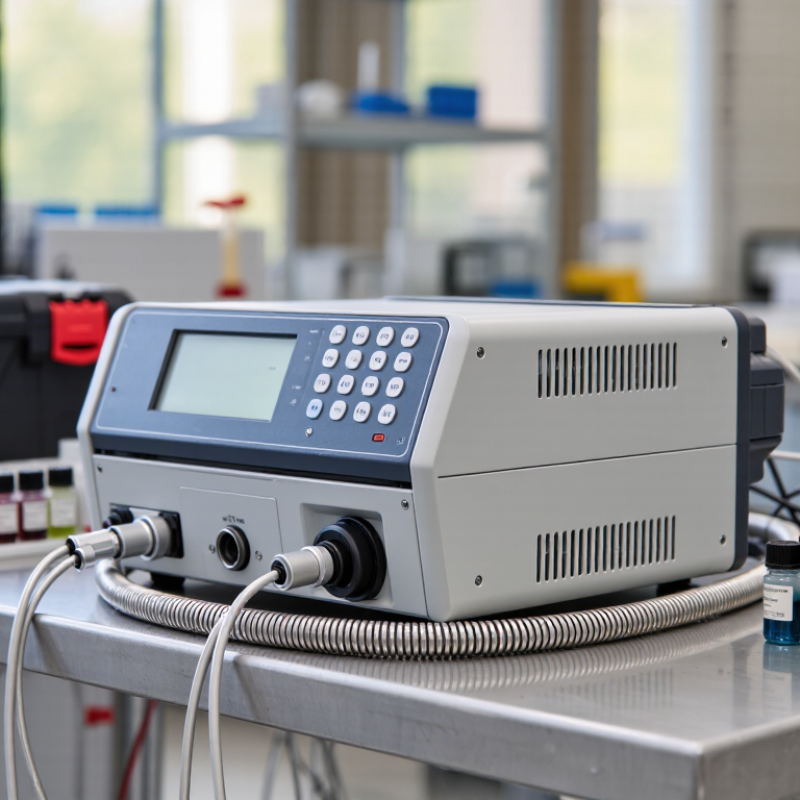
Understanding the IRS 2700 Series Portable FTIR Gas Analyzer
A portable FTIR gas analyzer identifies gases by measuring how molecules absorb infrared light at different wavelengths. Each gas produces a characteristic spectral pattern, like a fingerprint. The instrument compares that pattern with reference data to estimate which gases are present and at what concentrations. In practice, results depend on more than the analyzer itself. Sampling lines, filters, moisture, and temperature can all affect the measurement.
When evaluating an analyzer, check whether its target-gas library matches your application and whether its detection limits suit expected concentrations. Ask how calibration is performed and how often it should be checked. Also consider the sample-conditioning setup: a damp or dusty stream may need treatment before it reaches the measurement cell. Small details matter. Portability is useful only if the unit can run for the required period, withstand field conditions, and deliver data in a format your team can review. Compare documented specifications rather than relying on a broad claim of accuracy. One limitation is easy to overlook: a spectral match may be less certain when gases overlap or the sample contains unexpected compounds. Plan for verification when measurements carry important decisions.
How to Choose an IRS 2700 Series Portable FTIR Gas Analyzer - Understanding the IRS 2700 Series Portable FTIR Gas Analyzer
| Selection Dimension | What to Assess | Practical Guidance | Information to Confirm for the Analyzer |
|---|---|---|---|
| Target gases | Gas species and expected concentration ranges | List every target compound and its expected minimum, typical, and maximum concentration. FTIR can measure multiple infrared-active gases, but suitability depends on spectral overlap and the analyzer’s calibrated method. | Supported gas list, measurement ranges, and whether the required calibration or application method is available. |
| Detection and accuracy | Required detection limit, uncertainty, and reporting interval | Compare published performance under conditions similar to the application. Detection limits and accuracy can vary with gas composition, concentration, cell conditions, sampling setup, and measurement time. | Detection limits, accuracy or uncertainty, repeatability, response time, and the conditions used to establish each specification. |
| Spectral interference | Other gases and expected background composition | Water vapor and other infrared absorbers may overlap with target-gas spectral features. Assess the full sample matrix rather than evaluating target gases in isolation. | Interference corrections, cross-sensitivity data, and performance with representative background gases. |
| Sampling and conditioning | Sample temperature, moisture, pressure, particulates, and corrosive constituents | The sampling system must be compatible with the gas and operating conditions. Heated lines may be needed to reduce condensation when sampling wet or hot gases; filtration and compatible materials may also be required. | Permitted inlet conditions, required filters or probes, wetted materials, and any line or cell heating options. |
| Measurement cell | Cell path length, operating pressure, and temperature | A longer optical path can increase absorbance and may improve sensitivity, but the usable range also depends on concentration, spectral overlap, and instrument configuration. | Cell configuration, operating limits, pressure control, temperature control, and effects on the stated measurement ranges. |
| Portability and power | Instrument mass, carrying arrangement, battery runtime, and charging needs | For field work, consider the complete setup—not only the analyzer—including probe, sampling lines, filters, accessories, and spare power. Runtime depends on operating conditions and configuration. | Configured weight, dimensions, battery type and runtime, charging time, and any operating-temperature limits. |
| Data and reporting | Data logging, export formats, timestamps, and reporting workflow | Check that the measurement records include the information needed for traceability, such as gas names, units, measurement time, and relevant method or calibration details. | Available file formats, storage capacity, communication interfaces, and report options. |
| Calibration and maintenance | Calibration interval, verification process, and routine service needs | Plan for calibration checks using appropriate reference gases and for maintenance of filters, sampling components, and other serviceable parts. Follow the manufacturer’s method and schedule. | Calibration procedure, recommended service intervals, consumables, and available technical support. |
| Application fit | Field survey, process monitoring, emissions testing, or other intended use | Match the analyzer and sampling configuration to the measurement objective, applicable procedures, and site conditions. Do not assume that portability alone establishes regulatory suitability. | Applicable method approvals, validation requirements, environmental ratings, and documentation for the intended use. |
Note: The table describes general selection considerations for portable FTIR gas analysis. Confirm model-specific specifications, options, and application suitability in the current technical documentation.