How to Choose the Best Vehicle Fridge for Your Needs?
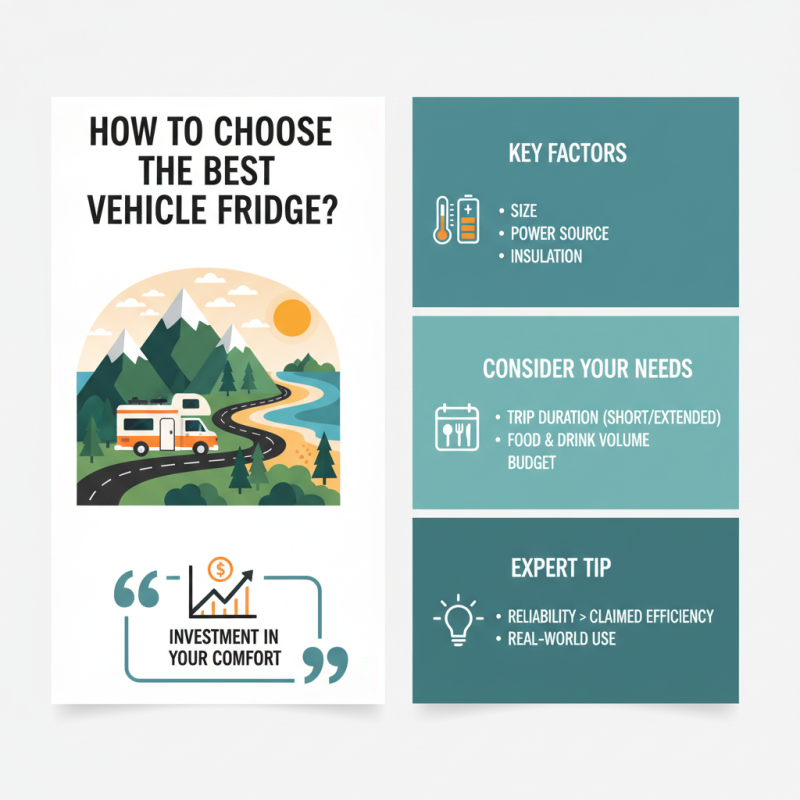
Choosing the right Vehicle Fridge is crucial for any adventure. With a plethora of options available, it can feel overwhelming. According to George Talbot, a leading expert in portable cooling solutions, “A good Vehicle Fridge is an investment in your comfort and convenience.” His insights remind us to select wisely.
When shopping for a Vehicle Fridge, consider your unique needs. Size, power source, and insulation quality are key factors. Imagine heading out on a long road trip. A reliable fridge can keep your food fresh and drinks cold. You want to enjoy the journey without worry.
However, not all fridges are created equal. Some models claim high efficiency but fall short in real-world use. Reflect on your priorities and budget. Will you need it for short trips, or extended travels? Knowing your needs is essential before deciding.
Understanding Your Cooling Needs for Vehicle Fridges
Understanding your cooling needs is crucial when selecting a vehicle fridge. How often do you travel? Are you camping or driving long distances? These factors play a significant role in determining the type of fridge that suits you best.
Consider the size and capacity. Smaller fridges might save space, but can they hold enough food and drinks for your trip? You might underestimate how much storage you truly need. On the other hand, a larger model can be cumbersome and consume more battery power. It's essential to find a balance.
Power source is another critical aspect. Do you have a reliable electrical source, or will you rely on a battery? Each option has its pros and cons. A battery-driven model offers convenience but demands regular charging. Don't overlook this; it can make or break your experience. The right vehicle fridge can enhance your journey, but the wrong choice can lead to frustration. Choosing wisely requires thoughtful reflection on your specific needs.
How to Choose the Best Vehicle Fridge for Your Needs?
| Feature | Description | Importance | Considerations |
| Cooling Capacity | The ability to cool items to desired temperatures. | High | Consider what temperatures you need to achieve based on the climate. |
| Size and Capacity | The internal storage space available for items. | Medium | Ensure it fits your vehicle and your storage needs. |
| Power Source | Types of power options available, such as AC, DC, and solar. | High | Match the fridge’s power source with your vehicle and usage patterns. |
| Insulation | Quality of insulation that affects cooling efficiency and energy consumption. | High | Better insulation leads to less energy use and better performance. |
| Weight | The overall weight of the fridge, impacting portability. | Medium | Consider if you will frequently move the fridge in and out of your vehicle. |
| Price | The cost of the vehicle fridge. | High | Set a budget, but also consider long-term value. |
Types of Vehicle Fridges and Their Features
When choosing a vehicle fridge, understanding the different types is crucial. Portable coolers, absorption fridges, and compressor fridges are common types. Portable coolers are lightweight and do not require power. They work well for short trips and can keep items cool for a limited time. However, their effectiveness can vary based on external temperatures.
Absorption fridges, on the other hand, use gas or electrical energy for cooling. They're efficient for long trips when a consistent power supply is available. Industry reports indicate that absorption fridges can maintain temperatures even when ambient conditions rise. Yet, their size and weight may be a drawback for some users.
Compressor fridges are designed for performance and versatility. They offer rapid cooling and can be more energy-efficient than their counterparts. Data shows that compressor fridges can maintain 0°C to 5°C even in sweltering climates. Despite this, they are typically heavier and pricier. Users often find it necessary to balance their cooling needs with portability and budget. Each type holds advantages and downsides, making the selection dependent on your specific requirements.
Vehicle Fridge Types and Features Comparison
Factors to Consider When Choosing a Vehicle Fridge
When choosing a vehicle fridge, several key factors come into play. The size of the fridge is crucial. Consider the space in your vehicle. A compact design is perfect for smaller cars, while larger models suit SUVs or vans better. Think about how much food and drinks you'll need to store. A fridge that’s too small will leave you scrambling for space.
Power source options also matter. Some fridges run on 12V DC, suitable for cars. Others might offer AC power as well, enabling use at campsites. Look into energy consumption too. A reliable fridge should keep your items cold without draining your battery quickly. Always check the insulation quality. Good insulation ensures your fridge maintains temperature efficiently.
Portability is significant as well. Look for a fridge that’s easy to handle. Built-in handles or wheels make transportation easier. Assess how often you’ll need to move the fridge. A heavy model can be cumbersome for frequent trips. Lastly, consider additional features. Adjustable shelves or separate compartments can enhance usability. Pay attention to reviews that address ease of use. Reflecting on these details can help ensure you make a suitable choice.
Energy Efficiency and Power Source Options
When choosing a vehicle fridge, energy efficiency is crucial. Many modern fridges use variable speed compressors. This technology adjusts cooling power according to the ambient temperature, improving efficiency. According to industry reports, energy-efficient models consume up to 50% less power than standard ones. This reduction can lead to substantial savings over time.
Power source options also play a significant role in performance. Most vehicle fridges operate on 12V or 24V DC power. Some can also run on 110V AC, providing versatility. This feature is essential for campers and RV users who often switch between power sources. Additionally, consider solar power compatibility. Research shows vehicles with solar panels can further enhance the efficiency of energy consumption.
Tip: Always check the fridge's insulation rating. Higher insulation reduces the amount of energy needed for cooling. Also, think about how often you'll use your fridge. If it's infrequent, a smaller model might suffice, saving both space and energy. Be mindful of your specific needs before making a decision. In some cases, a larger fridge could lead to unnecessary energy waste.
Budget Considerations and Price Ranges for Vehicle Fridges
When selecting a vehicle fridge, budget plays a crucial role. The price range for vehicle fridges varies widely, generally from $200 to over $1,000. Factors influencing this range include size, power options, and cooling capacity. A smaller, portable fridge may cost around $200, while larger models suited for long trips can exceed $800. According to industry reports, premium models often utilize advanced technology, enhancing energy efficiency and cooling performance.
Understanding your budget helps narrow down choices. If you're an occasional traveler, a basic model might suffice. However, frequent campers may find investing in a higher-end fridge beneficial in the long run. The Consumer Electronics Association (CEA) suggests that 40% of users prefer energy-efficient designs, even if they come with a higher price tag. This highlights the importance of evaluating long-term savings versus upfront costs.
Price often reflects durability and features. Lower-priced units may lack insulation quality or have limited temperature settings. On the other hand, investing more typically ensures a longer lifespan and better service. It's essential to consider how often you'll use the fridge and in what conditions. In challenging climates, a model with superior insulation might justify a higher investment. Balancing quality and budget is vital for selecting a fridge that meets your needs effectively.