
China Top 10 Remote IO Module Manufacturers?
China’s remote I/O market spans established automation groups and focused manufacturers. Choosing a supplier takes more than comparing prices or counting channels. Engineers must check protocol support, isolation, response time, and environmental ratings. A cabinet near a hot production line has different needs from a clean laboratory panel.
Remote Io Module systems connect field devices to controllers, so small design differences matter. A clear wiring diagram can save hours during commissioning. Stable communication can prevent missed signals and unnecessary troubleshooting. Look closely at certifications, product documentation, firmware support, and service coverage. Ask how each manufacturer handles spare parts and long-term product availability. The answers may be less polished than the brochures. That matters.
Industrial automation specialist Jonas Berge offers a useful engineering perspective on dependable data and plant connectivity. The following sentence is an editorial paraphrase, not a verified verbatim quotation: “Reliable automation starts with trustworthy signals and communication that operators can maintain.” This principle helps frame a practical comparison of China’s leading Remote Io Module manufacturers. The ranking should consider product range, interoperability, technical support, and evidence of real-world use. No single brand fits every plant. Buyers should confirm specifications against their own control system, wiring conditions, and operating environment before making a shortlist.
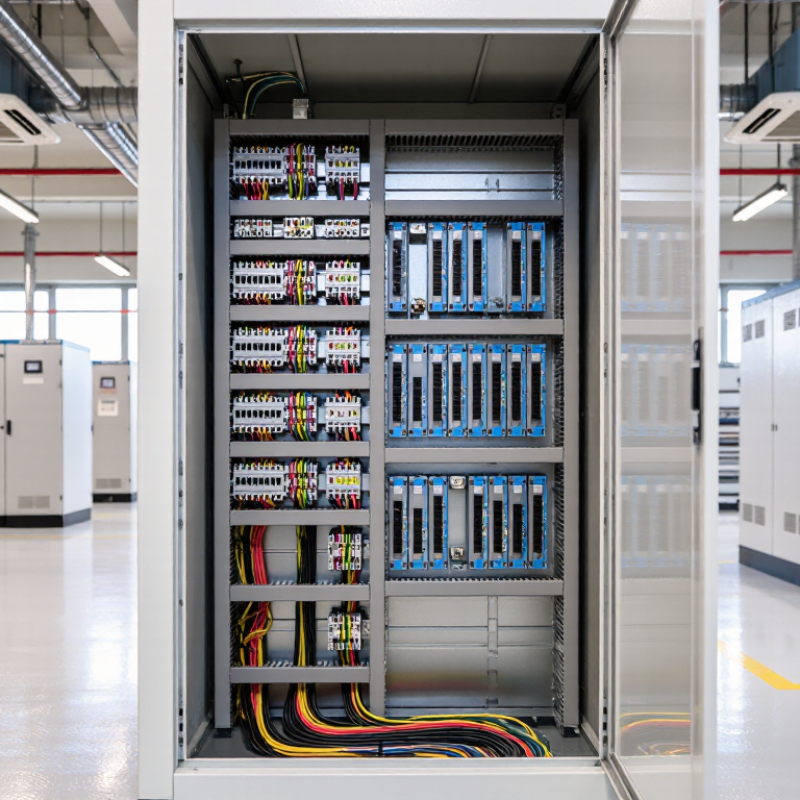
What Remote I/O Modules Do and How They Work
Remote I/O modules connect field devices to a controller without routing every signal back to one central cabinet. They gather inputs from sensors and switches, then send the data over an industrial network. Output channels carry commands to equipment such as valves, relays, and indicator lights. That saves cable. It can also simplify expansion across a large machine.
A module converts electrical signals into data the controller can read. Digital channels report states such as open or closed. Analog channels measure changing values, including a pressure signal or tank level. The controller processes this information and returns output commands through the same network. Communication timing matters: a slow update may be acceptable for temperature monitoring, but not for a fast-moving actuator. Small delays matter.
Picture a pump skid with pressure sensors and motor-status contacts spread along its frame. A nearby I/O module collects those signals and shares them with the control system. A technician can then inspect channel indicators and fault messages during troubleshooting. Good selection means checking channel count, signal range, isolation, network compatibility, and enclosure rating. Specifications can look precise, but wiring noise and installation conditions still deserve attention. A neat diagram is not the whole story.
How Remote I/O Modules Map a 4–20 mA Signal
A remote I/O module reads field-device signals, converts them into digital values, and sends those values to a controller over an industrial network. This chart shows the standard linear mapping of a 4–20 mA signal to 0–100% of a configured measurement span.
For example, 12 mA represents 50% of the configured span. The actual engineering value depends on the sensor and the range configured in the I/O module.
Key Criteria for Evaluating China-Based Remote I/O Manufacturers
Evaluating China-based remote I/O manufacturers calls for more than comparing channel counts and unit prices. The International Federation of Robotics reported 553,052 industrial robot installations worldwide in 2022, with 290,258 in China. That scale makes dependable field connectivity important. Ask how each module handles the protocols used at your site, such as PROFINET, EtherNet/IP, or Modbus TCP. Verify isolation ratings, operating temperature, EMC test evidence, and behavior after a network interruption. Request test reports, not only a datasheet. A polished PDF is not proof.
Check the details that appear on a real cabinet floor. Can technicians replace a module without rewiring every terminal? Do channel LEDs and software diagnostics identify a broken sensor wire, or only a general fault? Ask for lifecycle notices, spare-part availability, firmware support, and traceable production testing. Compare response time and delivery consistency across more than one order. One caveat: a short demo rarely reveals long-term reliability. I would also ask for a sample unit and test it with the intended controller, cable length, and electrical noise conditions. A small mismatch can become expensive. The best supplier is not always the one with the longest feature list.
China Top 10 Remote IO Module Manufacturers? – Key Criteria for Evaluating China-Based Remote I/O Manufacturers
| Evaluation Criterion | What to Check | Useful Evidence | Why It Matters |
|---|---|---|---|
| 1. I/O range and channel options | Confirm the available digital and analog input/output types, channel counts, signal ranges, and module combinations. | Current datasheets, wiring diagrams, and a compatibility list for the selected coupler or controller. | The available modules must match the sensors, actuators, and control tasks in the application. |
| 2. Communication protocols | Check support for the protocols required by the control system, such as Modbus TCP, Modbus RTU, PROFINET, EtherNet/IP, or EtherCAT. | Protocol-specific manuals, supported-device lists, and interoperability test documentation. | Protocol support affects integration with PLCs, industrial networks, and existing equipment. Support can vary by model. |
| 3. Electrical specifications | Review supply voltage, current consumption, isolation, input thresholds, output ratings, and analog accuracy. | Electrical specifications and test conditions in the product datasheet. | Matching electrical requirements helps prevent unreliable readings, overloads, and incompatibility with field devices. |
| 4. Environmental ratings | Verify operating temperature, humidity limits, vibration requirements, and enclosure protection where relevant. | Datasheets and test reports identifying the applicable conditions and test methods. | Environmental suitability depends on the installation location; an IP rating applies to a specified enclosure and test conditions. |
| 5. EMC and electrical robustness | Ask how the equipment is tested for electromagnetic compatibility, surge, and electrical transients relevant to the installation. | Declarations or reports that identify the product model, applicable standards, and test scope. | Industrial electrical noise and transients can disrupt communication or affect I/O operation. |
| 6. Certifications and compliance | Identify the approvals required for the destination market and intended application; confirm whether they cover the exact product model. | Current certificates or declarations that can be checked with the issuing body or official database. | Requirements differ by market and application. A general company certificate does not necessarily certify a specific module. |
| 7. Configuration and diagnostics | Evaluate setup tools, status indicators, error reporting, firmware updates, and access to configuration documentation. | Software or configuration-tool demonstration, user manuals, and diagnostic examples. | Clear diagnostics can reduce commissioning time and help identify wiring, communication, or module faults. |
| 8. Product lifecycle and change control | Ask about product availability, revision management, firmware support, and notification procedures for design changes or discontinuation. | Written lifecycle policy, revision history, and product-change notification process. | Lifecycle information helps buyers plan maintenance, spares, and future system expansions. |
| 9. Quality and production controls | Review documented quality processes, inspection stages, traceability, and handling of nonconforming products. | Quality-system documentation, sample inspection records, and audit information relevant to the product. | Evidence of repeatable controls is more useful than relying on a general quality claim alone. |
| 10. Technical support and supply capability | Clarify response channels, language coverage, spare-part availability, lead-time commitments, and support for integration questions. | Written service terms, sample response process, order terms, and references that can be independently checked. | Support and supply arrangements affect commissioning, maintenance, and recovery from equipment failures. |
Note: This table is an evaluation checklist, not a verified ranking of manufacturers. Confirm all specifications, certifications, and service claims for the exact product model and intended market.
Profiles of 10 Leading Remote I/O Module Manufacturers in China
A name-free view of China’s remote I/O market is best treated as a comparison of capabilities, not a verified ranking. Profile 1 represents an established automation producer with broad module ranges and familiar control-system interfaces. Profile 2 focuses on compact units for crowded electrical cabinets. Profile 3 emphasizes modular expansion, allowing users to add input or output channels as a line grows. Profile 4 targets machine builders needing fast installation and clear wiring labels. Details vary.
Profile 5 is geared toward process plants, where stable signal handling matters more than a small footprint. Profile 6 highlights communication flexibility across common industrial networks. Profile 7 serves OEM projects with configurable channel counts and enclosure options. Profile 8 focuses on distributed installations, reducing long cable runs between sensors and controllers. Profile 9 competes through straightforward products for routine monitoring tasks. Profile 10 offers engineering support for projects that need tailored configurations. These are useful distinctions, but they do not confirm a supplier’s quality by themselves.
When comparing suppliers, request current datasheets, wiring diagrams, environmental ratings, and test documentation. Check whether isolation, response time, and diagnostic features match the application. Ask for a sample configuration and clarify how firmware updates are handled. A polished catalogue is not enough. Field performance also depends on grounding, network design, and installation quality. Some product details may be difficult to compare directly, so buyers should verify claims against actual project requirements.
Comparing Product Range, Connectivity, and Industry Applications
When comparing China’s top ten remote I/O module manufacturers, look beyond channel counts. Product ranges may include digital input and output modules, analog signal modules, temperature interfaces, and mixed-channel units. Check voltage ranges, isolation, diagnostic indicators, and whether modules support local expansion. These details affect cabinet space and troubleshooting time.
Connectivity matters. Compare support for industrial Ethernet, serial links, and common protocols such as Modbus TCP or PROFINET. Check network redundancy, configuration tools, and how clearly each module reports faults. Tips: Match the interface to your controller before comparing prices. Request wiring diagrams and test reports, too.
Applications reveal practical differences. A compact module with fast diagnostics may suit packaging equipment, while isolated analog channels can help monitor pressure or temperature in process plants. For water systems, consider enclosure protection and communication stability across long cable runs. Look for published operating-temperature limits and evidence of testing. Catalog specifications are useful, but they do not show every installation challenge. A rushed comparison can miss grounding noise or awkward terminal access. Real deployments are less tidy. Ask suppliers for application references and confirm compatibility with your existing control system before selection.
How to Select a Manufacturer for Your Automation Project
Choosing a remote I/O manufacturer starts with the machine, not the catalog. Map each signal type, channel count, response time, and installation location before comparing suppliers. A cabinet beside a hot motor needs different protection from a clean control-room panel. Check isolation, diagnostic indicators, operating temperature, and support for your control network. Ask for documented interoperability tests and firmware lifecycle policies. A low purchase price can become costly when one discontinued module delays a line restart.
Supplier quality matters beyond hardware. Review spare-part availability, technical support hours, repair options, and delivery history for your region. Deloitte’s 2024 Smart Manufacturing Survey found that 86% of surveyed manufacturing executives expect smart manufacturing to be a primary driver of competitiveness within five years. That expectation does not make every connected module a good investment. NIST’s SP 800-82 Rev. 3 guidance on operational technology also makes security and system reliability part of sound equipment planning. Ask how access is controlled and updates are handled. Fit matters. A polished datasheet can still leave gaps; request a sample unit and test it with your PLC, wiring, and real field devices before committing.