
China Top 10 Gateway Transformer Manufacturers for Buyers
Choosing a Gateway Transformer supplier is not just a price comparison; it affects uptime, equipment protection, and maintenance planning. For buyers, the right manufacturer should explain electrical ratings, isolation needs, enclosure options, and operating conditions clearly. Small details matter. A nameplate that matches approved drawings can save hours during installation and later troubleshooting.
This guide introduces ten manufacturers relevant to gateway transformer sourcing, with attention to product range, engineering support, customization, and documented quality practices. Company capabilities vary by region and application, so a familiar brand is not automatically the best fit. Check input and output voltage, frequency, load profile, temperature rise, insulation class, and applicable certifications before requesting a quote. Ask for datasheets and test records. Also confirm lead times, spare-part access, warranty terms, and who answers technical questions after delivery. These checks make supplier comparisons more useful than marketing claims alone.
The list is a starting point, not a final endorsement. Specifications and product availability can change, and public information may not reveal every factory’s current capacity. Buyers should verify details directly, compare like-for-like models, and involve a qualified electrical professional when requirements are uncertain. That step can feel slow. It is often cheaper than discovering a mismatch after a panel is wired. Use the profiles below to build a shortlist based on fit, evidence, service, and total ownership cost—not name recognition alone.
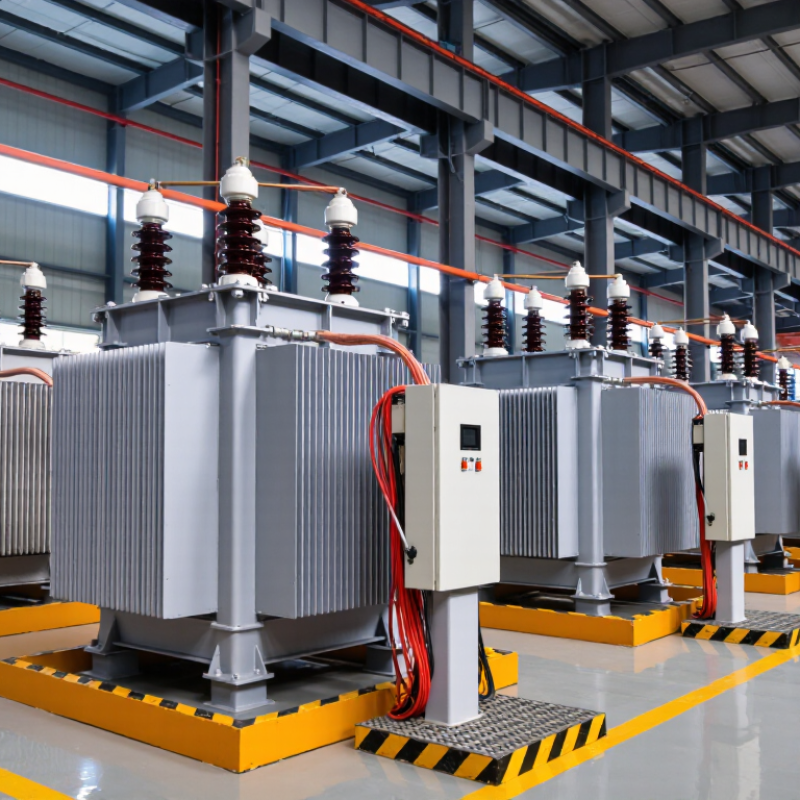
Gateway Transformers in China: Grid Functions and 50 Hz Operation
A gateway transformer connects a grid entry point with downstream transmission or distribution equipment. It steps voltage up or down, helping power move between network levels. In a Chinese project, engineers typically check the system voltage, expected load, short-circuit conditions, and connection arrangement before selecting a unit. Protection devices and monitoring systems also matter. A transformer is only one part of the substation.
China’s power networks generally operate at 50 Hz, so the transformer’s core and windings must suit that frequency and the specified voltage. Frequency affects magnetic flux; incorrect design assumptions can contribute to overheating or poor performance. Tap changers help manage voltage variation, while cooling equipment supports operation under changing loads. Details vary by site. A specification that looks complete on paper may still miss local operating conditions.
Tips: Confirm 50 Hz operation, rated voltages, cooling method, tap range, and test requirements in the technical documents. Ask how the unit handles expected load changes. Small details matter. Don’t rely on a generic catalog description alone.
Key Standards: IEC 60076 and China’s GB/T 1094 Transformer Series
For buyers comparing gateway transformers, IEC 60076 and China’s GB/T 1094 series provide a practical technical baseline. IEC 60076 covers core areas such as ratings, temperature rise, insulation, and short-circuit withstand. Relevant GB/T 1094 parts address similar subjects, but buyers should check the exact part, edition, and contract requirements. A shared topic does not guarantee identical test conditions or acceptance limits.
Details matter. Compare nameplate ratings, cooling method, insulation levels, temperature-rise limits, and test records line by line. The IEA’s 2023 report, Electricity Grids and Secure Energy Transitions, estimates that 80 million kilometres of electricity grids must be added or refurbished by 2040. This is grid infrastructure context, not a transformer sales forecast, but it underlines why consistent equipment specifications matter. Ask suppliers to identify the standards and editions used for routine, type, and special tests. Then verify that the offered test evidence matches the specified unit.
There is no perfectly simple crosswalk. National adoption, amendments, and project-specific clauses can change what “compliant” means in practice. A certificate alone may not answer whether test conditions match the buyer’s network. Compare the technical schedule, drawings, and test reports together. The paperwork can look complete, yet a small mismatch in voltage notation or temperature limits deserves a second look.
China’s 110–750 kV Grid: Transformer Classes and Typical Applications
China’s 110–750 kV grid spans several transmission levels, each serving a distinct role. At 110 kV, transformers commonly connect regional substations with industrial loads and distribution networks. A 220 kV unit may handle larger urban or provincial power flows. These ratings describe the grid connection, not a one-size-fits-all transformer design.
At 330 and 500 kV, transformers support regional backbone networks and major generation connections. In parts of western China, 750 kV equipment helps move bulk power across long distances.
That matters.
Step-up units raise generator output for transmission; substation transformers lower voltage for onward delivery. Buyers should check winding configuration, cooling method, tap-changer range, impedance, and short-circuit withstand requirements against the project specification.
Site conditions count, too. High altitude, winter temperatures, transport limits, and available maintenance access can affect equipment selection. A specification can look complete on paper, yet miss a practical constraint at the site.
Not always obvious.
Independent technical review and verified factory test records help confirm that the selected class suits the actual grid duty.
Buyer Metrics: Rated MVA, Load Loss, No-Load Loss, and Impedance
For gateway transformer procurement, rated MVA should match the expected transfer duty, not just a project’s headline capacity. Check normal and emergency loading assumptions, cooling stages, and future expansion plans. A unit sized too tightly may run hot during peaks; an oversized unit can add cost and occupy valuable site space. Small details matter.
Compare load loss and no-load loss separately. Load loss rises with current, so it affects operating cost more when the transformer carries heavy, sustained demand. No-load loss continues whenever the energized unit is connected, even during light-load periods. Ask suppliers to state guaranteed values and the test conditions behind them, including tap position and cooling configuration. Figures are not always directly comparable.
Impedance influences voltage regulation and the current available during a fault. A higher value can limit fault current, but may also increase voltage drop under load. Review it against the network study, protection settings, and parallel-operation requirements. Rated MVA, losses, and impedance must be assessed together. Buyers sometimes focus too narrowly on purchase price; that is understandable, but it can hide years of avoidable energy costs. Loss estimates also depend on actual operating patterns, which are often less tidy than a spreadsheet suggests.
China Gateway Transformer Buyer Metrics: 10 Reference Ratings
Illustrative three-phase power-transformer ratings with representative no-load loss, load loss, and impedance values. These are engineering reference points, not specifications attributed to any manufacturer; actual guaranteed values depend on design, voltage ratio, cooling, and applicable standards.
China’s Top 10 Gateway Transformer Manufacturers: Products and Capabilities
Buyers comparing China’s top ten gateway transformer manufacturers should look beyond rated capacity. Projects may require oil-immersed or dry-type units, step-up or step-down designs, and custom voltage ratios. The right choice depends on grid connection, load profile, site conditions, and fault requirements. Details matter. A capable supplier should explain core and winding design, insulation, cooling, impedance, and temperature rise in testable terms. Ask whether test records match the proposed configuration, not merely a similar model. Monitoring systems, bushings, tap changers, and protection interfaces may also be available. These options can help, but they add integration work.
Manufacturing capability also includes factory testing, material traceability, delivery planning, and after-sales support. Request drawings, loss data, noise limits, and guaranteed tolerances before comparing quotations. A factory visit or independent inspection can reveal gaps between stated capacity and production reality. Still, a visit cannot replace a full technical review. Not every option fits. Some tender documents leave assumptions unclear, so record them and resolve them before ordering. Check that the proposed design suits the project’s operating conditions and applicable technical requirements.
| No. | Capability Area | Common Products or Scope | What Buyers Should Verify |
|---|---|---|---|
| 1 | Power transformers | Transformers designed for transmission and large-scale power applications, with ratings and voltage levels configured for the project. | Rated power, voltage ratio, winding arrangement, impedance, cooling method, and routine and type-test documentation. |
| 2 | Distribution transformers | Oil-immersed or dry-type units for reducing distribution-network voltage for commercial, industrial, or utility use. | Rated capacity, primary and secondary voltages, losses, temperature rise, insulation level, and applicable efficiency requirements. |
| 3 | Dry-type transformers | Cast-resin or other dry-type designs commonly used indoors and in locations where liquid insulation is not preferred. | Enclosure and cooling arrangement, insulation system, environmental conditions, fire-safety requirements, and IEC 60076-11 compliance where specified. |
| 4 | Oil-immersed transformers | Liquid-filled designs used across distribution and power applications, with tank and cooling configurations selected for the installation. | Insulating-liquid type, sealing system, cooling class, tank design, accessories, and applicable environmental or fire-protection requirements. |
| 5 | Pad-mounted and compact units | Enclosed distribution equipment intended for outdoor or space-constrained installations, subject to local network requirements. | Compartment layout, switching and protection provisions, access and safety features, enclosure rating, and local utility specifications. |
| 6 | Renewable-energy applications | Transformers specified for solar, wind, and other generation projects, including step-up duties where required by the system design. | Load profile, harmonics, operating environment, voltage regulation, protection coordination, and project-specific grid-code requirements. |
| 7 | Special-purpose transformers | Custom designs for applications such as rectifier, furnace, traction, or other process loads, depending on the manufacturer’s engineering scope. | Duty cycle, waveform and harmonic content, short-circuit conditions, cooling needs, and drawings approved for the intended application. |
| 8 | Voltage regulation and tap changing | Designs may include off-circuit taps or on-load tap changers, selected according to the required voltage-control scheme. | Tap range and steps, operating method, control interface, switching duty, and compatibility with the project’s protection and control system. |
| 9 | Testing and quality assurance | Manufacturing quality programs typically include inspections and electrical tests defined by the product specification and applicable standards. | Approved inspection and test plan, calibrated equipment, test reports, traceability records, and witnessed tests where contractually required. |
| 10 | Standards and export support | Products can be specified against standards such as IEC 60076 or relevant national and project standards; export documentation depends on the order and destination. | Exact standard editions, deviations, certification scope, destination-country requirements, shipping documents, warranty terms, and after-sales arrangements. |
Note: This anonymized table summarizes common transformer product and capability areas for buyer evaluation. It is not a verified ranking of ten specific manufacturers; product availability, ratings, certifications, and factory capabilities must be confirmed directly with each supplier.