
China Best Solid State Diode Laser Manufacturer
Choosing a China-based Solid State Diode Laser manufacturer takes more than comparing prices or advertised power. Buyers need to understand how the laser will perform in their actual equipment and working environment. Wavelength, output stability, beam quality, pulse settings, cooling, and service support all matter. Small differences become visible on a production line: a drifting output can affect repeatability, while poor thermal design may shorten operating life.
Theodore Maiman, a pioneer of laser development, is often credited with describing the laser as “a solution looking for a problem.” The remark concerned laser technology broadly, not a particular diode product. It remains a useful reminder: specifications matter only when they solve a real application need. Ask manufacturers for test conditions, measurement methods, lifetime data, and clear warranty terms. A polished specification sheet is not enough.
That takes careful questions. It can feel tedious. A credible supplier should explain limits as clearly as strengths, and support claims with traceable test records. Check whether sample units match production models, and whether engineering staff can discuss integration details directly. Independent verification is valuable, especially when performance claims lack context. There is no universal “best” manufacturer; the right choice depends on application, budget, documentation, and long-term support. Some comparisons remain difficult, and buyers should say so rather than mistake confidence for evidence. This guide outlines practical criteria for assessing China’s Solid State Diode Laser manufacturers with care.
What Is a Solid-State Diode Laser?
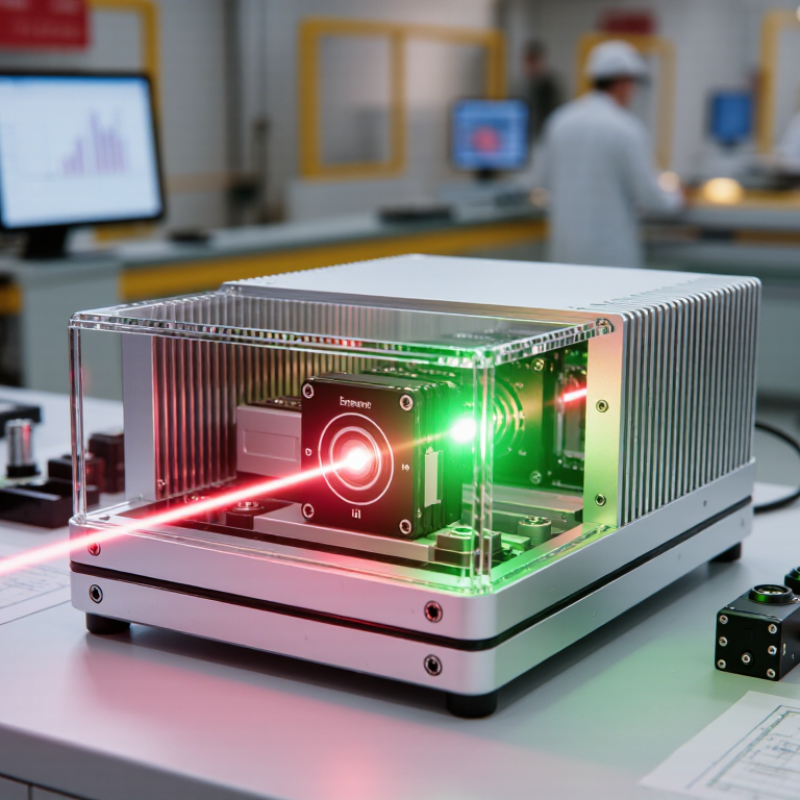
The term “solid-state diode laser” can be confusing. It often describes a diode-pumped solid-state laser, where a semiconductor diode supplies energy to a solid gain medium. Common media include crystals such as Nd:YAG. The excited crystal amplifies light inside a resonator, formed by carefully aligned mirrors. One mirror lets part of the light escape as the laser beam.
The diode is the pump source, not necessarily the part that creates the final output wavelength. That distinction matters. The gain material and optical design determine the output, while some systems use additional optics to convert the wavelength. For example, frequency doubling can turn infrared light into green light. In a workshop, the setup may look compact, yet heat control and optical alignment still affect stability. Heat still matters.
When comparing equipment, check the specified wavelength, output power, beam quality, and cooling requirements. Also confirm what the supplier means by “solid-state diode laser”; terminology is not always consistent. A datasheet can clarify the design, but real performance depends on operating conditions and maintenance. Small details matter. Properly matched to an application, this laser type can provide a stable, focused beam for tasks such as marking, measurement, or precision processing.
What Is a Solid-State Diode Laser?
A solid-state diode laser generates light in a semiconductor p–n junction when electrical current is applied. Its emission wavelength depends on the semiconductor materials and device design. The chart shows representative nominal wavelengths; actual specifications vary by laser and operating conditions.
How Solid-State Diode Lasers Work
China Best Solid State Diode Laser Manufacturer
How Solid-State Diode Lasers Work
A solid-state diode laser turns electrical current into a narrow, coherent beam. Inside its semiconductor chip, current pushes electrons and holes into an active layer. When they recombine, they release photons. Those photons stimulate further emissions, building light between reflective chip facets until part of it exits as a beam. The process starts at a threshold current. Below it, the chip mostly produces ordinary light.
Small details matter. Heat can shift wavelength and reduce output, so modules use heat sinks and temperature control. Many near-infrared diode lasers operate around 800–1,000 nanometers, a range widely used for pumping solid-state lasers and for industrial heating. Technical discussions in IEEE Photonics Technology Letters report wall-plug efficiencies above 50% for optimized high-power diode lasers; actual results depend on wavelength, drive current, and cooling. High efficiency is useful, but it does not mean every watt becomes usable beam power.
In a diode-pumped solid-state system, the diode beam excites a separate crystal, such as Nd:YAG. The crystal then produces the working laser beam, sometimes at a different wavelength. The distinction is easy to miss. A diode laser can be the light source, while the crystal shapes the final output. The IEEE data describe carefully engineered devices, not a guarantee for every module; real operating conditions deserve a closer look.
China Best Solid State Diode Laser Manufacturer - How Solid-State Diode Lasers Work
| Stage or Component | How It Works | Typical Example or Value | Effect on the Laser Output |
|---|---|---|---|
| Electrical power supply | Provides controlled current to the semiconductor pump diode. Stable drive current helps maintain consistent pump output. | Current and voltage depend on the diode array and system design. | Supplies the energy that starts the optical amplification process. |
| Semiconductor pump diode | Converts electrical energy into light at a wavelength chosen to be absorbed by the solid-state gain medium. | Common pump wavelengths include approximately 808 nm for neodymium-doped media and approximately 940 or 969 nm for ytterbium-doped YAG. | Efficiently transfers energy into the gain medium when the pump wavelength and absorption band are suitably matched. |
| Solid-state gain medium | A doped crystal or glass absorbs pump light. Energy stored in the active ions can create population inversion, enabling optical amplification. | Examples include Nd:YAG, Nd:YVO₄, Yb:YAG, Er:YAG, and Tm:YAG. | The material determines the laser’s principal emission wavelength and influences efficiency, thermal behavior, and operating modes. |
| Population inversion and stimulated emission | When enough active ions are in excited states, photons passing through the medium can stimulate the emission of additional photons with matching properties. | Nd:YAG commonly emits near 1064 nm; Yb:YAG commonly emits near 1030 nm. | Builds coherent light at wavelengths characteristic of the selected gain medium. |
| Optical resonator | Mirrors form a cavity that sends light through the gain medium repeatedly, allowing amplification. One mirror partially transmits light as the output coupler. | Mirror reflectivity, cavity length, and alignment are selected for the intended design. | Provides optical feedback and determines how laser energy is extracted from the cavity. |
| Wavelength conversion (optional) | A nonlinear optical crystal can convert the fundamental output to a shorter wavelength, typically by frequency doubling. | Frequency-doubled Nd:YAG or Nd:YVO₄ can produce green light near 532 nm from infrared light near 1064 nm. | Enables output at wavelengths not directly emitted by the gain medium, with conversion efficiency dependent on the design and operating conditions. |
| Thermal management | Heat sinks, conduction cooling, or liquid cooling remove heat produced during pumping and laser operation. | Cooling requirements vary with output power, duty cycle, and system construction. | Helps limit temperature-related wavelength shifts, efficiency loss, and thermal stress. |
| Output beam | The laser delivers continuous-wave or pulsed light, depending on the gain medium, cavity, and control method. | Nd:YAG systems may operate near 1064 nm or, with frequency doubling, near 532 nm. Actual power and pulse characteristics vary by configuration. | Beam wavelength, power, pulse duration, repetition rate, and beam quality are design-dependent specifications. |
Terminology note: A diode-pumped solid-state laser uses a semiconductor diode as its pump source and a solid crystal or glass as its gain medium. This differs from a direct diode laser, in which the semiconductor diode itself generates the output beam.
Key Applications of Solid-State Diode Lasers
China Best Solid State Diode Laser Manufacturer
Key Applications of Solid-State Diode Lasers
Solid-state diode lasers support precise work across manufacturing, healthcare, sensing, and research. In factories, focused beams can mark components, trim thin materials, or provide pump energy for other lasers. In clinical equipment, controlled wavelengths serve selected dermatological and therapeutic procedures. Compact diode modules also suit rangefinding and optical sensing, where size and electrical efficiency matter. Fortune Business Insights estimated the broader global laser technology market at USD 20.11 billion in 2023 and projected USD 30.77 billion by 2032. This covers multiple laser types, not diode lasers alone.
Application performance depends on more than output power. Engineers match wavelength, beam quality, pulse duration, and cooling to the material or tissue. A small thermal mismatch can shift output and reduce consistency. Heat still wins. In a workshop, stable cooling and clean optics may matter more than a headline power rating. That detail is easy to overlook, and real installations still require careful testing.
Tips: Check wavelength compatibility, duty cycle, and thermal limits before selecting a module. For production use, record output stability under actual operating conditions, not only at startup.
How Chinese Manufacturers Design and Produce These Lasers
Chinese manufacturers design solid state diode lasers around the intended operating conditions. Engineers define wavelength, output power, beam quality, duty cycle, and cooling needs before selecting diode chips. The package must hold the chip securely while conducting heat away from its active region. Even a small temperature rise can affect output and service life.
Optical design follows. Lenses or fiber couplers are aligned to collect the diode’s light, while a stable driver controls current and limits electrical fluctuations. On the production floor, technicians inspect components, apply thermal interfaces, and check alignment with measurement equipment. Clean handling matters. Dust on an optical surface can reduce transmission or distort the beam.
Each unit is tested for output stability, wavelength, and temperature behavior under specified conditions. A prototype may pass a short test yet drift during longer operation, so test duration and repeatability deserve careful attention. This part is not always convenient. Manufacturers can improve the process by recording results for each unit and investigating failures instead of relying on averages. No design is perfect; balancing compact size, heat removal, and optical efficiency often requires another revision.
How to Evaluate and Select a Chinese Manufacturer
When evaluating a Chinese solid-state diode laser manufacturer, start with your application, not the catalogue. Specify wavelength, output power, operating mode, beam quality, and duty cycle. These details shape the design. Small details matter. Ask how the supplier measures power and wavelength. Request test records linked to a specific production unit, not just a demonstration sample.
Review component traceability, assembly controls, and quality checks. Ask for acceptance criteria and sample reports that show test conditions, instrument calibration status, and tolerances. If possible, compare a sample against your own measurement setup. A factory visit or video audit can reveal how parts are handled and tested. It may not show every issue, but it gives useful context.
Compare quotations with the same technical requirements and delivery terms. Ask about warranty coverage, repair timelines, spare parts, and engineering changes. Then send a focused technical question and assess the clarity of the reply. A polished brochure is not enough. Some uncertainties may remain until a pilot order; document them and agree on measurable checks before scaling production.