7 Car Battery Jumper Buying Tips for Global Buyers
A dead battery rarely waits beside a warm garage. It may leave a driver stranded in a windy parking lot, with groceries in the trunk and a phone battery fading. Choosing a Car Battery Jumper is therefore more than comparing advertised peak amps. Buyers should match the unit to their vehicle, climate, and likely use. A compact model can suit a small petrol car, while a larger engine may need greater starting capacity. Check the manufacturer’s guidance, not just the boldest number on the box.
Automotive electrical systems specialist Alex Morgan puts the key principle this way: “Choose a jumper for the engine you own, then check the protections you hope never to need.” That means reviewing voltage compatibility, rated starting current, reverse-polarity protection, and short-circuit safeguards. Cable length matters, too. Short, stiff leads can be awkward when the battery sits beneath a crowded hood. In cold regions, confirm that the unit’s operating-temperature range fits local winter conditions. Small details matter.
This guide will cover seven practical buying tips for global buyers, including capacity, safety features, portability, charging options, durability, warranty, and supplier support. Consider whether the device can recharge by USB-C, whether its clamps grip securely, and whether its case can handle a damp trunk. Look for clear instructions and product documentation. Standards and certification requirements differ across markets, so buyers should verify applicable local requirements with the seller or a qualified testing body. A high price is not proof of quality. Nor is a low price always a bargain. Sometimes, the overlooked specification tells the real story.
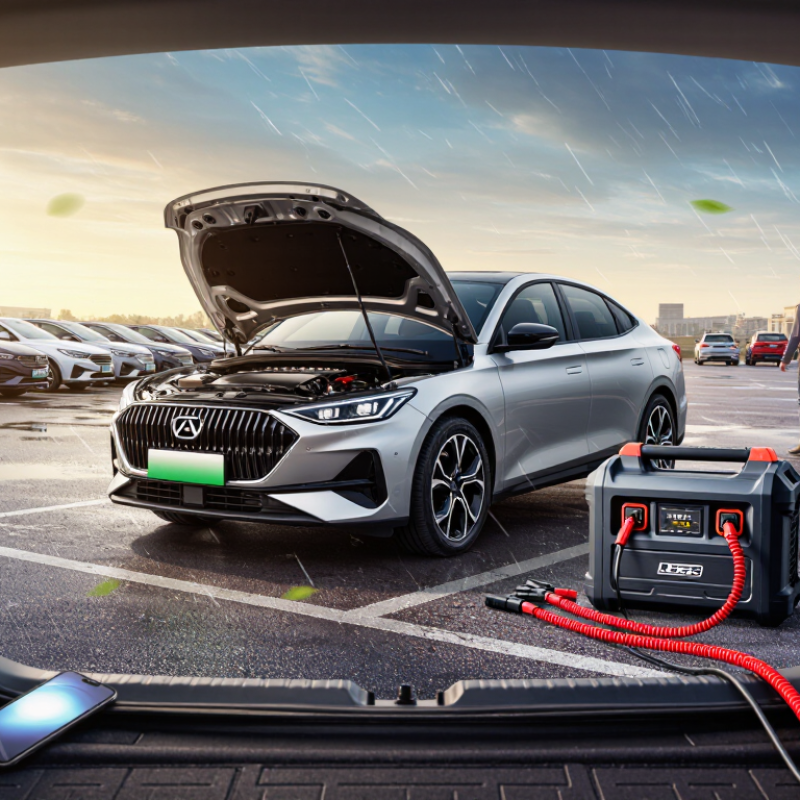
Understand Battery Compatibility and Vehicle Requirements
Before comparing peak-amp numbers, confirm the vehicle’s 12-volt system and battery type. Most passenger cars use 12 volts, but required starting current varies with engine size, battery condition, and temperature. Check the owner’s manual and the battery label; a small petrol engine and a large diesel do not make equal demands. Diesel engines often need more starting current, especially on cold mornings.
Match the jumper’s rated starting current to the vehicle’s requirements, not just its advertised peak figure. Check compatibility with flooded lead-acid, AGM, or EFB batteries, particularly in vehicles with start-stop systems. Some product instructions exclude certain battery types. Read the fine print. Also verify cable reach and clamp fit: crowded terminals can make a technically compatible unit awkward to use. A detail buyers sometimes overlook.
For international purchases, confirm that the instructions clearly show correct polarity and connection steps. Vehicle layouts differ, and some models have designated jump-start points away from the battery. Hybrid vehicles may have a 12-volt auxiliary battery, but a portable jumper should never be connected to high-voltage components. Follow the vehicle manual. It is tempting to choose the most powerful unit and assume it covers every car. That assumption is not reliable; compatibility depends on the specific vehicle and battery, and manuals can be less clear than they should be.
Compare Starting Power, Battery Capacity, and Performance
A jump starter’s peak current looks impressive, but it does not tell the whole story. Check the recommended engine size and starting-current rating, then compare them with your vehicle manual. A small petrol car and a large diesel engine may need very different support. Numbers need context. Ratings can also use different test methods, so avoid comparing figures blindly.
Battery capacity affects how many attempts the unit may support before recharging. Look for watt-hours when available; milliamp-hours alone can mislead because voltage differs between products. Cold changes things. Low temperatures reduce battery performance, while an older vehicle may need more than one attempt. Check whether the maker specifies cold-weather performance and how long a full recharge takes. A large capacity is useful, but it can also mean more weight in the trunk.
Performance is about more than a successful first start. Consider cable length, clamp grip, clear status indicators, and protection against reversed connections. These details matter beside a dim roadside or in a cramped parking space. I still think buyers can overvalue peak amps and overlook everyday handling. That is easy to do. Compare tested specifications, confirm compatibility, and leave a safety margin rather than choosing the smallest rating that appears sufficient.
Check Safety Features, Cables, and Product Durability
7 Car Battery Jumper Buying Tips for Global Buyers
Check Safety Features, Cables, and Product Durability
Check Safety Features, Cables, and Product Durability
A reliable jumper should list reverse-polarity, short-circuit, and over-temperature protection. Look for clear status lights and clamps that grip battery posts firmly, without wobbling. Check the manual for the recommended connection order and operating-temperature range. Small details matter. A protection label alone is not proof of performance, so request test documentation and inspect the instructions before buying.
Cable length should let the unit sit safely away from moving engine parts. Thin, stiff cables can be awkward in cold weather; check cable gauge and insulation quality, not just length.
Durability claims need evidence. Ask about cycle-life testing, drop resistance, clamp materials, and warranty terms, then compare results across models. The Battery Council International’s 2023 Sustainability Report cites a nearly 99% U.S. recycling rate for lead batteries. That figure concerns lead-battery recycling, not portable jumper lifespan; it should not be used as a product-quality score.
Still, it highlights why battery chemistry and end-of-life information deserve attention. Some specifications look reassuring but are hard to compare. Request the test method, rated capacity, and peak-current conditions, and be cautious when sellers provide only a large peak-amp number without explaining how it was measured.
Review Charging Options, Certifications, and Regional Standards
A jump starter is only useful when its charging inputs match your routine. Compare wall charging, a 12-volt vehicle socket, and USB-C input; then check recharge time and whether a cable is included. USB-C alone does not guarantee fast charging. Confirm the required power adapter and input rating, especially when traveling between regions with different mains voltages and plug shapes. Check the label.
Battery safety paperwork needs careful reading. UN 38.3 refers to transport tests for lithium batteries; it is not proof that a complete jump starter meets every local product-safety requirement. IEC 62133-2 covers safety requirements for portable sealed lithium cells and batteries. Regional marks also differ: CE applies to relevant EU requirements, UKCA to applicable Great Britain rules, and FCC requirements concern radio-frequency emissions in the United States. These labels are not interchangeable.
The IEA’s Global EV Outlook 2024 reports that electric-vehicle battery demand reached about 750 GWh in 2023, up roughly 40% from 2022. That growth reflects a changing battery supply chain, not a guarantee of jump-starter quality. For each market, verify the exact model’s documentation, warranty coverage, and local service support. I would also compare stated operating temperatures with your winter conditions. A small screen may look reassuring, but clear ratings and test records matter more.
Evaluate Climate Suitability, Warranty, and Global Support
Climate suitability is more than a cold-weather label. Many portable lithium jump starters deliver less power in low temperatures, just when a weak battery needs help. Check the stated operating and storage ranges, then compare them with your winter parking conditions. A car left outdoors overnight faces a different test from one kept in a heated garage. Heat matters too. Keep it dry.
Warranty terms can change by sales region. Read the written coverage for battery capacity, charging faults, and cable damage, and check whether shipping costs are excluded. Save the receipt and note the purchase date; both may be requested during a claim. A longer warranty is useful, but only if service is practical where you live. Small print deserves attention.
Global support should be tested before purchase, not after a failure. Look for clear instructions in a language you can use, reachable service hours, and a stated process for replacement parts. Ask whether the seller can support your country and how long a typical response takes. A high current rating looks reassuring, but it cannot compensate for unavailable service or unclear temperature limits. I would still verify those details directly; product pages can be incomplete.