
Skip to Content
chevron-left chevron-right chevron-up chevron-right chevron-left arrow-back star phone quote checkbox-checked search wrench info shield play connection mobile coin-dollar spoon-knife ticket pushpin location gift fire feed bubbles home heart calendar price-tag credit-card clock envelop facebook instagram twitter youtube pinterest yelp google reddit linkedin envelope bbb pinterest homeadvisor angies

China Best Industrial Mixing Machine Suppliers?

Choosing among China’s best suppliers of an Industrial Mixing Machine requires more than comparing prices or polished factory photographs. Buyers need evidence that a mixer can handle their material, batch size, viscosity, and cleaning requirements. A sample run matters. Watch how the powder wets, how the liquid circulates, and whether residue clings to the vessel wall.

Market demand offers useful context, but it does not certify any supplier. MarketsandMarkets’ Mixing Equipment Market report estimated the market at USD 4.4 billion in 2023 and projected USD 5.7 billion by 2028. That forecast points to continued investment in mixing systems, not a guarantee that every machine will perform as promised. Specifications and test records still deserve close review.

The technical standard is practical, not glamorous. Edward L. Paul, co-editor of Handbook of Industrial Mixing, describes mixing as “the process of reducing nonuniformities in fluid systems by creating flow patterns which transport and disperse materials.” This definition highlights why impeller design, power input, and vessel geometry must work together. For supplier comparisons, request material-grade details, motor data, mixing-time results, and references from similar applications. Ask how performance changes when the batch grows. Some brochures leave that question unanswered. That gap deserves attention. This guide examines supplier capabilities, equipment options, and verification steps, while recognizing that no single vendor suits every process.
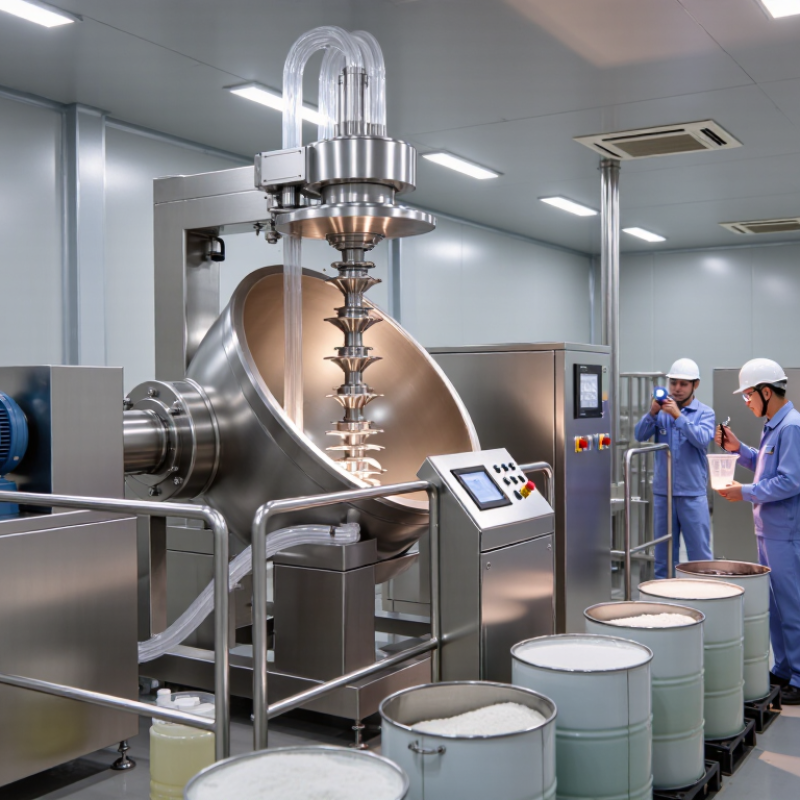
China Best Industrial Mixing Machine Suppliers?

Understanding Industrial Mixing Machines and Their Applications

China Best Industrial Mixing Machine Suppliers?

Industrial mixing machines combine liquids, disperse powders, emulsify ingredients, or blend thick pastes. The right design depends on the material and the result required. A propeller can blend a low-viscosity liquid, while a rotor-stator head creates stronger shear for fine dispersions. For powder wetting, the feed rate and impeller position matter; otherwise, dry clumps may linger near the vessel wall. In coatings, food processing, water treatment, and chemical production, even small changes in viscosity can alter mixing time and product consistency. There is no universal setting.

When comparing suppliers, ask for application-specific test data, not just motor power. Check the vessel geometry, wetted materials, speed control, cleaning access, and availability of service support. The International Energy Agency reports that industry accounts for roughly 37% of global energy use (IEA, “Industry,” 2023). Efficient motor sizing and avoiding unnecessary mixing time therefore matter, though energy savings depend on the process. A machine that runs smoothly with water may struggle with a dense paste. That detail is easy to overlook. Request a trial using a representative material, and record batch size, mixing time, and final uniformity.

Key Criteria for Evaluating Chinese Mixing Machine Suppliers

China Best Industrial Mixing Machine Suppliers?

Key Criteria for Evaluating Chinese Mixing Machine Suppliers

A reliable supplier should explain how its mixer performs with your actual material, not just quote motor power. Ask for batch capacity, viscosity range, mixing time, and energy use per batch. Request a material test using your sample, with the impeller, vessel, and operating speed recorded. Small details matter: a sticky residue around a shaft seal can mean extra cleaning time every shift.

The International Energy Agency’s Energy Efficiency 2023 report estimates that industry uses about 37% of global final energy. That makes kWh per batch a useful comparison, alongside output quality and cycle time. Ask suppliers for test conditions and raw readings; an efficiency claim without them is hard to verify. Check weld finish, seal access, spare-parts lead times, and whether technicians can support commissioning remotely or on site. Review quality records and inspection procedures, but treat certificates as evidence of a system, not proof that every machine will perform well. Not proof. A video test helps, though it cannot replace a visit or an independently witnessed trial. I might overvalue energy figures here; for abrasive or heat-sensitive materials, product consistency may matter more.

Key Criteria for Evaluating Chinese Industrial Mixing Machine Suppliers

Suggested evaluation weights for comparing suppliers. These are a procurement framework, not survey results or ratings of specific companies.

How to use it: Prioritize process and application fit, then verify performance claims with technical documentation and acceptance tests. Adjust the weights to reflect your material, production scale, compliance needs, and service requirements.

Major Types of Industrial Mixing Machine Suppliers in China

China’s industrial mixing machine suppliers generally fall into three groups: equipment manufacturers, engineering integrators, and export-oriented trading companies. Manufacturers build standard machines such as ribbon, paddle, and high-shear mixers. They may offer better access to production details, spare parts, and configuration changes. Engineering integrators combine mixers with feeders, tanks, controls, or complete processing lines. This suits plants with unusual materials or tight workflow requirements, but project coordination needs careful review. Trading companies can simplify communication and shipping arrangements. However, buyers should confirm who handles technical questions and after-sales service.

Supplier capabilities vary. A polished catalog is not proof that a machine suits your material. Ask for details on batch size, motor power, contact materials, cleaning access, and expected mixing time. For powders, request evidence that the proposed design can manage dust and reduce dead zones. For viscous products, check whether the drive and mixing elements fit the actual viscosity range. Sample testing can reveal problems that drawings miss.

Tips: Share a clear process brief, including ingredients, target output, and cleaning needs. Request a layout, warranty terms, and a parts list. Compare technical responses, not just prices. Small details matter, and supplier claims still need verification.

How to Compare Supplier Capabilities, Quality, and Services

When comparing industrial mixing machine suppliers, ask for test data using your actual batch size, ingredients, and target viscosity. A showroom demo may use an easier material. A brochure proves little. Record mixing time, speed, motor load, temperature rise, and batch-to-batch consistency. Request contact-material specifications, weld-finish details, cleaning instructions, and a sample inspection report. These details help reveal whether the supplier understands your process, not just the machine.

Energy deserves a place in the comparison. The U.S. Department of Energy’s 2014 motor-systems sourcebook reports that motor-driven systems use about 69% of U.S. manufacturing electricity. It notes that better-designed systems can often reduce energy use by 20–50%. The IEA’s Energy Efficiency 2023 report estimates that industry accounts for roughly 37% of global final energy consumption. Ask suppliers to document motor efficiency and expected operating load, rather than offering estimates without test conditions. Compare commissioning support, operator training, spare-part lead times, and response times in writing. A polished factory acceptance test can still miss problems in your own plant. I would treat trial results as useful evidence, not a guarantee; different operators and raw-material batches can change performance.

China Best Industrial Mixing Machine Suppliers? - How to Compare Supplier Capabilities, Quality, and Services

Comparison dimension What to compare Evidence to request or check Practical evaluation
Process fit Suitability for the product’s viscosity, solids content, batch size, and required mixing result. A written process review, proposed mixer configuration, and test results using a representative material or documented equivalent. Prefer a supplier that explains the selection and its limits, rather than recommending a machine based only on tank volume.
Mixing technology Whether the proposed agitator or mixer type matches the operation—for example, blending, high-shear dispersion, or powder incorporation. Impeller or rotor-stator drawings, speed range, power information, and an explanation of the expected flow pattern or dispersion duty. Check that the stated duty matches the process; a single mixer design is not suitable for every material or mixing objective.
Capacity and scale-up Working volume, batch size, vessel geometry, and how performance is expected to change when production is scaled up. A dimensional drawing, usable-volume range, motor and drive specifications, and documented scale-up assumptions. Confirm working volume—not just nominal vessel volume—and verify that the proposed machine fits the site and process sequence.
Product-contact materials Material grades and surface finish for product-contact parts, selected for the product, cleaning method, and operating environment. Material certificates, surface-finish specifications where applicable, weld documentation, and a product-compatibility review. Stainless-steel grade alone does not establish compatibility; assess chemical exposure, temperature, cleaning, and contamination requirements.
Fabrication and quality control Manufacturing controls, inspection stages, traceability, and handling of nonconformities. Quality-management documentation, inspection and test plans, calibration records where relevant, and sample inspection reports. Check whether quality records relate to the equipment being quoted; a quality-system certificate is not a substitute for product inspection.
Safety and compliance Machine guarding, emergency stops, electrical design, operating instructions, and any applicable site or market requirements. Risk-assessment documentation, electrical drawings, safety-device list, manuals, and relevant conformity documents for the destination market. Confirm requirements for the installation location and process, including hazardous-area needs where applicable; do not assume one certificate covers every requirement.
Controls and automation Control functions, speed regulation, interlocks, recipe handling, and compatibility with the plant’s electrical and automation systems. Control-panel drawings, component and signal lists, operating sequence, and a clear scope for integration and commissioning. Identify which controls are included and which require plant-side work, programming, or additional equipment.
Cleaning and maintenance Access for cleaning, disassembly needs, seal and bearing arrangement, and routine maintenance requirements. Cleaning instructions, maintenance schedule, recommended spares list, and details of seals and other wear parts. Evaluate cleaning against the actual process and hygiene requirements; a “cleanable” design does not automatically mean validated cleaning performance.
Testing and acceptance Factory testing, inspection scope, acceptance criteria, and any process-performance test before shipment. A mutually agreed test plan, completed test records, inspection checklist, and defined process-performance criteria where measurable. Agree on measurable acceptance criteria, responsibilities, and remedies before placing the order.
Delivery and project management Drawing approvals, manufacturing milestones, packaging, shipping scope, and coordination with installation dates. A project schedule, scope-of-supply list, packing details, shipping terms, and a named project contact. Compare the complete delivery scope and dependencies, not just the quoted equipment price or stated lead time.
Installation and commissioning Availability of installation guidance, startup support, operator training, and commissioning responsibilities. A service scope showing included days, travel or site costs, customer prerequisites, and training deliverables. Clarify support arrangements and site-readiness requirements before confirming the purchase.
After-sales support Warranty terms, technical response process, spare-parts availability, and escalation for service issues. Written warranty conditions, support contact details, spare-parts list, and stated service response arrangements. Compare documented commitments and exclusions; do not rely on verbal assurances alone.

Use this as a supplier-evaluation checklist. It is a comparison framework, not a ranking or a survey of specific suppliers; complete it with evidence from each quotation and technical review.

Steps for Selecting and Verifying a Suitable Supplier

China Best Industrial Mixing Machine Suppliers?

Selecting and Verifying a Suitable Supplier

A suitable supplier should understand your material, batch size, and production rhythm. Start by sharing measurable requirements, such as viscosity, target capacity, mixing time, and cleaning needs. Small details matter. Ask how the proposed machine handles your actual ingredients, not just a similar product category. Request drawings, material specifications, and a clear explanation of the mixing principle. Verify that the quoted configuration matches your process, including motor power, vessel dimensions, and any temperature-control features.

Tips: Send a representative sample when practical. Request a test using your target batch size, and ask for recorded results. Compare the test conditions with your real production process.

Before placing an order, review the supplier’s quality procedures, inspection records, and experience with comparable applications. Arrange a factory visit or live video inspection to see assembly and testing practices. Speak with customer references, if available, and confirm installation, spare-parts, and after-sales support in writing. A polished brochure is not proof of performance. Even a successful trial has limits: seasonal material changes or operator habits may affect results later. I would leave room for adjustment. Define acceptance criteria before production, and document any unresolved technical questions.