
Skip to Content
chevron-left chevron-right chevron-up chevron-right chevron-left arrow-back star phone quote checkbox-checked search wrench info shield play connection mobile coin-dollar spoon-knife ticket pushpin location gift fire feed bubbles home heart calendar price-tag credit-card clock envelop facebook instagram twitter youtube pinterest yelp google reddit linkedin envelope bbb pinterest homeadvisor angies

7 Best Industrial Filling Machines for Global Buyers?

Choosing an Industrial Filling Machine is not just a matter of matching a bottle to a nozzle. A buyer must consider the product’s viscosity, target fill volume, container shape, and planned production rate. A thin liquid may run smoothly through a gravity filler, while a thick sauce needs a different pumping system. Small details matter. A sticky residue around a nozzle can slow a line and complicate cleaning.

Quality-management expert W. Edwards Deming wrote, “Quality comes not from inspection, but from improvement of the production process.” His principle offers a useful lens for comparing filling equipment: look beyond advertised speed and examine how consistently a machine performs during real production. Ask suppliers about dosing accuracy, changeover time, cleaning access, spare parts, and technical support. Request a demonstration using containers and product characteristics similar to yours. A polished showroom test is helpful, but it cannot answer every question.

This guide reviews seven filling-machine types for global buyers, from compact manual systems to automated lines. It explains where each option fits, what trade-offs to expect, and which specifications deserve close attention. No machine is best for every plant. That can be frustrating. A lower purchase price may bring more manual work, while higher automation can demand extra training and maintenance. Treat these comparisons as a starting point, then verify claims against your own production needs and supplier documentation.
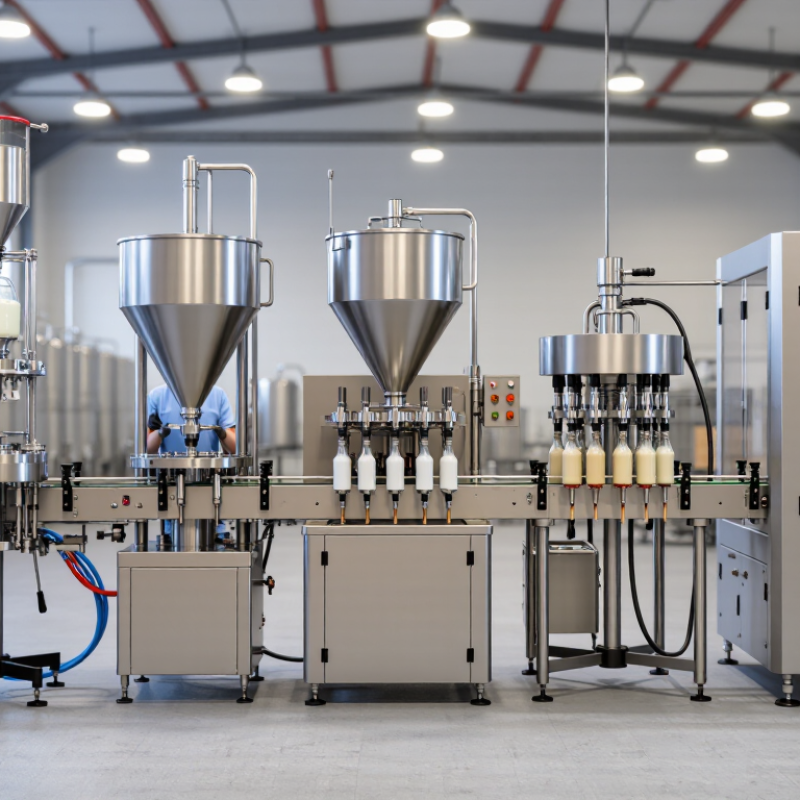
7 Best Industrial Filling Machines for Global Buyers?

What Industrial Filling Machines Do and Which Industries Use Them

Industrial filling machines dispense measured amounts of liquids, pastes, powders, or granules into containers. Their purpose is consistent dosing, not simply higher speed. Depending on the product, a line may use gravity, piston, pump, or auger filling. A food producer might fill thick sauce into jars, while a cosmetics facility may dispense lotion into bottles. Beverage, dairy, pharmaceutical, household-product, and agricultural-input manufacturers also use filling equipment. Each application has different requirements for viscosity, hygiene, container shape, and cleaning.

The filling method affects accuracy, product waste, and changeover time. Thin liquids may splash or foam; dense creams may need wider nozzles and slower flow. Powders can bridge in a hopper, making feeder design important.

Buyers should check the target fill range, container dimensions, expected output, product-contact materials, and cleaning process. Request a trial with the actual product and containers. A specification sheet may not reveal small problems, such as nozzle drips or awkward adjustments.

Tips: Measure fill variation across repeated runs, not just one cycle. Check whether operators can reach nozzles and cleaning points safely. Small inconveniences add up during a long shift. Confirm how container changes are handled, too; manual adjustments can work well when they are clear and repeatable.

How Filling Technologies Differ by Product and Container Type

Filling technology should match the product’s behavior, not just its target volume. Thin liquids, such as water-like solutions, often suit gravity or flowmeter filling. Flowmeters measure liquid moving through a line, which can help maintain consistent doses across production runs. Thicker products, such as sauces or creams, usually need piston fillers that push a measured amount through a nozzle. Product temperature and texture matter too. A cream that flows easily when warm may become slow and uneven after cooling.

Powders and free-flowing granules often use auger or cup-based dosing systems. Their accuracy can shift with particle size, moisture, and settling inside the hopper. Foam changes everything. Bottom-up filling can reduce splashing when handling foamy liquids, though nozzle speed and container shape still need testing.

Container geometry matters. Narrow necks may require slim nozzles, while wide-mouth jars allow easier access for thicker products. Pouches need controlled positioning and a reliable seal after filling. Glass containers may require gentle handling, since small impacts can cause chips or breakage. Before selecting equipment, test it with the actual product and container. Test real product. Watch for drips, trapped air, and changing fill levels during a full run. A machine that works well for one batch may behave differently with another. That detail is easy to underestimate.

Seven Industrial Filling Machine Types for Global Buyers

Industrial filling machines are designed around product behavior, not just container size.

Gravity fillers suit free-flowing liquids such as water or thin oils.

Piston fillers handle thicker products, including sauces and creams, with measured strokes.

Pump fillers move products through tubing, but the pump type matters when ingredients are delicate.

Overflow fillers help bottles look evenly filled, especially when shelf appearance matters.

Net-weight fillers measure product by mass, useful when fill quantity must be checked directly.

Auger fillers meter powders into jars or bags; powder flow can change with humidity.

Vacuum fillers draw liquid into compatible containers using pressure differences, so container strength and product properties need review.

Small details count. These seven types are not interchangeable. A sample run with the actual product can reveal drips, foam, settling, or slow refill cycles that a specification sheet misses.

A clean factory floor and a neatly printed brochure are reassuring, but they do not prove a machine will suit every shift. Buyers should compare changeover time, cleaning access, container range, and local service support, then ask for measured test results.

I would still leave room for doubt: one successful trial may not represent a full production day.

How to Compare Speed, Accuracy, Automation, and Total Cost

A useful comparison starts with the product and container, not the machine’s headline speed. Rated output may assume steady flow, uniform bottles, and no changeovers. Ask for the expected rate using your actual liquid, fill volume, and container shape. Watch a trial run. Does the line keep pace when operators replace a roll of caps or clear a bottle jam? A fast machine can still create a slow production day.

Accuracy matters in every shift. Request fill-weight or volume results across several runs, including startup and restart. A few milliliters of variation can add up across thousands of containers. Small details count. Compare manual, semi-automatic, and automatic setups by checking how many operators they need and how easily settings change. More automation is not always better; complex controls can require training and specialist support.

Compare total cost over the expected service life, not just the purchase price. Include installation, utilities, routine parts, cleaning time, training, and planned downtime. Ask how quickly common wear parts can be replaced, and whether local technicians are available. These estimates are imperfect; real maintenance often differs from a spreadsheet. Still, a clear cost model helps buyers weigh speed against accuracy and practical upkeep.

7 Best Industrial Filling Machines for Global Buyers? — How to Compare Speed, Accuracy, Automation, and Total Cost

Machine Type Best Suited For Typical Speed Typical Fill Accuracy Automation Options Relative Initial Cost Key Buying Consideration
Gravity Filler Free-flowing, low-viscosity liquids such as water and some non-carbonated beverages About 10–60 containers per minute Typically around ±0.5–1.5% by volume, depending on the product and setup Available with automatic container indexing, level controls, and multi-head configurations Low to medium Simple and economical, but generally unsuitable for thick, foaming, or highly valuable products.
Overflow Filler Thin liquids where a consistent visible fill level matters, including personal-care and household products About 10–60 containers per minute Consistent fill height; the actual volume can vary with container shape and internal dimensions Automatic models can include conveyor handling, nozzle diving, and recipe controls Low to medium Creates an even-looking fill line, but does not guarantee identical net volume in differently shaped containers.
Piston Filler Medium- to high-viscosity products such as sauces, creams, pastes, and some products with particulates About 10–60 containers per minute Typically around ±0.5–1.0% by volume under suitable operating conditions Can be configured with multiple pistons, automatic controls, and clean-in-place systems Medium Positive-displacement filling handles thicker products well; piston, valve, and nozzle design must suit the product.
Peristaltic Pump Filler Small-dose, shear-sensitive, sterile, or high-purity liquids in pharmaceutical, laboratory, and specialty production About 5–30 containers per minute Often around ±0.5–1.0% by volume for suitable small-dose applications Electronic dose control and recipe storage are common; tubing can be replaced without product-contact pump parts Medium to high Useful where product isolation and quick tubing changes matter; tubing life and dose size affect operating cost.
Gear Pump Filler Viscous liquids, oils, and products requiring controlled metering About 10–60 containers per minute Typically around ±0.5–1.0% by volume, depending on viscosity, pump setup, and calibration Servo-driven dosing, programmable recipes, and multi-nozzle layouts are available Medium to high Can deliver repeatable doses, but product compatibility, cleanability, and wear-part requirements need review.
Net-Weight Filler Products sold by mass, high-value liquids, and applications requiring weight-based fill verification About 5–30 containers per minute Commonly designed for approximately ±0.1–0.5% of target weight; confirm the achievable tolerance for the fill size Electronic weighing, automatic tare, feedback control, and data logging are typical options High Measures product mass directly, but weighing equipment, settling time, and container handling influence throughput.
Rotary Multi-Head Filler High-volume production of compatible products in standardized containers About 60–300 containers per minute, depending on the number of heads and product Depends on the installed filling technology; performance should be specified for the actual product and package Typically integrated with automatic infeed, filling, discharge, and synchronized line controls High to very high Offers high throughput, but requires more floor space, investment, and format-change planning than simpler systems.

Comparison note: Speeds and accuracy figures are indicative industry ranges, not guaranteed specifications. Actual performance varies with fill volume, product viscosity and foaming behavior, container geometry, number of filling heads, changeover requirements, and operating conditions. Request a product-specific test and a total-cost estimate covering installation, labor, maintenance, utilities, and consumables.

How to Check Compliance, Support, and Compatibility Across Markets

A filling machine can perform well in one plant and still miss a buyer’s local requirements. Compliance is not a single certificate. Request current declarations, electrical drawings, material-contact specifications, and risk assessments. Confirm applicable standards with a qualified local reviewer, since requirements can change. Compare voltage, frequency, guarding, enclosure rating, and emergency stops with the actual site conditions. Keep copies. A tidy document pack helps, but it does not prove the installed machine matches the paperwork. That gap is easy to overlook.

Compatibility starts with the product and package. Bring sample bottles, caps, and product data to a machine trial; note viscosity, foaming, target speed, and changeover time. Ask how filling accuracy is checked and how product-contact parts are cleaned. Then check utilities, floor space, conveyor height, and control-system connections. Support needs equal attention. Confirm response hours, spare-part availability, language options, and who can visit the site if remote troubleshooting fails. Weak connectivity can make remote help frustrating. Even a careful checklist misses details sometimes, so record trial results and open questions before approving the purchase.