Skip to Content
chevron-left chevron-right chevron-up chevron-right chevron-left arrow-back star phone quote checkbox-checked search wrench info shield play connection mobile coin-dollar spoon-knife ticket pushpin location gift fire feed bubbles home heart calendar price-tag credit-card clock envelop facebook instagram twitter youtube pinterest yelp google reddit linkedin envelope bbb pinterest homeadvisor angies

10 Best Biosafety Isolators for Global Buyers?

Selecting the right Biosafety Isolator requires more than comparing stainless-steel finishes or quoted prices. Global buyers must examine containment performance, pressure control, filtration, decontamination, ergonomics, validation support, and lifecycle costs. A small glove-port leak can compromise an entire workflow. That detail matters.

The World Health Organization’s Laboratory Biosafety Manual, fourth edition, emphasizes risk assessment as the foundation of safe laboratory design. The CDC and NIH Biosafety in Microbiological and Biomedical Laboratories, sixth edition, also stresses engineering controls, documented procedures, and trained personnel. ISO 14644-1 provides internationally recognized principles for cleanroom air classification. These references help frame the evaluation criteria behind this guide. Market analyses from Grand View Research and Fortune Business Insights also indicate steady growth in biosafety and containment equipment, driven by pharmaceutical manufacturing, advanced research, and diagnostic capacity expansion.

Still, no ranking fits every facility. A high-containment isolator may be excessive for one application and inadequate for another. Buyer expectations can also be unrealistic. Lower purchase prices may conceal expensive filter changes, validation delays, or limited local service. This guide reviews ten leading Biosafety Isolator options for global buyers, focusing on practical evidence rather than attractive brochures. Each model should be assessed against its intended risk profile, material transfer needs, cleaning routine, operator comfort, and regional support network. Ask difficult questions. Request test records. Verify claims independently. The final choice should protect people, products, and processes without creating unnecessary complexity.

10 Best Biosafety Isolators for Global Buyers?

What Are Biosafety Isolators and How Do They Work?

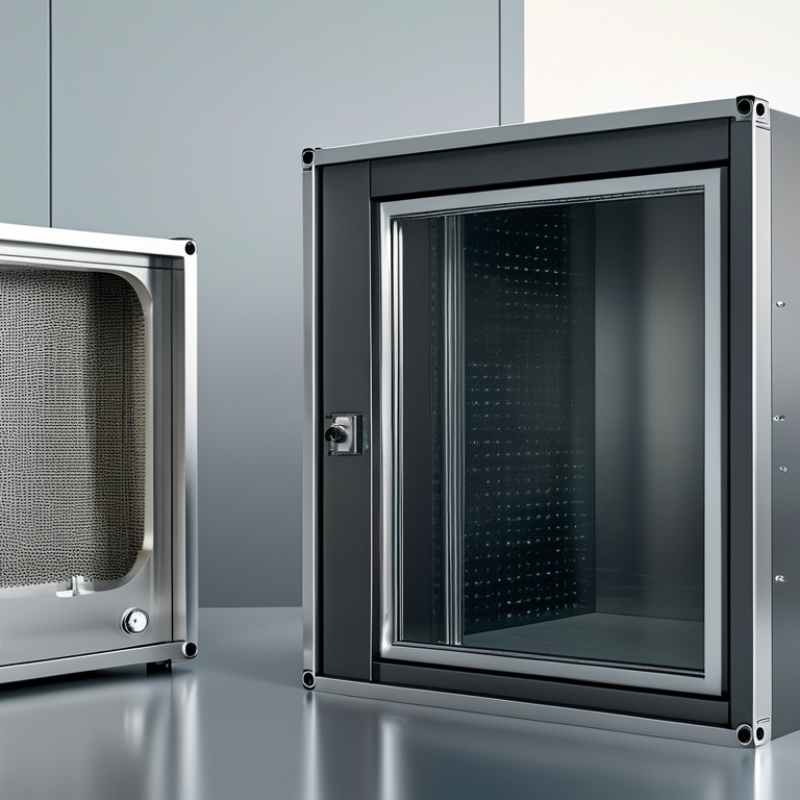
A biosafety isolator is an enclosed workspace that separates operators, products, and laboratory surroundings. It uses rigid walls, sealed gloves, controlled airflow, and high-efficiency particulate air filtration. Unlike an open biological safety cabinet, the isolator limits direct hand access. Operators work through glove ports while observing materials through a transparent panel.

Airflow design determines its protection level. Negative pressure helps prevent hazardous aerosols from escaping. Positive pressure can protect sensitive materials from room contamination, but it requires stronger leak control. Supply air passes through filters, while exhaust air receives additional filtration before release. Transfer chambers reduce contamination during material movement. Interlocks prevent both doors from opening together.

ISO 14644-1:2015 identifies 3,520 particles per cubic metre at 0.5 micrometres for ISO Class 5 air. ISO Class 7 permits 352,000 particles at the same size. These figures support cleanroom qualification, not automatic biological safety. The CDC and NIH BMBL, 6th edition, emphasize risk assessment before selecting containment equipment.

In practice, qualification includes airflow checks, filter integrity testing, pressure monitoring, and glove leak testing. Alarms matter.

“Sealed” is not absolute.

A damaged glove, poor transfer habit, or skipped maintenance can defeat excellent engineering. Users should verify recovery time, decontamination compatibility, and documented test results before purchase. I would also question impressive specifications without independent validation. Biosafety depends on equipment, procedures, training, and disciplined daily behavior.

Which Features Define a High-Quality Biosafety Isolator?

A high-quality biosafety isolator should protect operators, products, and the surrounding environment. Its sealed chamber needs stable, directional airflow and efficient HEPA or ULPA filtration. Pressure sensors should detect small changes quickly. Clear alarms matter when gloves, filters, or doors lose integrity. A quiet system also improves concentration during long procedures.

The working chamber should have smooth, chemical-resistant surfaces with rounded corners. These details reduce residue and make cleaning more reliable. Glove ports must support comfortable movement without creating awkward wrist angles. A practical transfer chamber helps users move materials safely between environments. Good visibility is essential, especially when handling small containers or checking liquid spills. However, no isolator is perfect. Poor maintenance can weaken even an excellent design.

Tips: Ask for airflow test records, filter certificates, leak-test procedures, and service documentation. Confirm that replacement parts are available in your region. Review the alarm history and data-recording functions before purchase. Check whether operators can clean every internal corner without excessive dismantling. Independent validation is valuable, but buyers should still observe a live demonstration. Specifications may look impressive on paper. The daily workflow reveals more.

How to Compare the 10 Best Biosafety Isolators Worldwide

Comparing the 10 best biosafety isolators worldwide requires more than checking product photographs. A reliable comparison starts with containment performance, airflow stability, filter efficiency, and alarm response. Ask suppliers for independent test records, not only internal claims. During site visits, observe glove movement, cleaning access, and visibility through the front panel. A unit may look advanced yet feel tiring after several hours. That matters in real laboratories.

Tips: Create one scoring sheet for all ten models. Record pressure range, noise level, working volume, filter replacement time, and service coverage. Request a demonstration using smoke visualization and glove leak testing. Check whether local engineers can calibrate sensors quickly. Also compare installation needs, power supply, room clearance, and operator training. Small details become expensive later.

Global buyers should examine certification evidence and validation methods carefully. Standards may differ between regions, so local compliance advice is essential. Review data integrity, maintenance logs, emergency procedures, and spare-part availability. Total cost includes delivery, installation, annual testing, consumables, and downtime. Do not trust the lowest quote automatically. It may exclude commissioning or future certification. I have seen comparisons fail because users ignored chair height and transfer-port reach. A technically strong isolator can still underperform when staff work around it. Leave room for questions that the brochure does not answer.

10 Best Biosafety Isolators for Global Buyers? - How to Compare the 10 Best Biosafety Isolators Worldwide

A practical comparison of widely used biosafety-isolator configurations. The specifications below are typical engineering ranges rather than product-specific claims and should be confirmed against the final validation, risk assessment, and regulatory requirements.

Rank Isolator Configuration Containment Mode Typical Operating Pressure Filtration Arrangement Material Transfer Typical Internal Work Area Best Suited For Common Decontamination Method Key Strength Important Limitation
1 Rigid-wall Class III glovebox isolator Maximum physical separation
Fully enclosed, gas-tight or highly leak-tight chamber operated under negative pressure.
Typically −100 to −250 Pa relative to the surrounding room; project values vary. Supply air commonly through HEPA filtration; exhaust normally through two-stage HEPA filtration or an equivalent validated system. Interlocked pass-through chamber, dunk tank, or sealed transfer container. Approximately 0.5–3.0 m² per work zone. High-consequence pathogens, aerosol-generating procedures, and work requiring maximum operator separation. Vaporized hydrogen peroxide, chlorine dioxide, formaldehyde alternatives, or another validated gaseous process. Strongest separation between personnel, product, and room environment. High capital cost, restricted access, and more complex maintenance and validation.
2 Flexible-film negative-pressure isolator High containment
Sealed flexible enclosure supported by a frame and maintained below room pressure.
Commonly −30 to −150 Pa, depending on enclosure design and risk assessment. HEPA-filtered supply and exhaust; exhaust filtration should be monitored for pressure drop and integrity. Glove ports, sealed transfer bags, rapid-transfer ports, or small pass-through chambers. Approximately 0.4–2.5 m² per enclosure. Temporary or semi-permanent containment, research procedures, and facilities needing deployment flexibility. Vapor-phase hydrogen peroxide or another material-compatible validated method. Fast installation and lower structural requirements than a rigid enclosure. Film durability, puncture control, and compatibility with solvents or sharp equipment must be managed.
3 Rigid-wall negative-pressure research isolator High containment
Hard panels, sealed joints, glove ports, and monitored pressure differential.
Typically −50 to −200 Pa relative to the surrounding area. HEPA or ULPA filtration selected according to the hazard, airflow pattern, and facility requirements. Interlocked material airlock, RTP, or sealed container transfer. Approximately 1–6 m², often modular. Routine microbiology, sample processing, and repeatable laboratory workflows. Vaporized hydrogen peroxide, chlorine dioxide, or surface disinfection combined with validated cleaning. Good balance of durability, cleanability, and containment performance. Requires careful airflow balancing and professionally qualified commissioning.
4 Pass-through production isolator Process containment
Separated personnel and material flows with controlled transfer interfaces.
Commonly −25 to −150 Pa for containment; positive-pressure designs are used only when product protection is the primary objective. HEPA-filtered supply and exhaust, with pressure monitoring across critical filters. Large interlocked pass box, rapid-transfer port, or automated transfer system. Approximately 2–20 m² depending on batch and process scale. High-throughput sample preparation, bioprocessing support, and controlled production operations. Vaporized hydrogen peroxide or another validated room-and-equipment biodecontamination cycle. Supports controlled logistics and reduces unnecessary personnel movement. More complex utilities, automation, cleaning validation, and material-flow qualification.
5 Anaerobic microbiology isolator Atmosphere-controlled containment
Sealed enclosure with oxygen removal and controlled internal gas composition.
Usually slightly negative to neutral relative to the room; exact pressure depends on containment requirements. HEPA-filtered gas supply and exhaust where biological containment is required. Airlock with vacuum and gas cycling, or interlocked transfer chamber. Approximately 0.5–2.5 m². Anaerobic culture, oxygen-sensitive organisms, and controlled specimen handling. Validated chemical or vapor decontamination compatible with the gas-control system. Combines oxygen control with closed handling and reduced exposure risk. Gas consumption, oxygen monitoring, and airlock cycle time add operational complexity.
6 Animal-handling biosafety isolator Containment with husbandry access
Enclosure designed for animal procedures, waste handling, and controlled airflow.
Typically −50 to −200 Pa, with airflow selected to control aerosols and animal-room exposure. HEPA-filtered supply and exhaust; prefilters may be used to protect final filters from fur and bedding dust. Interlocked animal transfer chamber, sealed cage transfer, or pass-through waste route. Approximately 1–12 m² depending on species and housing configuration. Small-animal infection studies, challenge studies, and procedures generating biological aerosols. Hydrogen peroxide vapor, chlorine dioxide, or validated wet-cleaning and surface-disinfection protocols. Integrates containment, observation, feeding, waste handling, and procedural access. Noise, heat, animal welfare, waste loading, and cleaning requirements can be significant.
7 Aerosol-challenge isolator Enhanced aerosol control
Closed chamber designed to control, contain, and remove airborne biological material.
Often −100 to −300 Pa, subject to chamber size and aerosol-generation method. High-efficiency exhaust filtration with monitored airflow; redundant filtration may be specified for higher-risk work. Small airlock, sealed instrumentation ports, and controlled sample removal. Approximately 0.5–4.0 m². Aerosol exposure studies, inhalation research, and validated airborne-containment testing. Validated vapor or gas decontamination, with special attention to internal tubing and hard-to-reach surfaces. Designed around airborne-risk control and measurable airflow performance. Requires specialized aerosol characterization, leak testing, and rigorous operational controls.
8 Cytotoxic or high-potency compound isolator Operator and product protection
Normally negative pressure when hazardous powders or aerosols are handled.
Commonly −30 to −150 Pa; pharmaceutical applications may define tighter site-specific limits. HEPA-filtered supply and exhaust; filter selection must consider powder loading and chemical compatibility. Rapid-transfer port, pass box, or sealed bag-in/bag-out arrangement. Approximately 0.5–6.0 m². High-potency biological materials, cytotoxic compounds, and sterile or low-bioburden operations. Validated hydrogen peroxide vapor or residue-compatible chemical cleaning. Provides controlled handling of hazardous powders, liquids, and contaminated disposables. Biological containment and chemical containment requirements must be assessed separately.
9 Dual-chamber transfer isolator Material-flow containment
Separate entry and exit chambers reduce cross-contamination and uncontrolled transfer.
Typically −25 to −150 Pa in the main chamber; transfer chambers may use staged pressure control. HEPA-filtered supply and exhaust, often with independent monitoring for each chamber. Two-door interlocked pass-through with configurable purge cycles. Approximately 1–8 m². Frequent sample movement, multi-step workflows, and facilities requiring directional material flow. Vapor-phase decontamination, wipe-down disinfection, or both. Reduces transfer-related contamination and supports efficient workflow separation. More doors, sensors, interlocks, and controls increase maintenance and qualification demands.
10 Mobile or relocatable biosafety isolator Flexible containment
Compact enclosure mounted on a movable frame or designed for rapid relocation.
Typically −30 to −150 Pa, depending on the enclosure and exhaust arrangement. HEPA-filtered supply and exhaust; exhaust connection must be compatible with the host facility. Small pass-through, sealed transfer bag, or glove-port loading method. Approximately 0.3–2.0 m². Overflow capacity, field laboratories, temporary projects, and facilities with changing layouts. Hydrogen peroxide vapor or validated manual disinfection, subject to enclosure materials. Shorter deployment time and lower dependence on permanent construction. Limited workspace, utility capacity, exhaust routing, and payload compared with fixed systems.

Buyer evaluation note: Before procurement, compare pressure stability, airflow visualization, HEPA filter integrity testing, leak-rate testing, alarm response, transfer-cycle validation, decontamination efficacy, cleanability, service access, utility demand, operator ergonomics, and compliance with the applicable local biosafety, laboratory, pharmaceutical, and occupational-health requirements. A configuration should be selected through a documented risk assessment rather than ranking alone.

What Standards and Certifications Should Global Buyers Check?

Global buyers evaluating biosafety isolators should verify standards before comparing prices or chamber size. ISO 14644-1 helps confirm cleanroom particle classification, while ISO 14644-7 addresses separative devices, including isolator design. For pharmaceutical applications, ISO 13408-6 may support aseptic processing requirements. These standards are useful, but they do not automatically prove biological containment.

Ask for current, product-specific test reports. HEPA or ULPA filters should have documented efficiency testing under ISO 29463 or EN 1822. Pressure decay tests, airflow studies, and glove integrity tests should match the intended operating conditions. A supplier should also provide factory acceptance records and clear acceptance limits. I have learned that vague “tested” statements create costly delays.

Check electrical and mechanical safety against applicable regional requirements, such as IEC 61010-1. Confirm whether CE, UKCA, or other market markings apply to the complete isolator system. For pharmaceutical buyers, review alignment with current GMP expectations, including contamination-control strategy and Annex 1 where relevant. Validation evidence should cover IQ, OQ, and performance qualification, not only installation photos. ISO 9001 can indicate controlled quality processes, but it is not a biosafety certification.

Do not rely on certificates alone. Verify issuing bodies, expiry dates, test methods, and equipment serial numbers. Ask whether the report covers the final configuration, including transfer chambers and gloves. This detail is often missed. A technically correct document may still be unsuitable for a different country, facility layout, or biosafety risk assessment.

How to Select, Install, and Maintain the Right Isolator

Selecting a biosafety isolator starts with the process, not the catalogue. Define the material, operator tasks, containment level, and expected throughput. Check glove ports, transfer chambers, pressure control, airflow direction, and filter access. A suitable unit should support routine cleaning without forcing awkward reaches. Ask for validated performance data, factory test records, and service documentation. Do not rely on appearance. Confirm local requirements, room utilities, floor loading, door clearance, and emergency power before purchase.

Installation should follow an approved site plan and involve trained technicians. Before delivery, verify the route from the loading bay to the final room. Measure turns and lift capacity. After positioning, test pressure stability, airflow patterns, alarms, and transfer-chamber cycles. Record baseline readings under defined operating conditions. Connect exhaust and power systems according to engineering specifications. Never treat commissioning as paperwork. An isolator can look clean while poorly balanced airflow weakens protection.

Maintenance needs a calendar, clear ownership, and honest records. Inspect gloves, seals, viewing panels, filters, and sensors at scheduled intervals. Replace damaged components before they become failure points. Use cleaning agents compatible with chamber surfaces and seals. Train operators to report small tears, unusual noise, or drifting pressure immediately. Keep decontamination procedures controlled, documented, and verified by qualified personnel. A missed inspection is easy to hide. It is also easy to regret. Review incidents and near misses, even when no exposure occurred. The first plan is often wrong; real use should refine it.