
Skip to Content
chevron-left chevron-right chevron-up chevron-right chevron-left arrow-back star phone quote checkbox-checked search wrench info shield play connection mobile coin-dollar spoon-knife ticket pushpin location gift fire feed bubbles home heart calendar price-tag credit-card clock envelop facebook instagram twitter youtube pinterest yelp google reddit linkedin envelope bbb pinterest homeadvisor angies

7 Best Industrial Quadcopters for Global Buyers?

Industrial Quadcopter platforms are moving from specialist tools into routine industrial operations. They now support infrastructure inspection, construction surveying, agriculture, mining, energy, and emergency planning. Grand View Research reports that the global commercial drone market continues to expand rapidly, supported by automation, high-resolution sensors, and reduced inspection costs. Drone Industry Insights also identifies enterprise services and industrial applications as major forces shaping commercial drone adoption.

Yet market growth does not make every aircraft suitable for global buyers. A quadcopter carrying a thermal camera over a solar farm faces different demands from one mapping a crowded construction site. Payload capacity, flight endurance, wind resistance, IP protection, RTK accuracy, and battery logistics matter in the field. So does software reliability. A perfect camera cannot compensate for weak data workflows.

This guide examines seven leading industrial quadcopters through a practical purchasing lens. It considers measurable specifications, manufacturer support, replacement parts, training requirements, and regional operating constraints. The European Union Aviation Safety Agency and the Federal Aviation Administration both emphasize risk assessment, pilot responsibility, and operational limitations. Buyers must therefore verify local registration, airspace, privacy, and remote-identification requirements before deployment.

Specifications can mislead.

A claimed forty-minute flight may shrink under strong wind, cold temperatures, or a heavy sensor. Global buyers should also examine warranty terms and service networks, not only launch prices. This comparison is useful, but it is not universal. A mining company, utility provider, and survey contractor may select different winners. The strongest choice is the aircraft that remains dependable after repeated flights, imperfect weather, and real maintenance demands.
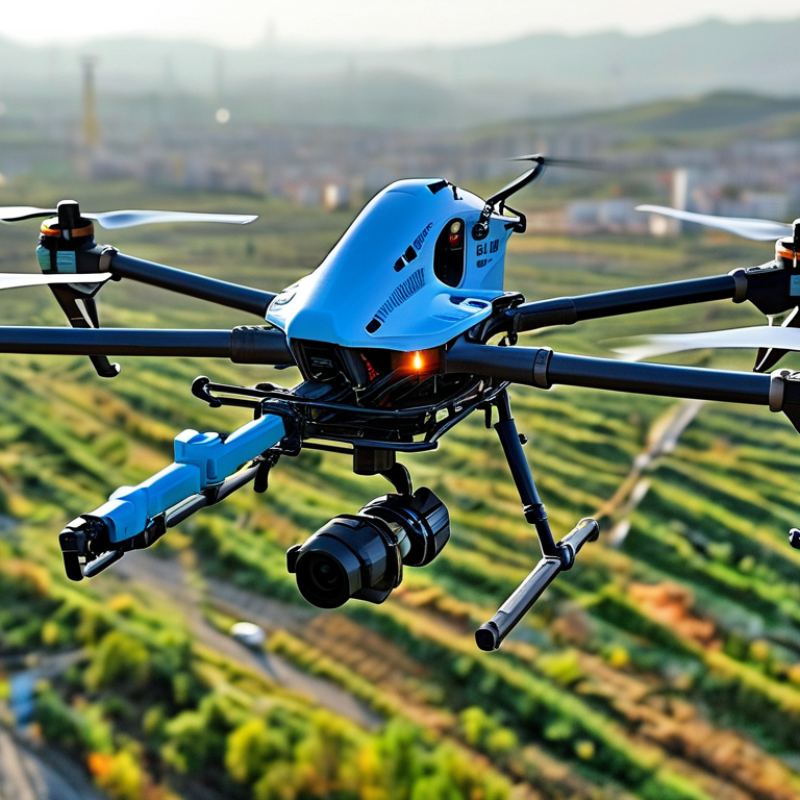
7 Best Industrial Quadcopters for Global Buyers?

What Defines an Industrial Quadcopter?

An industrial quadcopter is more than a camera attached to four motors. It is an aerial work system designed for repeatable, measurable tasks. In field inspections, operators often judge it by stable hovering, clear data, and predictable battery performance. A useful aircraft should carry its sensor without becoming difficult to control.

Payload capacity matters, but it is only one measure. A thermal camera, multispectral sensor, or laser scanner can change the aircraft’s balance and flight time. Strong motors help, yet efficient power management matters more during long surveys. Weather resistance also defines industrial quality. Sealed components, protected connectors, and reliable operation in dust or light rain reduce maintenance problems.

Safety features deserve careful attention. Industrial quadcopters should support obstacle detection, controlled return procedures, battery monitoring, and secure communication. Redundant positioning can improve reliability near structures, although no system removes every operational risk. Training remains essential. A skilled pilot checks wind, battery condition, signal range, and local requirements before launch. Small details matter.

From an engineering perspective, serviceability is often overlooked. Replaceable arms, accessible batteries, and clear diagnostic records can shorten downtime. However, rugged construction may increase weight and cost. That trade-off needs honest testing. A model that performs well in a showroom may struggle beside a cooling tower, where turbulence and metal surfaces affect control. Industrial value comes from dependable results, not impressive specifications alone.

How to Evaluate Industrial Quadcopters for Global Operations

Evaluating an industrial quadcopter for global operations requires more than comparing camera resolution. MarketsandMarkets projects the commercial drone market to grow from about USD 20.8 billion in 2023 to USD 54.6 billion by 2030. That expansion increases equipment choices, but also exposes weak procurement decisions. Check flight time with the intended payload, not an empty aircraft. A 45-minute specification may become 28 minutes in wind, cold weather, or inspection mode. Measure battery cycles, charging time, and spare-part availability across operating regions.

Ruggedness matters. Look for documented IP protection, operating-temperature ranges, vibration testing, and secure data transmission. Communications should tolerate partial network loss and return safely without creating unnecessary risk. Independent trials are valuable. The Drone Industry Insights 2024 market analysis highlights growing demand for professional services, yet market forecasts cannot prove field reliability. Request maintenance records, repair timelines, software-support policies, and training evidence. Do not trust glossy demonstrations alone.

Tips: Build a regional test plan before purchasing. Fly identical missions in heat, rain, dust, and weak connectivity. Record takeoff weight, wind speed, battery temperature, image quality, and landing accuracy. Check local aviation, radio, privacy, and import requirements with qualified advisers. A small operational detail can become expensive. Also, be honest about uncertainty: autonomy may reduce workload, but it still needs trained human oversight and periodic review.

7 Best Industrial Quadcopters for Global Buyers

How to evaluate industrial quadcopters for global operations: compare typical endurance and usable payload across common mission profiles. Values represent practical specification ranges for professional multirotor platforms and exclude batteries from payload calculations.

Longer endurance improves area coverage, while higher payload supports thermal cameras, LiDAR, zoom systems, and inspection accessories. Buyers should also verify weather resistance, operating temperature, navigation redundancy, regulatory compliance, spare-part availability, and local service support.

Seven Leading Industrial Quadcopters and Their Core Capabilities

7 Best Industrial Quadcopters for Global Buyers?

Seven Leading Industrial Quadcopters and Their Core Capabilities

Industrial quadcopters now serve inspection, mapping, surveying, and emergency planning. MarketsandMarkets projects the commercial drone market to reach about USD 54.6 billion by 2028. That growth reflects practical demand, not only enthusiasm. The leading options include a long-endurance quadcopter for extended infrastructure surveys, a thermal-imaging quadcopter for electrical fault detection, and a LiDAR quadcopter for dense vegetation or uneven terrain. A photogrammetry quadcopter supports accurate site models. A confined-space quadcopter uses compact protection cages and bright lighting. A heavy-lift quadcopter carries larger sensors. An all-weather quadcopter adds sealed housing and stable flight in rain or dust.

Core capability matters more than impressive specifications. Drone Industry Insights reports that inspection and mapping remain major commercial applications. Field teams should examine flight time with the payload attached, not the empty-aircraft figure. They should also test positioning accuracy beside steel structures, where satellite signals may weaken. A thermal camera can reveal heat, but poor calibration creates misleading images. LiDAR improves geometry, yet processing costs and operator skill remain easy to underestimate. The International Energy Agency notes that grid expansion and maintenance needs are increasing worldwide, creating strong inspection demand. Still, no quadcopter performs perfectly everywhere. Battery changes, wind limits, and data security may disrupt a carefully planned mission. That inconvenient detail deserves attention.

7 Best Industrial Quadcopters for Global Buyers? - Seven Leading Industrial Quadcopters and Their Core Capabilities
Platform Maximum Flight Time Maximum Takeoff Mass Payload Capability Environmental Protection Operating Temperature Maximum Transmission Range Positioning and Navigation Core Industrial Capability Typical Deployment
Platform 1 Up to 55 minutes 9.2 kg Up to 2.7 kg IP55 -20°C to 50°C Up to 15 km, region dependent Dual-frequency GNSS with RTK support Heavy-lift multirotor operations with interchangeable cameras, mapping sensors and inspection payloads Power-line inspection, corridor mapping, emergency response and infrastructure surveys
Platform 2 Up to 55 minutes Approximately 9 kg Up to 2.7 kg IP45 -20°C to 50°C Up to 15 km, region dependent RTK positioning, obstacle sensing and redundant flight systems Multi-sensor operation using downward, upward and dual-payload mounting positions Industrial inspection, surveying, public safety and large-area asset management
Platform 3 Up to 41 minutes 3.77 kg Integrated sensor payload; no separate heavy-lift rating IP55 -20°C to 50°C Up to 10 km, region dependent Multi-constellation GNSS with optional RTK capability Compact enterprise aircraft combining wide-angle, zoom, thermal and range-finding sensors Roof inspection, firefighting support, security patrols and construction progress monitoring
Platform 4 Up to 42 minutes 1.999 kg Integrated multi-sensor payload; no external payload rating IP43 -20°C to 50°C Up to 20 km in compliant radio environments GNSS, visual positioning and obstacle avoidance Long-endurance compact aircraft with thermal imaging, laser ranging and night-operation support Search and rescue, solar-farm checks, perimeter security and inspection of remote assets
Platform 5 Up to 40 minutes Approximately 2.11 kg Integrated camera payload; external payload use is limited IP55 -20°C to 45°C Up to 10 km, region dependent GNSS, visual navigation and automated obstacle avoidance High-resolution visual inspection with rapid deployment and automated flight workflows Utilities, telecommunications, bridges, towers and public-safety operations
Platform 6 Up to 32 minutes Approximately 1.5 kg Integrated imaging payload; no heavy external payload rating IP53 -35°C to 50°C Up to 9 km in compliant radio environments Multi-constellation GNSS with optional RTK and photogrammetry support Lightweight professional mapping and inspection platform with a high-resolution camera Surveying, 3D modeling, building inspection and confined-area documentation
Platform 7 Up to 37 minutes Approximately 3.7 kg Up to approximately 0.8 kg, configuration dependent Weather-resistant professional design Approximately -20°C to 45°C Up to 8 km, region dependent RTK-capable GNSS with automated return-to-home functions Modular mapping aircraft designed for interchangeable photogrammetry and surveying payloads Mining, construction, agriculture, land surveying and volumetric measurement

Note: Flight time, transmission distance, payload capacity and operating range are published maximum or nominal values. Actual performance varies with payload, wind, temperature, altitude, battery condition, local regulations and radio-frequency restrictions.

Which Industrial Quadcopter Fits Each Professional Application?

The seven best industrial quadcopters are not identical winners. Each fits a different professional application. Infrastructure inspectors need stable imaging, obstacle sensing, and accurate positioning around towers, roofs, and bridges. Survey teams often prefer strong mapping performance, precise cameras, and reliable flight logs. Construction crews value quick deployment, repeatable routes, and useful data under changing site conditions.

Agricultural operators may need multispectral imaging, weather resistance, and efficient coverage across large fields. Search teams require bright lighting, thermal imaging, and steady control in difficult terrain. Mining professionals should consider dust protection, long-range communication, and terrain awareness. For indoor inspections, compact frames and strong collision protection can matter more than maximum endurance. From practical field testing, payload weight changes flight time faster than many buyers expect. That detail is easy to underestimate.

Tips: Match the aircraft to the task, not the specification sheet. Check wind limits, battery storage conditions, spare parts access, training needs, and local operating rules. Request sample data before purchase. Test one complete workflow, from takeoff to report delivery. A powerful camera is not enough if the software produces confusing measurements. Also, plan for imperfect flights. Rain, magnetic interference, and blocked signals can expose weaknesses that appear invisible during demonstrations. A small pilot project usually reveals more than a long product presentation.

Global Purchasing, Compliance, Maintenance, and Support Considerations

For global buyers, an industrial quadcopter is a compliance project, not only a flight purchase. Grand View Research valued the global commercial drone market at approximately $30.6 billion in 2022. Its forecast expects a 13.9% compound annual growth rate through 2030. That growth increases scrutiny around operator training, remote identification, radio frequencies, privacy, and import documentation. Buyers should request country-specific conformity records, battery transport papers, and firmware change logs before payment. Local aviation rules can differ sharply.

Maintenance planning deserves equal attention. A useful acceptance test includes a 20-minute hover, obstacle-sensor checks, camera calibration, and battery temperature readings. Keep spare propellers, landing gear, charging equipment, and sealed batteries available locally. The U.S. Federal Aviation Administration’s Remote ID compliance framework shows how equipment requirements can become operational requirements. Similar registration or identification rules may apply elsewhere. Ask whether authorized technicians can respond within 48 hours. That promise should be written into the service agreement.

Support quality is often underestimated. ISO 9001-certified processes can indicate controlled documentation, but certification does not guarantee good field service. Request failure-rate data, repair turnaround times, and software support periods. Cybersecurity also matters when aircraft upload survey data to cloud systems. IEC 62443 principles can guide access control and network review, even outside factory environments. One weakness remains common: buyers compare flight time but ignore downtime. We did that once. It was costly. A slightly heavier aircraft with reliable parts may deliver better yearly value than a lighter model with uncertain support.