
Skip to Content
chevron-left chevron-right chevron-up chevron-right chevron-left arrow-back star phone quote checkbox-checked search wrench info shield play connection mobile coin-dollar spoon-knife ticket pushpin location gift fire feed bubbles home heart calendar price-tag credit-card clock envelop facebook instagram twitter youtube pinterest yelp google reddit linkedin envelope bbb pinterest homeadvisor angies

2026 Top Cutout Electric Fuse Types What Buyers Need?

The 2026 market for Cutout Electric Fuse equipment is becoming more demanding. Utilities now expect safer distribution, clearer fault coordination, and longer service life. MarketsandMarkets reports continued growth in the global electrical fuse market, driven by grid upgrades, renewable power, and industrial electrification. Its findings suggest that selection is moving beyond purchase price. Reliability now matters more.

Technical guidance supports this shift. IEC 60282-2 addresses high-voltage expulsion fuses, while IEEE Std C37.41 defines important testing requirements for distribution-class fuse equipment. These documents help buyers compare interrupting capacity, rated voltage, current range, insulation performance, and environmental durability. Still, standards do not remove every purchasing mistake. A fuse can meet its rating and perform poorly in a dusty, salty, or poorly coordinated network.

A. Wright, co-author of Electric Fuses, offers a useful professional reminder: “Fuse performance must be judged in the circuit, not in isolation.” That principle remains practical for 2026 buyers. A 15 kV cutout installed beside a pole transformer faces different stresses from one used near a solar feeder. Wind, ice, wildlife, repeated surges, and maintenance habits all change the decision.

The best type is not always the newest type. That sounds obvious, yet buyers still overlook it. This guide compares expulsion, current-limiting, polymer-bodied, porcelain, and dropout designs. It also examines fuse links, operating mechanisms, supplier documentation, and lifecycle costs. Some market forecasts appear confident, but field conditions remain unpredictable. Careful specifications and verified test evidence should lead the final choice.
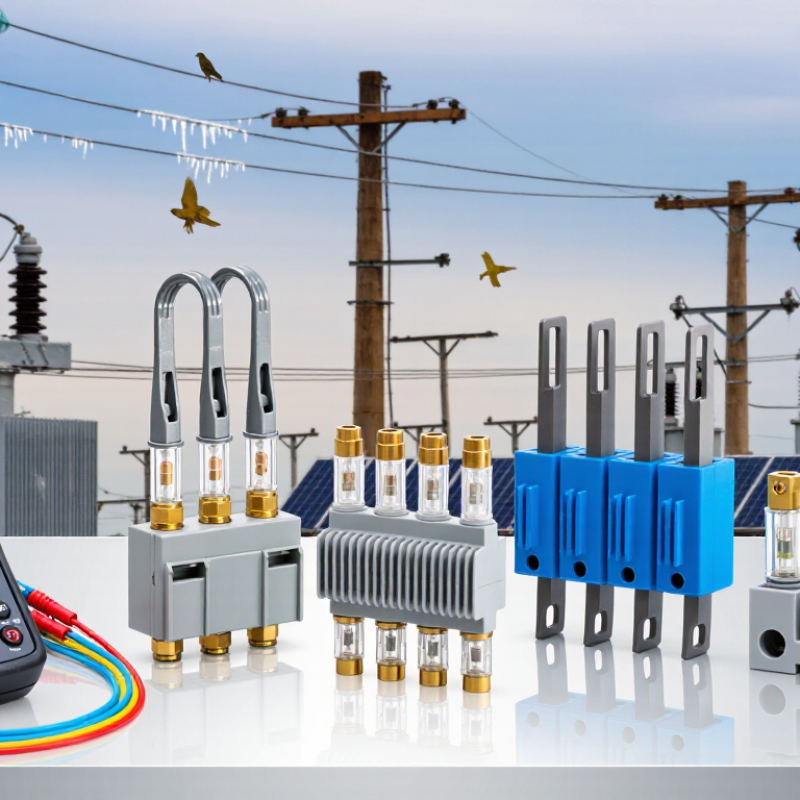
2026 Top Cutout Electric Fuse Types What Buyers Need?

What Is a Cutout Electric Fuse and How Does It Work?

A cutout electric fuse is a pole-mounted protective device for medium-voltage distribution lines.

It combines a fuse holder, fuse link, and insulating tube. When excessive current heats the link, the link melts and opens the circuit. The fuse tube then produces gases that help extinguish the arc. The holder usually drops visibly, giving crews a clear isolation point.

Common choices include standard expulsion cutouts, dropout designs, and units with load-break capability.

Standard cutouts protect transformers and short feeder sections. Dropout models provide a practical visual signal after operation. Load-break versions allow trained operators to interrupt limited current safely, but their ratings must match system conditions.

The IEA Electricity 2024 report forecasts global electricity demand will grow by about 3.4% annually from 2024 through 2026. That growth increases pressure on aging distribution equipment.

Buyers should compare voltage class, continuous current, interrupting rating, insulation level, mounting strength, and fuse-link coordination.

Check outdoor pollution, salt, ice, and lightning exposure. A higher ampere rating is not automatically better. It may delay transformer protection. IEEE distribution practices and utility reliability reports repeatedly emphasize coordinated protection and correct fault-clearing times.

Field experience also matters: a well-rated fuse can still fail early when contacts corrode or installation torque is inconsistent. This is easy to overlook.

Performance records should be reviewed after installation.

Key Cutout Electric Fuse Types Available in 2026

Key Cutout Electric Fuse Types Available in 2026

Cutout electric fuses remain important in overhead distribution systems, especially where transformers and branch lines need visible protection. The most common option is the expulsion fuse cutout. It uses a fuse link and an arc-extinguishing tube to interrupt fault current. During operation, the tube usually drops open, giving technicians a clear visual indication.

Current-limiting fuse cutouts are another key type available in 2026. They reduce peak fault current and can protect equipment from severe thermal and mechanical stress. These units often suit locations with higher available fault levels. However, their installation details, coordination requirements, and replacement costs deserve careful review.

A lower interrupting rating can create serious problems.

Solid-material and polymer-insulated cutouts offer different benefits. They can provide compact construction, improved contamination resistance, and reduced maintenance in demanding outdoor conditions.

Material quality still matters. Dust, salt, moisture, and repeated temperature changes can expose weak designs over time.

From field inspection experience, buyers should compare:

  • voltage class
  • continuous current
  • interrupting capacity
  • fuse-link compatibility
  • creepage distance
  • mounting strength

Coordination with upstream and downstream protection is equally important. A cutout that looks suitable on paper may operate poorly in a real network. No selection guide is perfect. Site data must confirm the final choice. Periodic inspection remains necessary, even with modern designs.

How to Compare Ratings, Materials, and Protection Features

Choosing a cutout electric fuse in 2026 requires more than matching a voltage number. Compare the rated maximum voltage, continuous current, and interrupting rating together. The fuse link must also coordinate with transformer inrush and downstream protection. A higher ampere rating is not automatically safer. It may delay fault clearing and increase equipment damage.

Look closely at construction materials. Porcelain offers proven rigidity and strong heat resistance, while polymer housings can reduce weight and improve resistance to impact. Contacts should use durable conductive alloys with reliable plating. Check resistance to ultraviolet exposure, moisture, salt fog, and temperature changes. Small hinge or contact weaknesses can create heating points. Field inspections often find these details matter.

Protection features deserve practical testing, not just catalog review. Expulsion designs can visibly interrupt fault current, while current-limiting options may reduce peak energy in selected systems. Check fuse-link indicators, dropout action, load-break capability, and safe installation clearances. Request certified test data against applicable electrical standards. A qualified engineer should verify coordination using actual fault levels and transformer data. Specifications can look convincing. They still need site confirmation. One imperfect assumption about available fault current can change the entire selection. Also consider maintenance access, replacement intervals, and whether crews can identify a failed fuse from the ground.

How to Choose the Right Cutout Fuse for Your Application

2026 Top Cutout Electric Fuse Types: What Buyers Need

How to Choose the Right Cutout Fuse for Your Application

Selecting a cutout fuse starts with system facts, not a familiar product name. Confirm nominal voltage, maximum load current, fault current, and grounding arrangement. A 15 kV feeder with high transformer inrush needs different protection from a small lateral. Measure the real operating load. Do not rely only on the nameplate.

For overhead distribution, expulsion fuse links are common because they interrupt faults and provide visible dropout indication. Current-limiting fuse options may suit installations with higher available fault current, but coordination must be checked carefully. Match the fuse link to the cutout body, voltage class, continuous current rating, and interrupting capacity. Review time-current curves with upstream and downstream devices. Small details matter.

Examine altitude, rain, salt, dust, wildlife exposure, and switching frequency. Mechanical strength and creepage distance can matter as much as amperage. Follow applicable utility specifications and recognized electrical standards. Then verify installation torque and clearances onsite. Field teams should inspect contacts, fuse tubes, and corrosion during maintenance. A catalog match can still fail in service. That is the uncomfortable part.

An oversized fuse may stop nuisance operations, but it could protect equipment too slowly. Record fault studies, load assumptions, and coordination reviews for future changes. Good selection is evidence-based, but never static.

What Buyers Should Check Before Installation and Replacement

Choosing a cutout electric fuse is not only a size decision. Buyers should verify the voltage class, continuous current rating, interrupting capacity, and fuse-link type. Common options include expulsion, current-limiting, and dropout cutout fuses. Each responds differently to fault current and outdoor exposure.

Field technicians often find mismatched fuse links, loose hardware, and moisture marks during replacement work. These small details matter. NFPA’s Electrical Fires report recorded an estimated annual average of 35,150 U.S. home fires involving electrical distribution and lighting equipment from 2015 to 2019. The report also linked these fires to approximately 470 deaths and 1,100 injuries. Fuse selection cannot remove every risk, but correct coordination can limit damage. Check the equipment label, system fault level, conductor size, and approved installation instructions. IEC 60269 also emphasizes proper fuse-link ratings and compatibility within the protection system.

Tips: Isolate the circuit and confirm zero voltage before work. Inspect the cutout body, contacts, hinge, and mounting surface. Replace cracked porcelain, burned clips, or corroded terminals. Use a calibrated torque tool where specified. A fuse that fits physically may still be electrically wrong. That mistake is easy to make. Installation should be reviewed by a qualified person under applicable local requirements.

2026 Top Cutout Electric Fuse Types What Buyers Need? - What Buyers Should Check Before Installation and Replacement
Fuse or Cutout Type Typical Use How It Operates Common Rating Range Main Advantages Checks Before Installation Replacement Checks
Expulsion Fuse Cutout Overhead distribution transformers, lateral feeders, and capacitor banks. The fuse link melts and the arc is extinguished by gases produced inside the fuse tube, usually causing the tube to drop open. Commonly up to 27 kV or 38 kV class; current ratings often range from approximately 1 A to 200 A, depending on the assembly. Visible isolation, simple construction, and convenient field replacement. Confirm system voltage, interrupting rating, mounting arrangement, phase spacing, terminal orientation, and grounding requirements. Use the specified fuse-link speed and ampere rating; inspect the tube, hinge, contacts, latch, and insulators for damage or contamination.
Open-Link Cutout Basic overhead feeder and transformer protection where visible fuse status is desirable. A replaceable fuse link is installed in an exposed or semi-exposed carrier; melting interrupts the fault current and opens the circuit. Often used on medium-voltage distribution systems; exact voltage and current limits depend on the cutout design. Low complexity, clear visual indication, and generally straightforward maintenance. Check required creepage and clearance, environmental exposure, carrier compatibility, and whether the installation location permits this design. Never substitute a fuse link solely by physical size; verify time-current characteristics and coordination with upstream and downstream protection.
Enclosed-Link Cutout Installations requiring a more protected fuse-link carrier and improved resistance to weather, animals, or accidental contact. The fuse link is enclosed in a tube or carrier that contains the arc and supports controlled interruption. Available across several low- and medium-voltage distribution classes; ratings must be matched to the complete assembly. Improved physical protection and reduced exposure of energized components. Check enclosure condition, venting requirements, insulation level, mounting hardware, and compatibility with the specified fuse link. Replace cracked, heat-damaged, carbon-tracked, or moisture-contaminated carriers; confirm the fuse link is seated correctly.
Dropout Cutout Outdoor overhead circuits where an automatic open position provides a visible indication of operation. After the fuse link operates, the hinged carrier drops away from the upper contact, creating a visible open circuit. Common in medium-voltage distribution, frequently in 15 kV, 27 kV, and 38 kV classes; exact ratings vary by construction. Visible fault indication and convenient manual isolation using approved live-line procedures. Verify operating clearances, mechanical travel, pole and crossarm strength, wind and ice exposure, and accessibility for maintenance. Check that the carrier drops freely, the latch resets correctly, and the contacts are not burned, loose, misaligned, or excessively worn.
Current-Limiting Fuse Cutout Transformer, feeder, and equipment protection where available fault current may exceed the interrupting capability of an expulsion fuse. A specially constructed fuse element and filler limit peak fault current and interrupt it within the fuse body. Often selected for medium-voltage systems with high prospective short-circuit current; the interrupting rating must be confirmed from the product documentation. High fault-current interruption and reduced let-through energy when properly coordinated. Compare available fault current, voltage rating, minimum interrupting current, maximum interrupting rating, and coordination curves. Replace the complete approved fuse unit when required; do not use an expulsion link as a substitute or bypass a failed current-limiting element.
Polymer-Insulated Cutout Outdoor distribution in coastal, polluted, high-humidity, or weight-sensitive locations. The fuse mechanism operates like the selected fuse type while a polymer housing provides external insulation and weather resistance. Commonly supplied for medium-voltage distribution classes; electrical ratings depend on the specific design. Lower weight and good resistance to many environmental conditions when correctly selected. Check leakage distance, ultraviolet exposure, pollution level, seal condition, mechanical strength, and compatibility with the pole hardware. Inspect for cuts, punctures, tracking, chalking, loss of hydrophobicity, loose fittings, and evidence of thermal stress.
Porcelain-Insulated Cutout Outdoor distribution systems requiring rigid, established insulation construction and strong resistance to ultraviolet exposure. The porcelain body provides insulation while the selected fuse carrier and link perform the interruption function. Available for common low- and medium-voltage distribution applications; confirm the exact insulation and interrupting ratings. Rigid construction, long service history, and good ultraviolet stability. Look for chips, cracks, cement deterioration, contamination, correct mounting torque, and adequate phase-to-ground clearance. Do not reuse cracked or chipped porcelain; inspect metal fittings and verify that replacement parts match the original insulation class.
Dual-Element or Time-Delay Fuse Link Transformer primary protection where temporary magnetizing inrush or permissible overloads should not cause unnecessary operation. A time-current design tolerates short-duration inrush while operating for sustained overloads or faults within its specified curve. Ampere ratings are application-specific and must be selected from transformer load, inrush, and coordination calculations. Can reduce nuisance operations during transformer energization when correctly coordinated. Review transformer full-load current, inrush duration, secondary protection, available fault current, and the manufacturer’s time-current curve. Use the same approved speed category and rating unless a protection study authorizes a change; never increase amperage merely to stop repeated blowing.
Buyer and Safety Note: Voltage, continuous current, interrupting rating, insulation level, time-current characteristics, environmental conditions, and mechanical dimensions must all match the system design. De-energize, isolate, test for absence of voltage, and follow applicable electrical safety procedures. Installation and replacement should be performed only by qualified personnel.
Typical rating ranges are general industry references only. Always verify the latest technical documentation, applicable local regulations, and the requirements of standards such as ANSI/IEEE C37.41, ANSI/IEEE C37.42, or IEC 60282-2 before purchase or installation.