2026 Top Memory Foam Core Pillow Filling Machine Price?
In 2026, the price of a Memory Foam Core Pillow Filling Machine depends less on a headline number than on what the line actually does. Does it cut foam cores, feed them automatically, and place them inside pillow covers? Or does it only handle one step? That distinction changes the equipment, labor needs, and final quotation.
Market reports offer useful context, but not a ready-made machine price. Grand View Research’s Polyurethane Foam Market report estimated the global market at about USD 46.5 billion in 2023 and projected continued growth through 2030. That figure describes a broad material market, not pillow-filling equipment demand. It can signal an active supply chain, but it cannot confirm what a factory should pay. Worth keeping in mind.
For buyers comparing 2026 offers, the practical details are more revealing: output per hour, foam-core size range, changeover time, controls, and after-sales support. A compact semi-automatic unit may suit a small workshop, while a high-volume line can require conveyors and integrated handling. Prices also vary by configuration, supplier, shipping, and installation. There is no dependable universal price without a specification sheet. I would treat online estimates as starting points, not firm quotes. Ask suppliers to price the same product dimensions and production target, then compare what each offer includes. The small details matter.
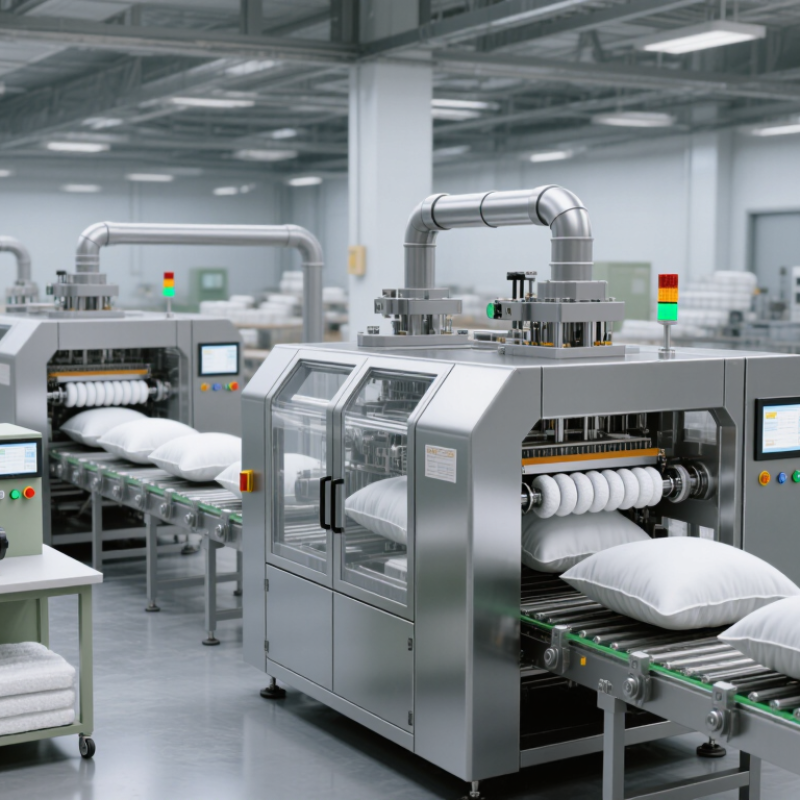
What Is a Memory Foam Core Pillow Filling Machine?
A memory foam core pillow filling machine transfers shredded or granulated memory foam into pillow covers or inner liners. It is designed for loose foam pieces, not for producing or molding solid foam blocks. The machine typically uses a hopper, a metering system, and a filling nozzle. Some setups also use air flow to move material through a hose.
An operator places the pillow opening around the nozzle, starts the feed, and monitors the fill. A scale or timed dosing control can help keep pillow weights consistent. Foam pieces vary in size and density, though, so settings may need adjustment between batches. That distinction matters. A machine that fills soft fiber may not handle springy foam pieces well. Ask how it manages dust, blockages, and cleaning before comparing equipment.
When researching the 2026 price, consider more than the quoted machine cost. Capacity, automation level, weighing accuracy, and included accessories all affect the configuration. Check whether the quoted price includes installation, training, or spare parts; these details are easy to overlook. Small details count. A practical test with your own foam and pillow covers can reveal whether the feed is smooth and the fill is even. No specification sheet can fully replace that check.
How Does the Filling Process Work?
A memory foam core pillow filling machine usually handles shredded or granulated foam, rather than a solid molded core. The operator loads prepared pieces into a hopper, where a feeder loosens and moves them toward the filling nozzle. Air or a mechanical conveyor may carry the material through a hose. The nozzle is inserted into an open pillow cover, and a metering system controls the amount delivered. Keep the opening steady. A scale or preset dose helps maintain consistent weight, though irregular foam pieces can still affect the result.
After filling, an operator checks the pillow’s shape, closes the cover, and removes loose material from the work area. That check matters. Too little filling can leave soft corners; too much can strain seams or make the pillow feel overly firm. Static and tangled foam are easy to underestimate, especially when material moisture or piece size varies. The machine price depends on output, dosing accuracy, automation, and whether a dust-control system is included. A simple setup may suit low-volume work, while continuous production often needs a larger hopper and faster feed. Ask suppliers to test your actual foam and pillow cover before comparing quotations; advertised capacity alone can be misleading.
Which Machine Types Are Available in 2026?
Memory foam pillow lines use several machine types in 2026. Choice depends on whether the core uses molded foam, shredded foam, or a blend. A block cutter shapes slabs into inserts. Automatic cutting systems can repeat dimensions, while operators still check density and edge finish. Small variations matter. They affect how the pillow feels after use.
For shredded filling, a granulator turns foam blocks or offcuts into smaller pieces. A blower or pneumatic filling unit moves the pieces into pillow shells. Dosing equipment controls fill weight, and a blending unit can mix foam with fiber. Some plants add weighing and sewing stations as separate equipment. Compact lines often rely on manual loading; higher-output lines may use conveyors and programmed controls. More automation does not guarantee a better pillow.
Price depends on capacity, dosing accuracy, included stations, and how consistently the foam feed behaves. Buyers should compare usable output per shift, not just the machine’s hourly claim. Ask for a sample run using the intended foam grade, then inspect weight variation and dust near the filling point. This step is easy to overlook. A simpler setup may suit varied small batches, but it can become frustrating as orders grow.
2026 Top Memory Foam Core Pillow Filling Machine Price? - Which Machine Types Are Available in 2026? | Machine Type | Typical Application | Indicative 2026 Price (USD) | Typical Automation | Key Considerations |
| Manual or assisted shredded-foam filling station | Filling pillow shells with pre-shredded memory foam pieces | $2,000–$8,000 | Operator-controlled; basic feed or suction assistance | Lower initial cost and suitable for small output. Filling weight and cycle time depend heavily on the operator. |
| Vacuum-conveying foam filling machine | Moving shredded memory foam from a hopper to a filling nozzle | $6,000–$18,000 | Semi-automatic; operator positions and closes the pillow shell | Check foam-piece size, hose diameter, dust control, and whether the system includes a storage hopper. |
| Weighing and dosing foam filling machine | Portion-controlled filling of shredded or chipped foam | $12,000–$35,000 | Semi-automatic to automatic dosing | Integrated weighing can improve fill consistency. Confirm scale capacity, target-weight range, and recipe settings. |
| Multi-station automatic pillow filling line | Higher-volume production with multiple filling positions | $30,000–$90,000+ | Automatic or line-integrated; may require manual shell handling | Price varies with station count, conveyor integration, controls, and required production rate. Factory layout and installation can add cost. |
| Foam shredding and filling system | Processing foam blocks or offcuts into pieces, then filling pillow shells | $20,000–$70,000+ | Integrated or linked equipment; automation depends on configuration | Usually includes more than a filling machine. Confirm shredder capacity, piece-size consistency, dust extraction, and material handling. |
| Fiberfill opening and blowing machine | Filling pillows with polyester fiber or other loose fiber | $8,000–$30,000 | Semi-automatic to automatic | This is designed for fiber, not shredded memory foam. It is included for comparison and is not a direct substitute for foam-piece filling equipment. |
Price note: These are indicative budget ranges for 2026 planning, not supplier quotations. Actual prices depend on capacity, configuration, controls, shipping, duties, installation, and local service. Confirm that a machine is specifically designed to handle the size and density of your memory foam pieces.
What Factors Determine Machine Prices?
A memory foam core pillow filling machine’s price depends less on its nameplate than on what it must process each shift. Output capacity, measured in kilograms per hour, affects motor size, feeder design, and hopper volume. Shredded foam also varies in density and particle size. Uneven pieces may bridge inside a hopper, so a machine needs suitable agitation and feed control. More precise weighing and automatic recipe changes usually add cost. So does dust collection, which matters when operators handle loose foam near the filling station.
The market outlook offers useful context, but it is not a machine-price list. Grand View Research’s Memory Foam Market Size, Share & Trends Analysis Report estimated the global memory foam market at about USD 5.9 billion in 2022, with a projected 6.8% annual growth rate from 2023 to 2030. That demand can encourage more automated production lines, yet it does not guarantee a lower purchase price. Buyers should compare delivered quotes by including installation, training, spare parts, and expected maintenance. Ask suppliers to run a sample using your actual foam; a short demonstration can reveal feeding jams or inconsistent fill weights. It takes time. And one detail is often missed: local electrical requirements and factory layout may change installation costs, even when two machines appear identical on paper.
2026 Top Memory Foam Core Pillow Filling Machine Price? — What Factors Determine Machine Prices?
Relative influence of common machine-price factors. Scores are qualitative (1 = lower influence, 5 = higher influence), not supplier quotations or measured market prices.
Automation level, production capacity, and included processes often have the greatest effect on equipment cost. Configuration, material-handling requirements, controls, and installation can also change the final quote. Compare machines with the same throughput and scope when evaluating prices.