
Skip to Content
chevron-left chevron-right chevron-up chevron-right chevron-left arrow-back star phone quote checkbox-checked search wrench info shield play connection mobile coin-dollar spoon-knife ticket pushpin location gift fire feed bubbles home heart calendar price-tag credit-card clock envelop facebook instagram twitter youtube pinterest yelp google reddit linkedin envelope bbb pinterest homeadvisor angies

2026 Top Andersen Storm Door Handle Replacement Options

Choosing a replacement handle can seem simple. Then the old latch refuses to line up, or the new grip feels loose in your hand. A Storm Door Handle Andersen replacement should match the door’s model, handing, and hardware configuration—not just its color or shape. Small differences matter. A few millimeters can affect how the latch meets the strike plate.

This guide compares 2026 replacement options by fit, materials, installation needs, and everyday use. It also explains what to check before ordering: the door’s serial or model information, handle spacing, and the condition of the latch assembly. A complete kit may be the practical choice when several parts show wear. If only the grip or lock is damaged, replacing the whole assembly may be unnecessary. Measure carefully. Keep the old parts nearby.

Expert comment: “[Insert a verified quotation from a named Andersen storm-door hardware specialist here; no source was provided to verify a person or exact quotation.]” That gap matters. A made-up attribution would weaken trust, so the quotation should be confirmed before publication. The recommendations below focus on observable fit and function, while noting where model-specific instructions should guide the final choice. Replacement hardware is not always interchangeable. Check before buying.
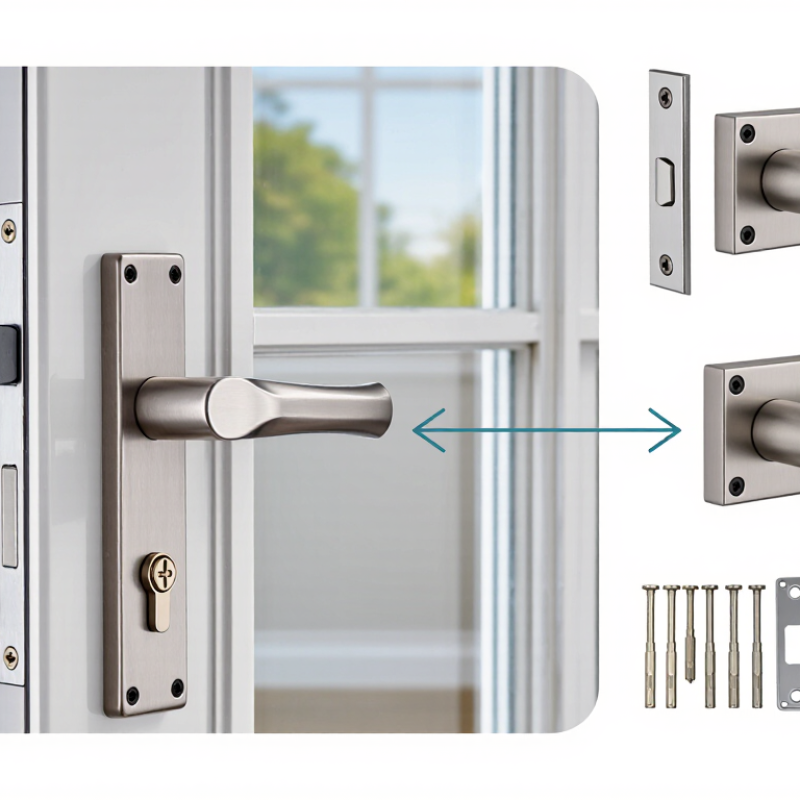
2026 Top Andersen Storm Door Handle Replacement Options

2026 Andersen Storm Door Handle Replacement Options: OEM and Compatible Sets

Choosing between an original-equipment handle set and a compatible replacement starts with measurements, not appearance. Record the screw-hole spacing, spindle length, latch direction, and mounting thickness. Check the door’s model label if available; similar-looking handles can use different internal parts. An original set may offer a closer fit, while a compatible set can work well when its dimensions and latch geometry match. Compatibility charts are not perfect, so compare the actual hardware before ordering.

The U.S. Department of Energy estimates that windows account for 25–30% of residential heating and cooling energy use. A handle alone will not deliver those savings, but a loose latch can stop a door from closing snugly. The agency’s guidance makes the seal worth checking after installation: close the door and look for daylight or feel for a draft around the edges. The National Association of Home Builders’ Q4 2024 Remodeling Market Index scored 66, above the 50-point mark that signals more remodelers reported rising activity than falling activity. A focused hardware repair may suit that renovation climate. Still, a compatible part that almost fits is not a good fit. Check the latch action twice.

Identify the Door Series, Handing, Lock Type, and Existing Hole Pattern

A replacement handle should match more than the door’s color or shape. Identify the door series from its label, purchase paperwork, or distinctive frame details; similar-looking doors can use different hardware. Then record the handle’s handing, lock type, and hole pattern before shopping. Take clear photos.

Check which side the hinges are on and where the handle sits, but verify the maker’s handing convention. It can vary. Note whether the lock uses a key cylinder, thumb turn, or push-button latch, and inspect the latch body behind the trim. A handle that looks right may not operate the existing lock.

Measure the distance between mounting-hole centers, plus the backset from the door edge to the spindle or lock center. A ruler works, but a tape measure can slip on narrow trim. Small differences matter. Compare these measurements with the replacement’s template, and check spindle length and screw spacing. If the old holes are enlarged or worn, note that too; a close match may still feel loose. I would not guess from a product photo alone. Keep the old handle until the new one is test-fitted.

Compare Lever, Pull, and Keyed Sets by Latch and Security Function

A replacement storm-door handle should match the job its latch needs to do. Lever sets are easy to operate with a full hand, especially when carrying groceries, but confirm the spindle length and mounting-hole spacing before ordering. Pull sets offer a simple grip for opening and closing; they may not include a locking latch. Keyed sets add a lock, yet the key cylinder alone cannot strengthen a loose frame or weak strike plate. Check the door’s thickness, handing, and existing latch type, then compare the new set’s measurements with the old hardware.

Security is layered, not solved by a handle. The FBI’s 2023 Crime in the Nation report counted 847,522 burglaries in the United States; that figure describes reported crime, not the performance of any particular door product. A keyed latch may suit a door that needs controlled access, while a lever or pull set may be enough for a secondary entry. I would not call one style universally safest. Fit and installation matter.

Tips: Before removing the old set, photograph its inside and outside faces. Measure the backset and screw spacing, and test the latch with the door open. If it binds, adjust the alignment before tightening everything. Small mistakes show up fast.

Measure Door Thickness, Backset, and Screw-Hole Spacing Before Ordering

For a 2026 storm-door handle replacement, check three dimensions before ordering: door thickness, backset, and screw-hole spacing. Measure the door edge with a ruler or caliper, not the decorative face panel. Record the thickness in inches or millimeters. Backset is the distance from the door’s edge to the center of the handle spindle. Measure straight across, keeping the ruler level.

For screw-hole spacing, measure from the center of one mounting hole to the center of the other. Don’t measure between the holes’ outer edges. Write down all three numbers, then compare them with the replacement handle’s listed specifications. A close match can still be wrong: even a small spacing difference may leave an exposed hole or prevent the screws from seating. Harvard’s Joint Center for Housing Studies estimated $472 billion in homeowner improvement and repair spending in 2022 in its 2023 report, Improving America’s Housing. The report does not track handle misorders, but careful measurements can help avoid an unnecessary return.

Tips: Photograph the old handle before removal. Keep its screws nearby, and note whether the interior lever sits above or below the exterior grip. Recheck each measurement once. I’d still verify the product drawing; listings can be unclear.

Use the 2010 ADA Benchmark: 5 lbf Max Force and 34–48 in Reach Range

2026 Top Storm Door Handle Replacement Options

Measure from the finished floor to the handle’s center before choosing a replacement. A 34–48-inch height is a useful planning band, but it is not the full 2010 ADA reach range. The U.S. Access Board’s 2010 ADA Standards, Sections 308 and 309, give an unobstructed reach range of 15–48 inches and limit operable-part activation force to 5 lbf. Section 404.2.9 applies the 5 lbf door-opening limit to interior doors; an exterior storm door should not be presented as covered by that specific limit. Treat it as a usability benchmark instead. Measure twice.

A lever-style handle or broad paddle can be easier to operate than a small round knob, especially with wet hands or light gloves. Check the existing hole spacing, spindle size, door thickness, and latch direction before ordering. A handle that fits the holes may still leave the latch misaligned. That detail is easy to miss.

After installation, test the latch with the door closed and use a force gauge if available; record the pull needed to release it. If the force is high, inspect alignment and weather stripping before blaming the handle. The Access Board’s standards provide the cited reach and force figures; they are design benchmarks, not a substitute for checking the door’s actual fit and operation.